

How To Get Rid Of Carpenter Ants If You Can't Find The Nest
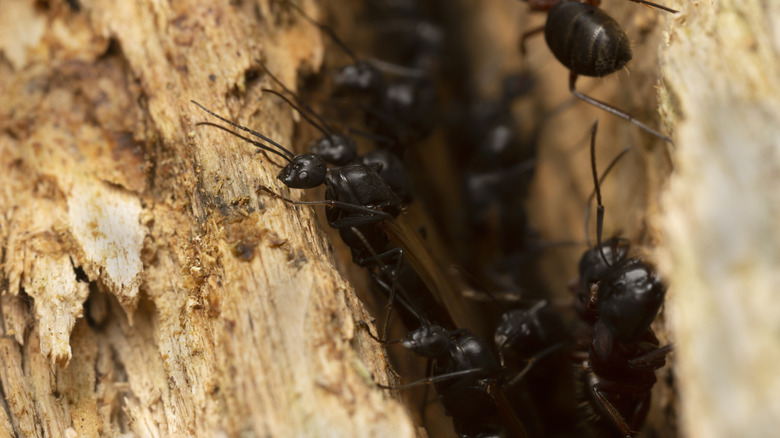
Even if you're someone who cares about the wellbeing of all living things, you may be more willing to declare war on insects inside the home. Although it might seem dramatic to consult Sun Tzu's "Art of War" to fight tiny bugs, some of the ancient general's advice might actually be helpful. For example, the idea that all warfare is based on deception is surprisingly apt when you're dealing with carpenter ants. You may never be able to find the nest of these pesky insects, but there are ways to make them come to you instead. Just as Sun recommends baiting a human enemy, you can provide carpenter ants with bait that they'll take back to their nest, destroying the colony from within.
The ants you see around your home are the ones out foraging for food, but there are workers and queens that never leave the nest because of the division of labor in ant colonies. When you spray carpenter ants, the poison likely won't reach the nest. You may kill a few individual ants, but spraying isn't an effective long-term control. Depending on the species, these insects range from ⅜ to ½ inch long, making them some of the largest ants in North America. They build satellite nests inside and outside homes, and these can often be traced back to parent colonies in stumps, logs, and rotting boards outdoors.
Tips for getting rid of carpenter ants with bait
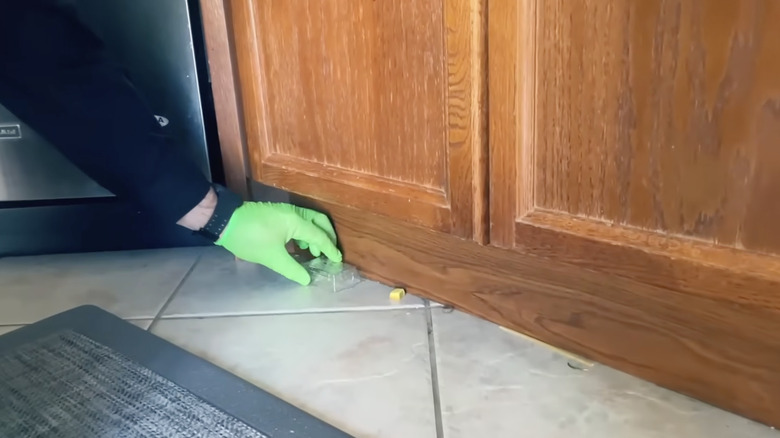
Whether or not you find a carpenter ant's nest in your home, if you see these insects traversing your baseboards or crawling under your couch, lay some gel or liquid bait nearby. These pest control products look like food to ants, but they actually contain pesticides, such as avermectin, borax, fipronil, and spinosad. The ants pick up the poison and carry it back to their nest. Once enough poison reaches the nest, the colony is destroyed. Be patient — eradication can take weeks or even months. If you're using bait to get rid of the ants plaguing your home, continue to monitor the situation closely. If you keep seeing ants, you may need to apply more bait. Carpenter ants are notorious for being finicky eaters, so don't hesitate to try a new brand of bait if the first bait is being ignored.
Sometimes you can treat an exposed ant nest using aerosol or liquid ant killers made with active ingredients like cypermethrin, deltamethrin, and permethrin. However, you may need professional assistance to treat nests inside your walls, crawl space, or attic. There are things that make it easy for ants to wander into your home, such as unsealed cracks, damp or decaying wood, excess moisture, and poor air circulation. In fact, the presence of carpenter ants can indicate a water leak; it will be hard to get rid of the ants until the leak is fixed. In all cases, heed Sun Tzu's wartime advice: stay vigilant, be prepared (with plenty of ant bait), and try not to tire of waiting.