

Say Goodbye To Traditional Mulch: This Long-Lasting Alternative Slows Weed Growth

Are you tired of replacing your traditional organic mulch year after year? If so, you're probably looking for a more durable alternative that will still stop those pesky weeds from popping up in your garden beds. Believe it or not, you can turn to volcanoes for one such mulch: pumice stone. Really! This lightweight byproduct of volcanic activity is surprisingly effective at blocking the sunlight weeds need to thrive, just as other mulches do. It's porous, so it retains moisture. Plus, it's about as visually appealing as mulch can get. Thankfully, you don't have to scale a volcano to source pumice for your garden. It's readily available from specialist suppliers and online marketplaces, although the amount you'll need depends on the area you need to cover.
As mentioned, pumice stone is naturally permeable, keeping the air circulating and preventing the soil below from becoming stagnant. The light weight and rough exterior of the stone reduce soil compaction. Despite its crumbly appearance, this natural material doesn't decompose, adding to its longevity. However, you may still need to refresh it occasionally as the stones can chip over time. Finally, since pumice stone is minimally processed — it's only broken up into finer pieces — it requires less energy to produce than similar horticultural materials, such as perlite. If you're ditching landscape fabric, why use a common household waste item to keep weeds out and maintain soil health — such as newspaper — when you can instead use something that's come from the belly of a volcano?
Why you should switch to pumice stone mulch — or not
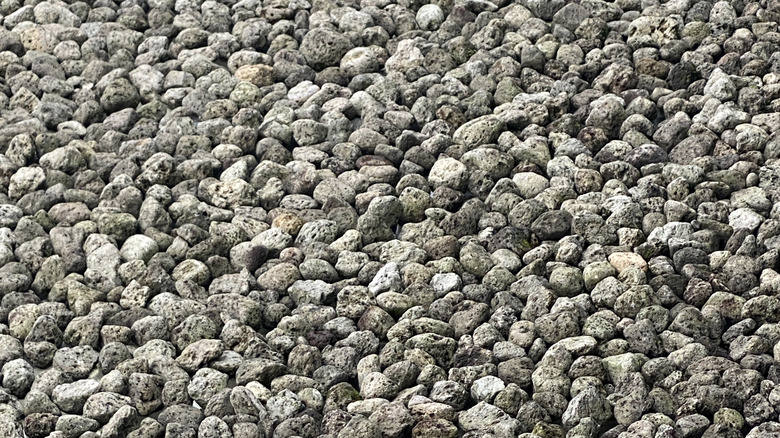
Is pumice stone the best type of mulch for your garden? The first thing to consider is your budget. Pumice stone is typically more expensive than many other stone mulches, such as gravel, and certainly costlier than free mulches like lawn clippings or raked leaves. However, you may save on maintenance costs. Smooth-edged gravel, for example, tends to move out of whatever bed it's added to, whereas rough pumice is more likely to stay put. Pumice stone could, however, save you money in the long run because it doesn't break down like organic mulches, which typically last between six months and four years, depending on the material.
Another key consideration when using pumice stone mulch is its texture. As mentioned, rough pumice stones allow air and moisture to circulate through the soil, which can help reduce plant rot. The material can, however, become a hindrance when used near high-traffic areas in your yard. Some stones have razor-sharp edges that put young, barefoot children or curious pets that like to chew things at risk of cuts. Likewise, depositing pumice on your garden beds or relocating it from one place to another can be hazardous to if you're not wearing gloves. Use this mulch in less-visited beds, and wear gloves and closed shoes when tending a garden with pumice mulch. Alternatively, keep your pumice mulch contained with creative garden edging ideas that make for the perfect landscaping, such as boxwood hedges, brick pavers, or treated wood planks.