

What Does A Dry Button On An Air Conditioner Mean?

Humidity might not show up on your thermostat, but it's often what makes the air in your home feel sticky and heavy. High humidity is downright uncomfortable. If you've ever noticed the raindrop icon or a button labeled Dry on your air conditioner remote and done nothing about it, you're missing out on an efficient feature. Dry mode on your AC acts primarily as a dehumidifier. When you turn it on, the unit typically lowers the fan speed and chills the indoor coils just enough to pull water vapor out of the air without aggressively cooling the room. That leaves your space feeling refreshed and dry, potentially using less energy without turning your room into an icebox.
In cool mode, the compressor and high-speed fan work together to bring down ambient air temperatures until the room reaches your target thermostat setting. Dry mode targets moisture removal instead. The compressor cycles in short intervals while the blower fan slows to a crawl. Moving warm, clammy air over chilled evaporator coils at a slower pace lets moisture condense into liquid droplets that drain outside rather than recirculating through your home. Adjusting the settings on your air conditioner is one of the easiest ways to give your AC a break and make your home cooler without lowering the thermostat. Because the compressor isn't running at full capacity to reach a low temperature, your machine may use less power, giving you a practical way to trim energy costs on cool, muggy days.
When to switch to dry mode on your AC
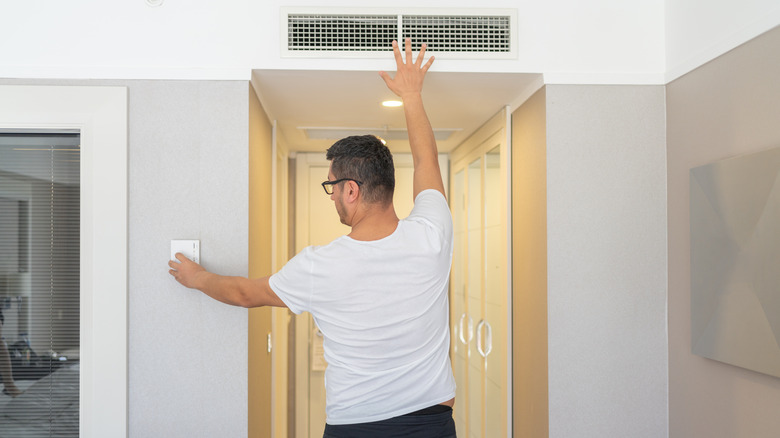
While cool mode helps you survive scorching heat waves, the dry mode on your AC is ideal for days with high humidity. Hit that button on rainy afternoons, damp early mornings, or late spring and early fall, when the air feels thick but outdoor temperatures stay under 80 degrees Fahrenheit. It also helps with nighttime comfort. If high humidity causes you to toss and turn while sleeping, running dry mode overnight can keep the air dry and light without necessarily making the room uncomfortably cold or spiking your electric bill.
Controlling indoor humidity also protects your living space over time. Excess moisture encourages mold, mildew, and dust mites, so trying this fast way to dehumidify your home in the summer and keeping indoor humidity levels between 30% and 50% can help protect drywall and hardwood floors, reducing warping and musty smells. Using your AC for humidity control also saves floor space and may eliminate the need to buy a standalone dehumidifier.
Keep in mind that dry mode isn't a substitute for standard cooling. On triple-digit days, a lower fan speed likely won't drop ambient temperatures fast enough to keep you cool. In those cases, run cool mode first to bring the room temperature down, then switch to dry mode to help keep humidity low. Just avoid toggling between modes too quickly. Keeping the three-minute rule for air conditioners in mind gives your compressor enough time to equalize internal pressure and can help prevent damage from short-cycling.