

How Do You Know When Your Gas Stove Is Going Bad?
Gas stoves have a reputation for lasting forever, but their internal parts eventually will wear out. While you can fix a flickering burner or a dirty igniter with a quick scrub, other symptoms point to deeper mechanical trouble. Spotting those warning signs early and knowing when your gas stove is going bad keeps a minor component failure from turning into an actual hazard in your kitchen.
A solid gas range should give you around 13 to 15 years of use; however, clogged gas lines or worn safety valves can easily cut that short. You'll usually know a stove is on its last legs if the flames turn yellow, the igniter clicks without stopping, or rust starts flaking off of the burner heads. A strong sulfur or rotten-egg smell from your stove is the one exception where you shouldn't troubleshoot — leave the house immediately and call your gas company or 911.
If you're dealing with constant minor breakdowns instead, it pays to look into why you may want to consider getting rid of your gas stove rather than sinking more cash into an aging appliance. Once you decide to upgrade, figuring out whether you should replace your gas stove yourself comes down to how comfortable you are with live fuel lines.
Hooking up a gas range requires exact pressure settings, proper thread sealant, and leak checks. A bad DIY job risks gas leaks, fires, or code violations that could void your home insurance. Hiring a licensed tech means your gas line gets pressure-tested and your old unit gets disconnected safely. While you can do this job yourself (if you have the DIY knowledge), it's almost always recommended to have a professional take this project on.
Signs your gas stove isn't working right
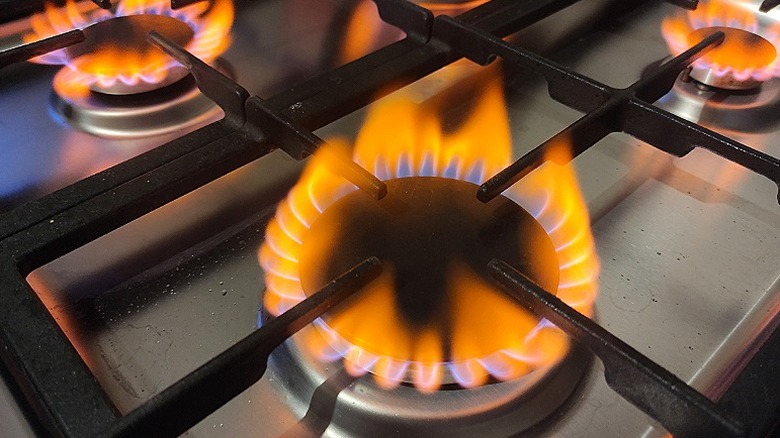
You can diagnose most gas stove problems just by watching how your burners cook. Healthy stove flames burn blue, indicating a complete combustion process. If you see yellow or orange flames that won't go away, the gas isn't mixing with enough oxygen to burn cleanly. Running a humidifier in the kitchen area can cause a temporary orange flash, but steady yellow flames mean blocked gas ports, misaligned burner caps, or even a carbon monoxide risk. Trust your nose, too — a tiny whiff of gas right as the knob turns is normal, but a persistent sulfur odor when the stove is completely off means a gas leak.
You'll also need to pay attention to what happens when you turn the gas stove's dials. If the igniter clicks endlessly without lighting a flame – or stays completely dead — current is not reaching the burner to throw a spark. That usually means a dead spark module, switch, or electrode. Grease spills or moisture can cause temporary ignition issues, but if a thorough cleaning doesn't fix it, the electrical parts are shot.
When looking at your gas stove, take a minute to inspect the exterior for visible structural damage. Deep rust, cracked cooktop enamel, or scorch marks around the control knobs show serious heat degradation that can clog gas ports and leave you with cold spots on your pans.
Finally, you'll want to consider how much you've spent on repairs. Paying for a new igniter or thermostat every few months on a 10-year-old range adds up fast. If this is an issue that keeps happening over and over, it's time to call it and start shopping for a replacement. Depending on the age of your stove and the cost of the fix, it might make more sense to ditch your gas-powered appliance and put that money toward a modern range or an induction cooktop.