

What To Do If You Spot Ants In Your Raised Garden Bed
We may receive a commission on purchases made from links.
While ants are often considered pests when they make their way into your kitchen, most species play an important role in the natural ecosystem outdoors. Seeing ants in your garden is rarely a cause for concern, and may even be something to celebrate as an indicator of healthy biodiversity. Unless, that is, you come across large numbers of ants in a raised garden bed or spot one of the few problematic ant species, like carpenter ants or fire ants. Have you caught sight of some ants in your raised garden bed? First, try to determine why they are there and which species they are. Once you know what you're dealing with, you can decide whether to leave them be or explore safe methods to get rid of them.
If you've observed black ants, a common garden species, there are numerous ways to deter or remove them without killing your garden plants. However, before you attempt to expel them from your raised bed, check your plants for signs of sap-sucking insects, such as aphids, mealybugs, whiteflies, or scale insects. These pests secrete a sticky substance known as honeydew that ants will happily feed on. In fact, ants love honeydew so much they go to great lengths to protect these insects from predators, essentially farming them on your plants. You can use the lazy gardeners' trick for dealing with aphids in the garden: clear your plants of them with a strong jet of water from your garden hose. This works on other sap-sucking insects, too. Once they're gone, the ants will likely move on to find other sources of food.
Identifying the ants and getting rid of them
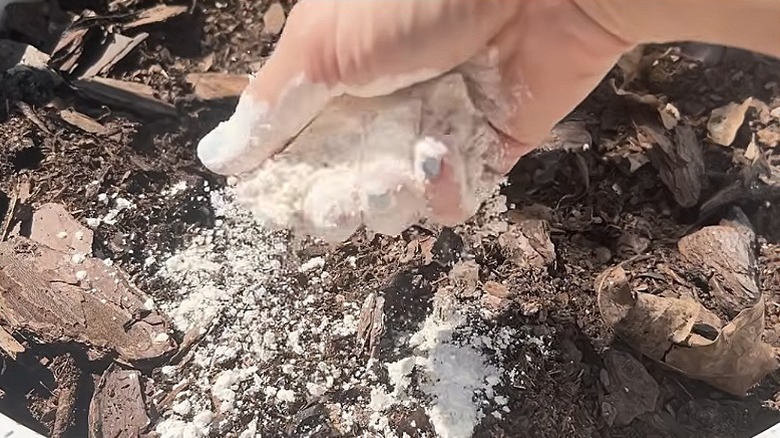
If you want to eradicate common black ants from your raised garden bed entirely, start by giving the soil a really good soaking for a few days in a row. Ants prefer dry soil and may abandon a nest if the ground stays wet. You could also sprinkle some diatomaceous earth (DE) on the soil, concentrating the powder on any nest entrance you spot. When ants — or other armored insects — come into contact with DE, the powder's tiny shards penetrate their exoskeleton and soak up body oils, leading to dehydration and death. You will need to reapply the powder if it rains or you water your garden because it doesn't work when wet. Finally, there's a degreaser called Nature's Orange 100% Food-Grade D-Limonene Extract that ants dislike. Mix about 2 ounces of the concentrate with 1 to 1 ½ gallons of water and drench the soil and any nests you can find with the solution.
There are a few types of ants you may find in the garden, and how to get rid of them can be species-specific. If you're positive that imported fire ants (Solenopsis invicta Buren and S. richteri Forel) have taken up residence in your raised bed, you need to proceed with caution. These ants are aggressive and will sting. Treat the nest immediately with a pesticide bait containing spinosad, which is approved for organic gardening. Another pesky ant that may invade raised garden beds made from untreated or older, rotting timber is the carpenter ant. Engage the services of a pest control company to get rid of the nest for you. On a positive note, carpenter ants primarily nest in decaying wood, so they're less likely to nest in raised garden beds made from treated timber or inorganic materials.