

Say Goodbye To Mothballs: You Won't Need Them If You Store Clothes Like This

Having moths destroy your favorite sweaters kind of, well, bites. Clothes moths are attracted to clothing and other fabrics made with animal fibers, such as wool, cashmere, silk, or leather. So, if you see tiny holes chewed through your favorite cashmere scarf or sweater, congratulations, that's a telltale sign moths have gotten to your belongings. And, much like bed bugs, they can work fast, with an adult female clothes moth laying 40 to 50 eggs over a three-week period.
You've likely heard of mothballs as an effective deterrent. But that pungent, chemical smell that accompanies them is the reason you should never use mothballs in your closet. Both the naphthalene and paradichlorobenzene in mothballs are toxic to humans, and you're affected by the chemicals when inhaling them. Basically, if you can smell them, you're being exposed. Worse yet, children or pets could mistake the colorful, round balls for food or candy. That's why it's recommended that mothballs are placed in airtight containers to avoid potential symptoms, such as headaches, nausea, dizziness, and difficulty breathing. But since that's the same advice pros give to prevent moths from treating your dresser or a closet like an all-you-can-eat buffet, mothballs are actually entirely extraneous if you follow smart storage strategies.
How to prevent a moth infestation
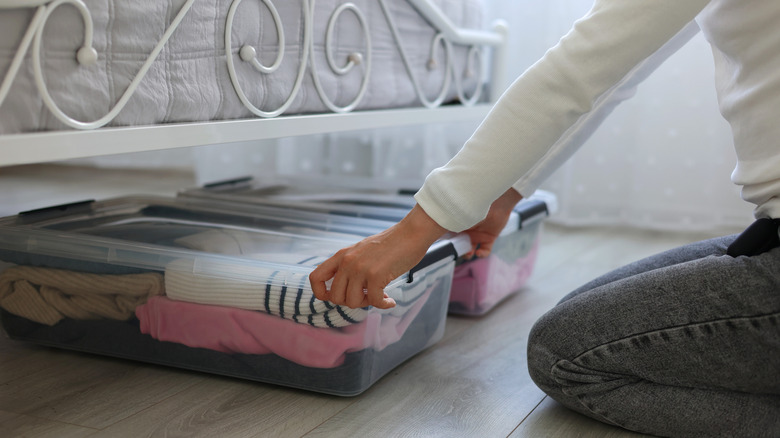
If moths have already had their way with your favorite silk shirt, here's what to do when you find moth holes in your clothes. While you should separate damaged clothing from the hole-free variety, it's best to treat all fabrics as if they're potential hosts. Any fabrics that can handle hot water should be laundered in water that's at least 120 degrees Fahrenheit and dried in high heat. Delicates, such as leather jackets or wool and cashmere sweaters, should be dry-cleaned. Everything else can be sealed in plastic bags and placed in a freezer for 72 hours. You can then have an exterminator come in to treat the area with insecticides that will kill the adults and larvae.
To effectively mothproof your clothing moving forward, keep things clean. Since moths thrive in mustier, darker environments, be sure to vacuum inside drawers and your closet regularly, using the attachments to get into tight corners and attack baseboards and walls. And since moths prefer lesser-used and dirty clothing, make sure you're washing your clothes frequently. Most importantly, store your garments in completely sealed storage so that moths can't do their thing. Since the insects can't eat through cotton, fabric garment bags should do the trick, or you can use watertight hard plastic storage containers.