

The Simple Solution That Stops Flies From Coming Into Your Home

Nothing ruins a quiet afternoon quite like the constant buzz of a fly zipping around your living room. Once they get inside, they're surprisingly hard to swat, leaving you chasing them from room to room. Bug sprays and yellow sticky strips can help, but they usually mean dealing with a mess after the damage is already done.
The easiest fix is to stop them before they ever make it past your doorway or window. Finding the right ways to deter or eliminate annoying flies from the house comes down to shutting down their entry points. While you can focus on naturally keeping flies out of your house with plant oils or DIY traps, good old-fashioned window and door screens are still your best line of defense. Fixing up your mesh is cheap, takes minimal tools, and lets you catch a nice afternoon breeze without opening the floodgates to every bug in the yard.
Flies have a knack for finding even the smallest gap near a warm kitchen or garbage can. Taking a weekend to check the perimeter of your home and seal off those tight spaces gives you a permanent, passive shield against seasonal pests. Once your screens are secure, you can leave the windows open all day long without having to keep one eye on the room for unwanted visitors. Plus, taking care of the issue at the frame keeps you from spending money on heavy-duty exterminators or staring at ugly flypaper hanging in your kitchen.
How to check and maintain your screens
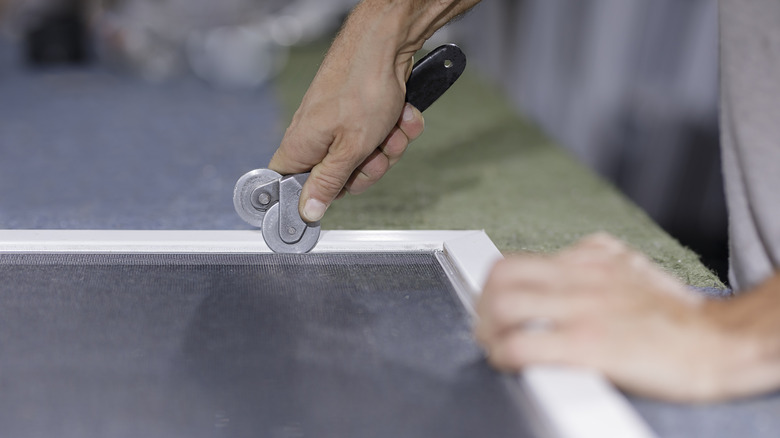
If your screens have seen better days, bugs won't hesitate to take advantage. Walk around your house, and check the mesh closely for thin spots or small tears that might escape a quick glance. A good trick is to hold a flashlight up to the screen from the inside at night, as light shining through will immediately highlight fraying edges and pinholes. Check the corners especially, since the tension on the frame tends to pull the material apart there first. If you spot a small hole, you don't need to throw out the whole screen. Anything under three inches can be patched up in seconds with a bit of screen repair tape or a self-adhesive mesh patch. Just make sure your patch overlaps the tear by about half an inch so it stays put.
For larger rips, replacing the mesh entirely is the way to go. Luckily, replacing ripped window screens is easy with the right equipment. Pick up a roll of fresh mesh and a length of rubber spline at any home improvement store. Use a flathead screwdriver to pry the old rubber cord out of the frame channel, stretch the new mesh tight over the top, and roll the new spline back in with a spline tool to lock everything in place.
If your back door gets a lot of foot traffic from kids or dogs, standard screens usually end up left propped open. Hanging a magnetic mesh screen door on high-traffic patio entrances solves the problem automatically. The weighted center seam snaps shut the second someone walks through, keeping flies outside even when hands are full with groceries or dinner plates.