

What To Do If Your AC Is Running But Not Bringing Down The Temperature

During the dog days of summer, there's nothing worse than your air conditioner failing. Suddenly, your home is eerily quiet, the temperature is skyrocketing, and the air feels stagnant. This is a problem most of us have run into at one time or another, but what if you notice a sudden jump in temperature while your AC is actually still running? This can be confusing and frustrating, but don't panic — there are several potential reasons for this problem, and in most cases, it's not a sign that your AC is in trouble.
Before calling out the pros, make sure to ensure that your thermostat is on the right setting, your unit has proper airflow, and your air filter is clean. These are simple fixes that you can perform at home to take care of the problem and get your space back to a comfortable temperature. Unfortunately, it's also important to consider the temperature outdoors — AC units aren't miracle workers, and in most cases, they can only take down the interior temperature 15 to 25 degrees without working overtime. If it's 100 degrees outside, you'll probably reach a minimum of 75 degrees inside.
If the weather isn't blazing, your first step should be to check your AC's setting on the thermostat. This might sound silly, but it's very easy for you or another member of your family to mess with your normal settings without realizing. Check the current temperature setting, then make sure it's also set to cool — if it's just on the fan function, you'll be getting airflow without any cooling action. Now's also a good time to confirm that you don't have any pre-set schedules that might be increasing the temperature automatically. Everything in order? It's time to move on.
How to ensure your AC is getting proper airflow for cooling
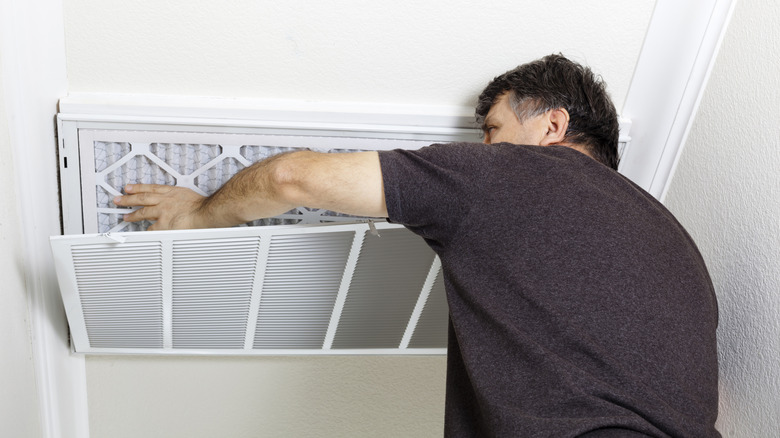
If you suspect that your unit is having a hard time taking in air, it could be due to two main causes: exterior blockages or a dirty air filter. AC filters should be changed often, and they're easy to swap, so give yours a check if you haven't thought about it in a while. Dirty filters can make your unit work less efficiently, which might cause it to struggle to get down to your set temperature if it's especially hot outside.
The same line of logic applies to external blockages. If there's debris around your outdoor condenser unit, like leaves, cut grass, or fallen branches, it likely won't be running at peak performance. Clean up around the area and make sure the condenser has adequate space for airflow. Now is also a good time to clean your AC coils. This task should be performed twice a year, and if it's been neglected, buildup and gunk could contribute to a poorly-running system. Make sure to take a gentle approach if you attempt this task at home — high water pressure, abrasive tools, and acidic cleaning solutions can cause more damage in the long run.
If none of these troubleshooting tactics lead to an improvement in the situation, it's time to call out a professional. Leaking or low refrigerant can also result in high air temperatures, but this should be handled by someone with access to the appropriate tools, expertise, and chemicals. With proper diagnosis, you should be back to cool in no time.