

Can You Use Cast Iron On An Induction Stove?
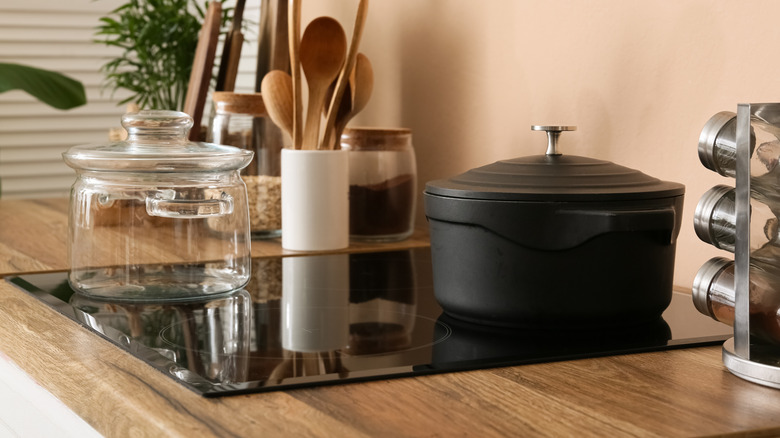
Dropping a heavy cast iron skillet onto a polished glass cooktop feels like an expensive accident waiting to happen. It's no surprise why people may ask if it is safe to use any type of pan on your induction stovetop or assume their old seasoned skillets belong in storage. However, before you pack away your precious cookware, you'll be happy to know that cast iron and induction actually work together remarkably well.
To understand why this duo works wonders in the kitchen, you'll need to know how induction cooktops work. Induction stoves use magnetic fields to generate heat, meaning that they'll only work with magnetic metals like iron. Copper coils underneath the cooktop pass energy straight to the pan instead of heating up the glass top first — a major reason why induction is a cooktop trend that's making kitchens safer and more efficient. Since cast iron is loaded with raw iron, it grabs that energy, using it to not only heat up the pan, but also keep it hot. When you pair that direct heating power with cast iron's ability to hold onto heat, you end up with steady temperatures for searing meat or keeping a stew bubbling without needing to constantly turn the dial.
Bare cast iron and enameled Dutch ovens all have those same magnetic properties. If you're ever unsure about if a specific pan will work on your induction cooktop, grab a fridge magnet and touch it to the bottom. If it sticks, it will work. As long as you take care not to gouge the glass or heat the metal too fast, cast iron will quickly become your go-to for this modern cooktop.
How to use your cast iron on your induction stove safely
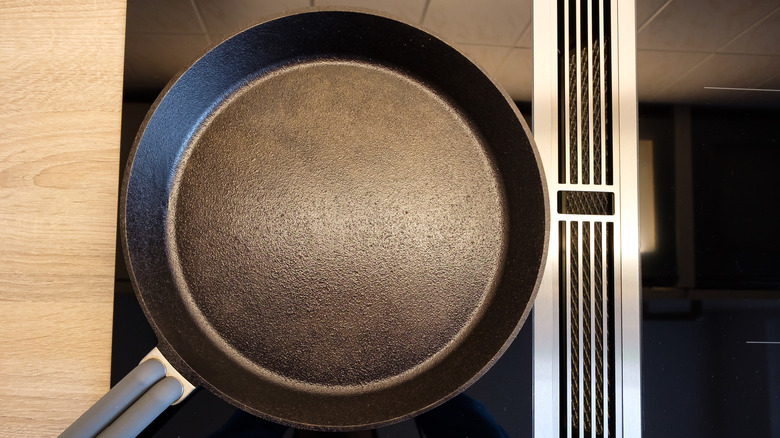
Keeping your cooktop in good shape when using a cast iron pan comes down to avoiding scratches and preventing thermal shock. Part of caring for your cast iron pan is checking the bottom for grease or burnt food that can grind into the glass. Enameled pans are smoother than raw iron, but grit underneath either style will leave scuffs. Most importantly, always lift the skillet when you need to reposition it and never slide it. Sliding iron cookware across the glass will almost always result in scratches on your glass, and these will leave permanent marks that are impossible to repair.
To further help keep your cooktop safe, you can also put a liner between the pan and the glass while cooking. While it might sound counterintuitive, putting down a thin silicone induction pad between the pan and the cooktop prevents surface marks and catches grease splatters. Because the heat comes from magnetic fields rather than open flame or direct burner coils, the liner won't disrupt the heat transfer. Just remember to avoid using paper products (like paper towels), since these still pose a potential safety risk.
When you're cooking, give the pan the time it needs to come up to temperature. Try to match the pan's base size to the burner ring so the heat distributes evenly rather than scorching the middle and leaving the edges cold. Remember to give cast iron a few minutes (usually up to five) on low or medium heat before turning up the heat to your final temperature — iron takes a little extra time to absorb heat, but once it gets up to temperature, it holds it effortlessly.