

Turn Old Vinyl Blind Strips Into Cheaper Diy Paver Molds With A Clever Upcycle
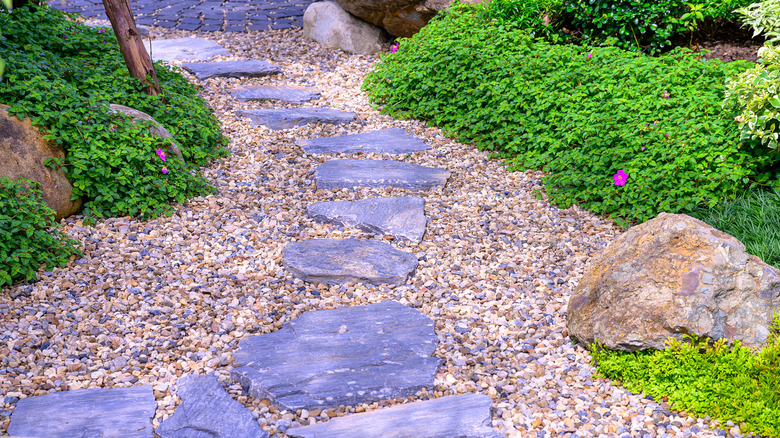
Whether you've just moved in and are removing the old window furnishings, or you've managed to break one and don't know what to do with it, don't worry. There are actually lots of smart ways to repurpose old or broken window blinds in your home and garden without simply sending them to the landfill. Some you may well already have heard of, but one that recently caught our eye is the use of old vinyl blind strips to create the most unique concrete pavers. All you need to do is to take the strips, wrap them into your desired shape, and use tape to hold the ends together. You then use cheap garden stakes to pin them into position in your yard, before mixing up the required amount of concrete and pouring the mixture into your molds.
Not only is this method super simple, but it's also much more practical than buying — and moving — natural pavers and flagstones. These are heavy, which makes just getting them into position easier said than done. Not only that, but they can be expensive. Those vinyl blind strips, on the other hand, are free. The cost of concrete needn't be excessive, either, although that will depend on how many pavers you plan to make. But if you're using the method, for example, to add some stepping stones to your garden, it could well be much easier and more cost effective. That's not the best part, though. What we love about this idea is how much you can customize your new stepping stones.
How to customize your homemade vinyl-blind-strip stepping stones
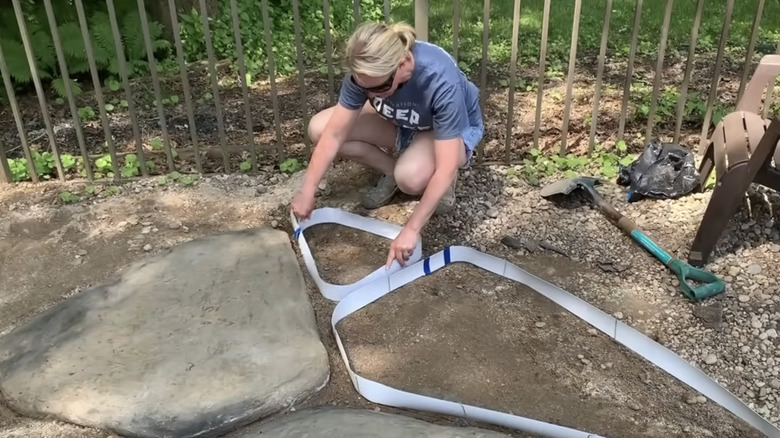
The first and most obvious way to customize your stepping stones using this method is by playing around with the shape and size. Since vinyl blind strips are flexible, you can manipulate them into a world of irregular, quirky shapes, to mimic the randomness of nature. Not only that, but depending on how many strips you have to work with, you can potentially make some very large pavers with them.
Another way to add your own stamp to these creations is to add texture. Now, you'll need to do this before the mixture sets. Otherwise, you'll end up with flat — and, let's face it, dull — slabs of concrete. But you could personalize your pavers with, say, hand prints from each member of your family. Or you could take some crumpled garbage bags and gently press them into the partially-cured surface, which will help to achieve a more natural, stone-like look. You can even use concrete colorants, or dyes, which can either be brushed onto the dried surface or mixed into the wet concrete before pouring.
Finally, if you're making several slabs for a more natural-looking patio, then you may wish to fill in the gaps between your new "stones." There are several ways to do this, but one of the easiest is simply adding a course of gravel between each slab. This will help to keep the worst of the weeds from spoiling your area's aesthetic. You can also choose gravel in a variety of sizes and colors, for yet another layer of customization to consider.