

Step Aside Hydrangea: This Berried Shrub Provides Color From Late Summer To First Frost
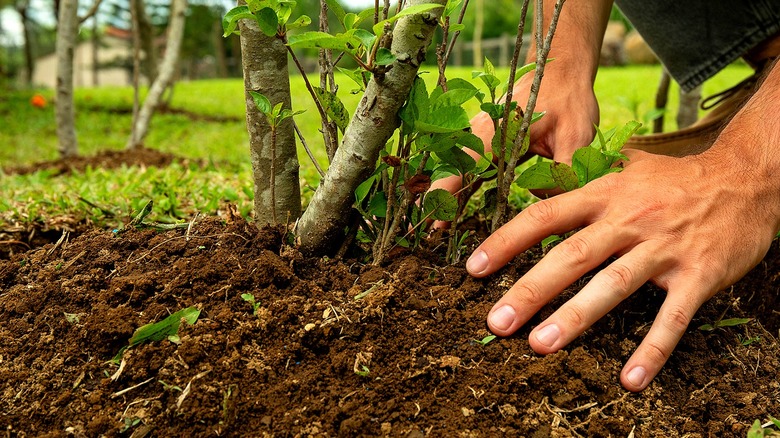
Many gardeners appreciate having color in their yards through spring, summer, and well into fall. One well-known flower that can fulfill this gorgeous aesthetic is the hydrangea, with some of its cultivars and hybrids blooming through autumn. But if you don't have the right conditions, or aren't particularly fond of hydrangea, there's another colorful shrub that provides color from late summer all the way until the first frost: Viburnum nudum 'Brandywine.' What's more, this tall shrub, unlike hydrangea, also grows berries.
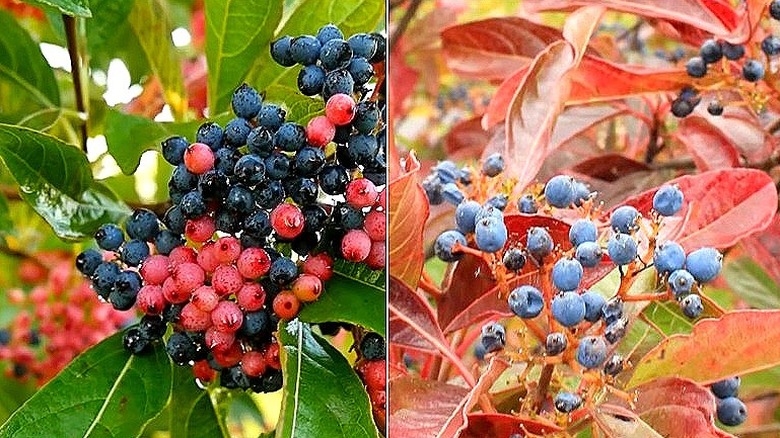
Bred by Proven Winners, this deciduous shrub will delight you as it transitions through the seasons. Glossy green leaves first appear in spring and will persist through the warmer months. In late spring and early summer, 'Bradywine' produces white, fragrant flower clusters that turn into berries (pink and blue) in the fall. The berries themselves go through color changes timed with their ripening.
To add to the amazing color show, those glossy green leaves of 'Brandywine' will turn maroon-red once autumn arrives. In addition, this shrub will attract both birds and butterflies to your yard with its pretty flowers and colorful berries. In fact, you'll find a variety of birds will enjoy visiting this gorgeous native shrub in your garden, including robins, cardinals, and eastern bluebirds.
Growing colorful 'Brandywine' in your garden
Native viburnums are ornamental shrubs that can house and feed birds in your yard all winter long, which is why you will be happy to know that 'Brandywine' will grow in USDA hardiness zones 5 to 9, which covers a large portion of the country. It can reach a height and spread of around 5 to 6 feet. You can plant this shrub in either full sun or part shade in well-drained soil; it's not too fussy about soil type and can even handle wet conditions. For optimum growth, fertilize it in the spring with a controlled-released fertilizer.
If you want to keep your Proven Winners shrub a bit more compact, you can prune it just after the flowers have faded. But refrain from removing all of the spent flower clusters as those clusters will turn into the gloriously colored fall berries. Although, removing a few shouldn't be a problem, as the berries can get quite heavy and may even cause the branches to droop a little.
You can grow this cultivar as a hedge, with plant spacings of around 6 feet, and having more than one will also help with pollination, and thus the production of more berries. Finally, if you love how this cultivar attracts birds, you might like to add a few other berried plants to your garden, such as elderberry, American bittersweet, and chokeberry.