

Forget Mums: This Succulent Is The Perfect Alternative For Fall Planters
We may receive a commission on purchases made from links.
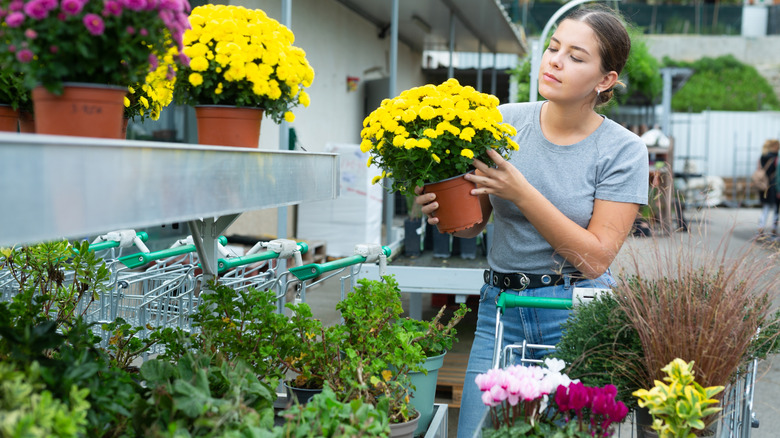
Mums are beautiful plants that can add a burst of color to your fall containers. However, you need to water them pretty frequently to keep them blooming until the end of the season. Unfortunately, this also coincides with the busiest part of fall, a time full of fun activities like apple picking, corn mazes, and pumpkin carving. Adding extra time for watering to an already packed schedule isn't ideal. If you're looking for a stunning container-friendly plant that will tolerate some neglect during this busy season, consider sedums.
Sedums (Sedum spp.), also commonly called stonecrops, are low-maintenance perennials. They're succulents that can handle heat, drought, and even frigid conditions, depending on which species or cultivar you choose to grow. Broadly speaking, sedums thrive in USDA Plant Hardiness Zones 3 to 9.
There could be up to 400 species in the Sedum genus. While they can vary dramatically in shape, height, and color, they're roughly collected into two categories: creeping or upright — reaching up to two feet tall in some cases. No matter which species you choose — pink, yellow, orange, or green; rambling or vertical — you can build an attractive planter arrangement with it. This wide array of forms makes sedums exceedingly adaptable. There are all kinds of beautiful succulent garden design ideas that will add curb appeal to your yard or jazz up your backyard patio planters.
Which sedums work well in fall planters?
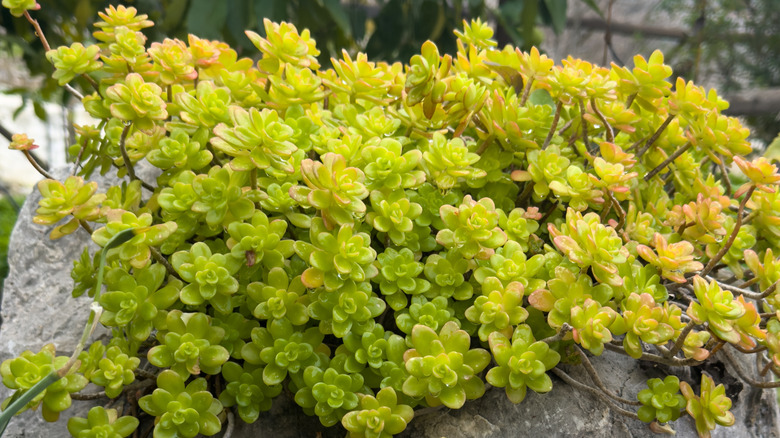
While not all sedums are ideal for fall gardens, there are many species that thrive in the cooler temperatures. In fact, many species flower at the end of summer and into fall, providing pollinators with an important late-season food source. Sedums offer more than beneficial flowers, though. Many of these hardy succulents are grown specifically for their unique and colorful foliage. One of the most popular stonecrops is 'Autumn Joy' (Hylotelephium spectabile 'Autumn Joy'), a pretty pink perennial that is highly attractive to birds and pollinators. It thrives in zones 3 to 9, can reach up to 2 feet tall, and blooms from August to November. It's sure to look stunning as part of a quirky deck planter arrangement.
If you're looking for a plant with fall color, consider the Chinese sedum cultivar 'Coral Reef' (Sedum tetratinum 'Coral Reef'). This plant grows up to 1 foot wide and about 3 inches tall. When stressed — typically when exposed to dramatic temperature fluctuations — its foliage turns copper-red, a perfect hue for fall. 'Angelina' stonecrop (Petrosedum rupestre 'Angelina'), 'Voodoo' stonecrop (Phedimus spurius 'Voodoo'), and 'Dragon's Blood' (Sedum spurium 'Dragon's Blood') are also excellent choices for fall planters. If you don't like any of these sedums, don't worry. There are plenty of other stonecrops out there — it's worth browsing the catalogs of local plant nurseries to see what species and cultivars they have.
Caring for sedums in fall planters
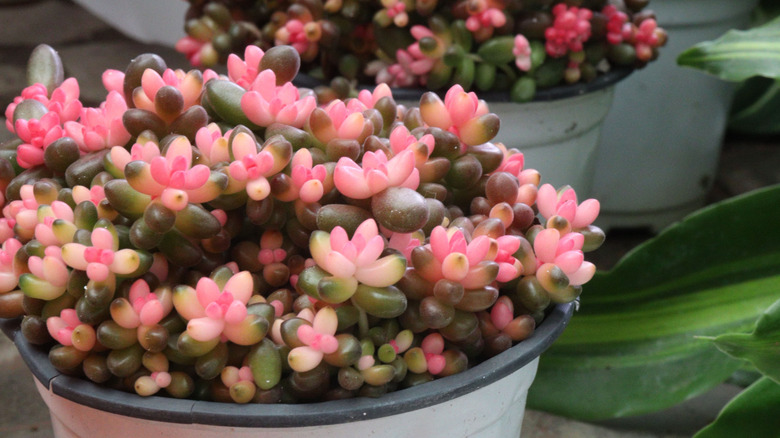
Sedums prefer a site with full sun. They will tolerate some shade, but the less sun they get, the fewer flowers they will produce. They also need a well-draining pot. When growing stonecrops in planters, make sure the container has plenty of drainage holes and, ideally, a Bloem Ups-A-Daisy Soil-Saving Insert. Aid drainage with some of the best materials you should be using to fill the bottom of larger planters — from peanut shells and pinecones to sand, sticks, and even smaller pots.
You can use pretty much any growing medium for sedums, as long as it doesn't retain water. There's no need to apply fertilizer, either. Pests tend to leave these tough succulents alone, although slugs, snails, mealybugs, and whiteflies may occasionally bother them. Sedums also require little, if any, pruning. If you wish, you can deadhead the blooms to encourage more abundant flowering.
In the right zone, you can easily grow sedums as perennials. Potted plants can be a little harder to overwinter because the soil in the containers gets cold quickly. However, if you live in zones 3 or 4 — the two coldest zones sedums can survive in — overwinter your containers indoors and take them outside again as soon as the weather starts to warm up. That way, you can enjoy these low-maintenance plants for more seasons than just fall.