

Deer Will Gobble Up Your Mums: Add Fall Color To Your Yard With Lacy Flowers They Won't Touch
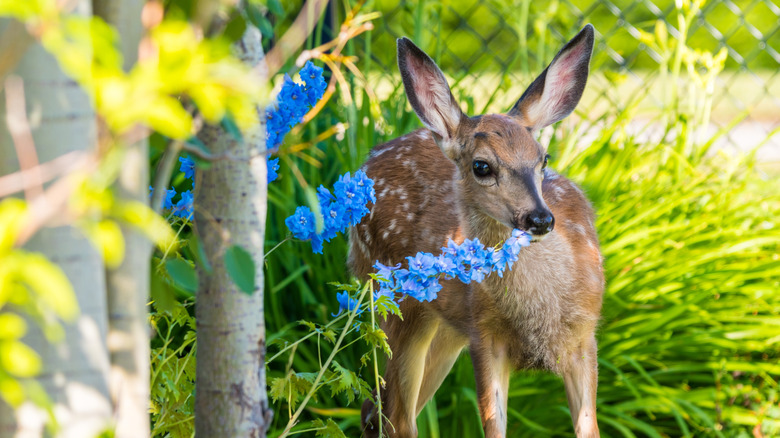
Landscaping around your home for the fall season can be tricky with hungry deer on the lookout for a treat. In the leaner months of the year, including the cool months of autumn, whitetail deer may venture over to your yard to nibble on bright chrysanthemum blooms. While you can follow some handy tips and tricks to prevent deer from eating your fall flowers, you can also try growing another flower with a bold hue that the deer will be less likely to damage. Goldenrod (Solidago rugosa), specifically the 'Fireworks' cultivar, is a native option that blooms beginning in late summer, displaying showy flowers from September to October. Its golden yellow flowers grow together in clusters at the end of long stems, creating a look similar to streaks of fireworks splashing against the night sky.
'Fireworks' is resistant to deer browsing, making it a good alternative to cheerful mums in the fall. It's also a reliable pollinator-favorite flower that'll add a gorgeous autumn glow to your garden, attracting beneficial insects like butterflies and bees at a point in the year when the rest of the garden is starting to wind down. Gardeners were introduced to this bushy perennial in 1993 and it remains a great option for a native goldenrod in residential yards.
Using goldenrod 'Fireworks' in your autumn garden
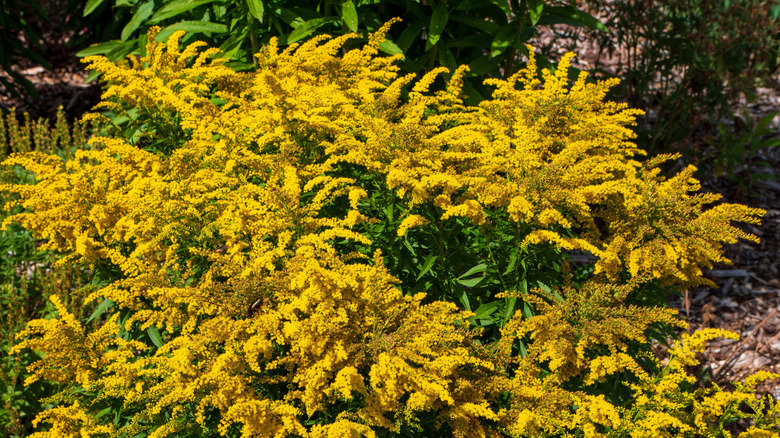
Growing 'Fireworks' is a simple task for most gardeners in the U.S., as long as you live in Hardiness Zones 4 through 8. This species requires average soil with proper drainage and full sun. But this cultivar also tolerates dryer or wetter conditions without fuss. With little maintenance, you can establish this autumn-blooming species instead of mums in your yard.
When it comes to the 'Fireworks' cultivar, you do not need to worry about learning how to deadhead goldenrod so it won't take over your garden. This specific cultivar of goldenrod was bred to be less aggressive than its wild cousin. However, its self-seeding, spreading nature means it might be best suited to a border spot. The tall, bursting plant's flowers grow on arching stems that can reach 18 inches long and the entire plant can spread 3 feet wide.
Another bushy flower to grow as a counterpoint to this variety's golden yellow is the showy purple New England aster (Symphyotrichum novae-angliae). While deer sometimes come after this plant, they typically leave it alone due to its smell and bitter taste. So growing 'Fireworks' together with New England asters may be an ideal match for a bold fall garden – without problematic deer!