

What To Do With Zinnias In September For Fall Cleanup

By the time September rolls around, you may be ready to sit back and spend more time indoors after a long, hot summer of working in the yard. But if you have zinnias, there are a couple of last things you might want to do before hanging up your gardening gloves for the year. Luckily, though, this end-of-season cleanup is totally optional — so if you don't feel like doing it, you don't have to.
The first and simplest option requires no effort at all. Literally. Zinnias are annuals, so if you leave hem in the ground, they'll eventually wither up as the weather gets colder. Fair warning, though: A patch of dead, shriveled-up zinnias isn't the nicest-looking thing in the world. If you're fine with that, then you can leave them alone. In some cases, the plants will drop seeds and produce new flowers in spring (but that's not a guarantee). Birds also love zinnia seeds, so you might spot them munching on the leftovers when the season ends.
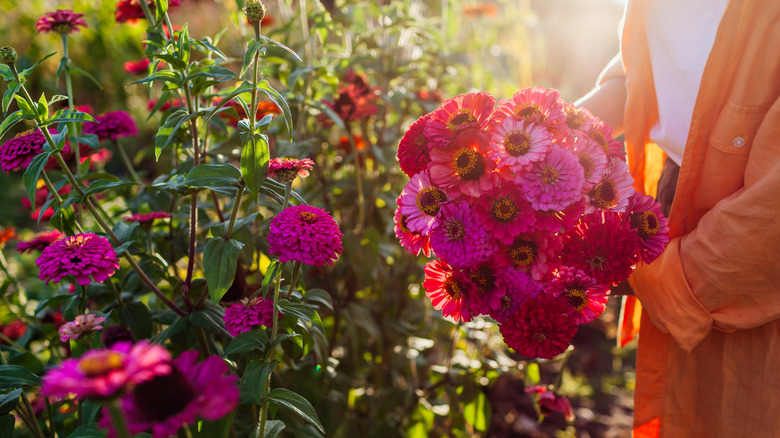
Even if you don't want to grow more zinnias in spring, there's something else you can do to enjoy the existing ones for a little bit longer: Before they start to wilt, cut a bunch and put them in a vase with water. To get the most life out of the flowers, the Old Farmer's Almanac recommends snipping them early in the morning when they're soaked up moisture overnight.
How to collect zinnia seeds for replanting in the spring
If you want to bring back your zinnia patch for another summer, there's a little more work required. Fortunately, though, it's still fairly simple and a great trick to get an endless supply of colorful zinnias every year. After the flower heads turn brown and dry completely, snip them off and bring them inside. Then, gather the seeds and put them in paper envelopes in a cool, dry area until spring.
All in all, there's no right or wrong way to approach fall cleanup. Instead, it comes down to personal preference — as seen in the Zinnia Growers group on Facebook, where one first-time grower asked others for advice on the subject. One commented, "When they're all dried up, I usually cut quite a few and store them in a paper bag. Then I yank the rest up, shake them vigorously over the bed and then toss the dead vegetation into my compost bins." Another said, "I cut all my flowers, enjoy them in a vase. When they wilt, I dry them and get the seed."
Going forward, if you're looking for ways to help your zinnias bloom and flourish all season long, there are a few important tips to keep in mind. For starters, remember that these flowers grow best in full sunlight, so pick a bright spot to plant them. Once the zinnias are established, use an all-purpose fertilizer once a month to stimulate flower production. Finally, deadheading, or removing the old blooms throughout the season, is another way to keep your zinnias growing beautifully.