

Using Recycled Wood For DIY Raised Garden Beds Is A Good Idea — Unless It's This Type
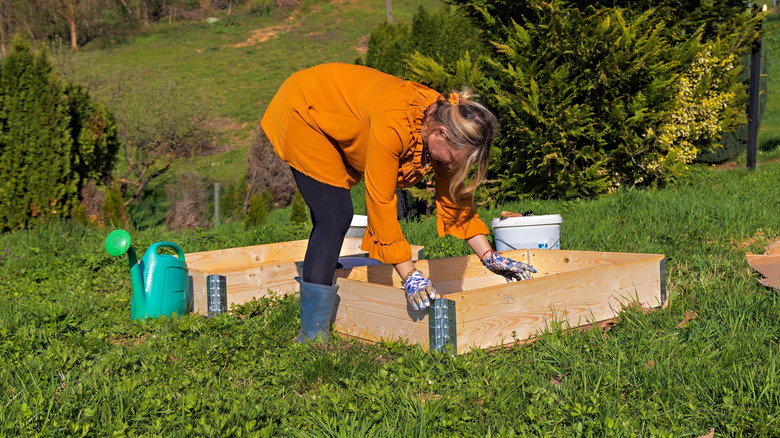
There are plenty of creative raised bed designs that you can draw on to customize your growing spaces. There's an equally vast array of materials that you can use to build your raised bed, too, although one of the most popular is reclaimed or recycled wood. It's usually one of the cheapest materials to use, and depending on the species, it can last a surprisingly long time without sealants or preservatives. The only thing to bear in mind, especially when using recycled wood for a raised bed, is where it came from and, more importantly, what it may have been treated with.
If you're reusing or salvaging pressure-treated lumber that's more than 20 years old, there's a chance it was treated with chromated copper arsenate (CCA). This treatment was once commonly used for wood that was sold to the public. It was designed to protect the materials from common pests like termites and fungi, which might otherwise compromise the wood's integrity. In the early 2000s, manufacturers voluntarily phased out CCA-treated wood for most residential consumer applications amid concerns about potential exposure to arsenic. Now, with that being said, the Oregon State University Extension explains that there's little evidence to suggest that wood of this type increases the risk of arsenic accumulation in plants and vegetables. However, it's probably not a risk that you want to take. After all, there is a reason that CCA-treated wood is no longer available to the general public. As a general rule, manufacturers of this type of wood create it solely for industrial use, and they categorically recommend against using it around the home and garden.
Ensuring you use an appropriate type of recycled wood for your raised bed
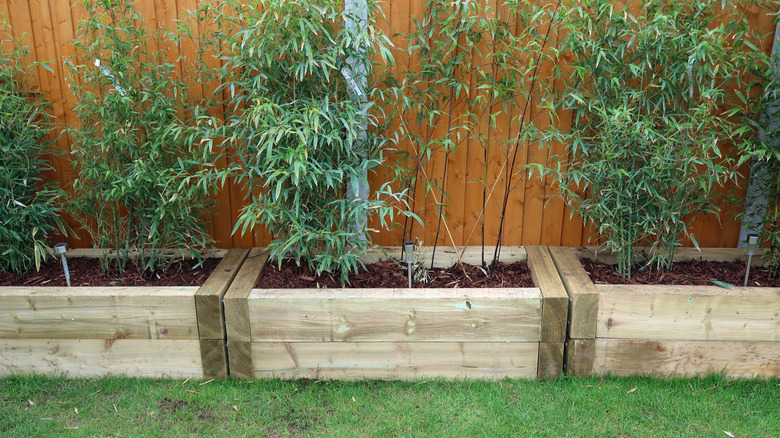
One of the biggest disadvantages of using wood for your raised beds, particularly treated wood, is that those chemicals risk leaching into your soil. And the issue with recycled or salvaged wood is that it's very difficult to know whether it was treated, and what it was treated with. Buying new lumber makes it much easier to identify which preservatives were used and whether the wood is appropriate for your intended application. When you do, you can either check with the manufacturer, or you can consult the label. This should indicate what its intended end use is, which in turn should give you some clarity around whether it's safe to use in your garden.
With that being said, if you're determined to use recycled wood, be that for sustainability or budgetary reasons, there are some ways that you can discern its suitability for gardening. First, if you suspect the lumber is more than 20 years old or it came from an industrial application — such as old railroad ties — it's safest to avoid using it for a raised garden bed. Such materials are typically treated with strong, chemical-based preservatives, like CCA, which are simply not designed for use in gardens.
If you're unsure of the wood's age or origin, you can inspect it for signs that it may have been treated, but appearance alone can't reliably establish its treatment history. Older wood may not show signs on the surface, but if you cut into it, you may notice a visual difference in color between the interior and exterior of the timber. Another way to check is to use your nose and sniff. Oily or chemical smells are good indicators that the wood was treated with something. On the other hand, if it smells like natural wood, then there's a good chance no chemicals were used.