

Use These Common Materials To DIY Your Own Soaking Bathtub From Scratch

All the world's problems seem to float away when you sink neck-deep into the warm, soothing water of a Japanese-style soaking tub. For centuries, these deep vessels, called ofuro, have been relied on for their wellness properties and serene, minimalist design aesthetic. Purchasing one ready-for-install may counteract the thirst for zen since they can be priced from $2,000 to $4,000. DIYers like YouTubers Bryce & Katie are skipping the high-priced options and building their own using common materials like wood and epoxy.
Ofuro tubs are deeper and shorter than traditional bathtubs and are made only for soaking, not bathing, so they are a great option for small spaces. They're traditionally made from hinoki or cedar wood, but for a more economical option, consider using plywood, recycled lumber, or tongue and groove pine. Stainless steel is also an option for an alternative to wood. While a circular tub is stylish, a rectangular tub is easier to fashion with its straight cuts. The key to this DIY is durability and size. The tub needs to be deep enough to reap the full benefits of a full body soak: soothing sore muscles, reducing stress, and improving circulation — plus the added bonus of no cold shoulders, while the material needs to withstand the constant moisture.
Use wood and epoxy to create a spa-like tub
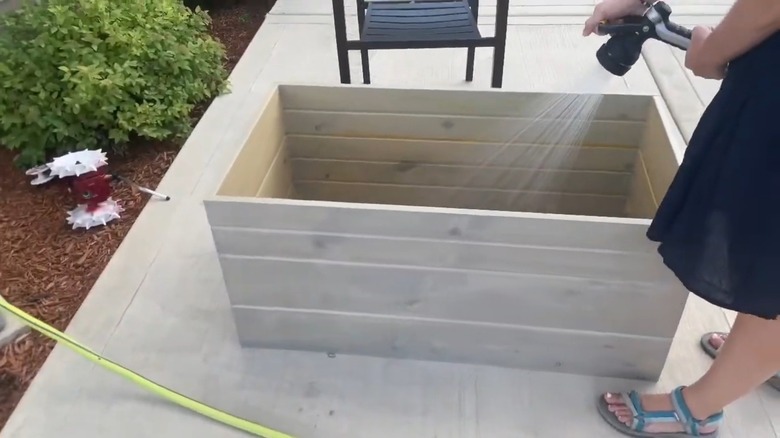
To assemble the DIY soaking tub, first carefully measure and cut your side panels to size, roughly 2 feet wide by 4 feet long by 2 feet high. Then use high-quality, exterior-rated wood glue between the horizontal and vertical panels to build the rectangular tub, clamping the pieces and leave them to dry. For extra security, use a nail gun and nails to reenforce the tub. After, stain the exterior for some color and waterproofing. Most importantly, apply a coat of epoxy to the interior (you can eliminate epoxy bubbles with a blowtorch) and allow it to cure, assuring water tightness. Once cured, you can add another layer of epoxy or simply spray the entire exterior with a layer of clear, water-based spar urethane with an exterior rating. Finally, fill the tub with water and put it to the test. Now you have a chic freestanding tub you'll want to relax in.
Depending on the materials you choose, a DIY tub unconnected to a water source should run a few hundred dollars. If you're considering hooking up a water source to your DIY outdoor soaking tub or indoor luxury soaker, you'll need to factor in those pipes, valves, and installation. Further, as pine is less rot resistant to more expensive woods like hinoki, cedar, or teak, you'll need to re-apply the spar urethane finish at least yearly to make your tub last.