

How To Choose The Best Type Of Patio Swing For Your Outdoor Space

One of the best ways to make your patio the ultimate outdoor entertaining destination is to outfit it with a gorgeous swing. The problem with that? Choosing the best type in the first place. While it's wonderful to enjoy a plethora of choices, the process can soon turn overwhelming: would an A-frame look better or an egg chair? Should it be black to match the outdoor furniture or contrast it? Can a windy day blow your patio furniture away? Clearly, there are many aspects to consider before making a final decision.
When choosing the right patio swing for your outdoor space, start by taking your patio's area dimensions. You don't want the door banging open into the swing or your feet touching the wall as you're swaying in the wind. So, find an obstacle-free area — typically over 3 feet wide on all sides. Next, measure the height if it's a covered patio. On average, swings are raised about 19 inches above ground, though you may need to go higher or lower, based on your height, accessibility or health issues, and overall preferences.
After factoring in clearance, determine whether a traditional patio swing set (often 4 to 5 feet long) will work or if you'd prefer a single seater. Your goals should also play a role in your decision. Despite the space, there's little use in adding a large swing if you aim to live out a retired life away from people and the din of the city.
Choosing between a hanging or freestanding swing
Support beams, or a lack of them, are another significant factor when choosing your patio swing. Hanging swings require proper ceiling support to hold their weight. If you are unsure if your porch can hold the weight of a swing, a structural engineer, a general contractor, or a carpenter can help you determine what is possible. If you are unsure, it's best to leave these calculations to the pros to avoid jeopardizing your household's safety.
However, if you're armed with serious DIY skills and trust yourself to get the job done, know that a single sturdy joist typically supports a two-seater. But if you envision hosting guests frequently over the years, estimate total seating and weight accordingly. For instance, six-seating benches can hold about 700 pounds or more (as noted in the swing specs). Depending on the existing arrangements, you may need to reinforce the ceiling beam — which can be tricky, whether you're using chains or ropes — to install a hanging swing.
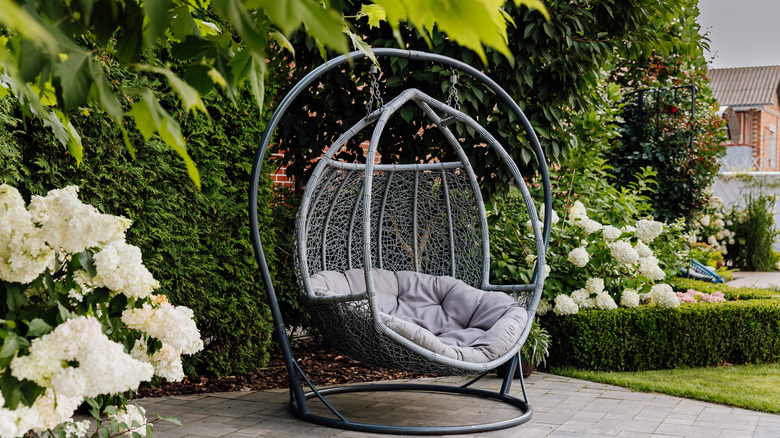
Where beam support is lacking, the patio is uncovered, you're uninterested in assembling heavy structures, or you're temporarily renting, you can choose a freestanding swing instead. Naturally, the floor must be level and even for a pleasant experience. A plus of this an option is that you can move the swing around as you please if you decide to revamp your patio space.
Materials matter, too
While metals like aluminum or steel are highly durable, they can run hot in scorching temperatures, limiting their utility to milder climates. Wrought iron materials, in contrast, are unsuitable in wet regions as they can rust and are difficult to install without support. Metal styles often run contemporary and fit with minimalist or modern style homes. But if you've got a coastal or a farmhouse aesthetic, rattan furniture may suit you better. Since it is often cushioned, it can offer more comfort and may be useful if you're creating a cozy reading nook. But you must keep it covered when it rains, or the material will degrade.
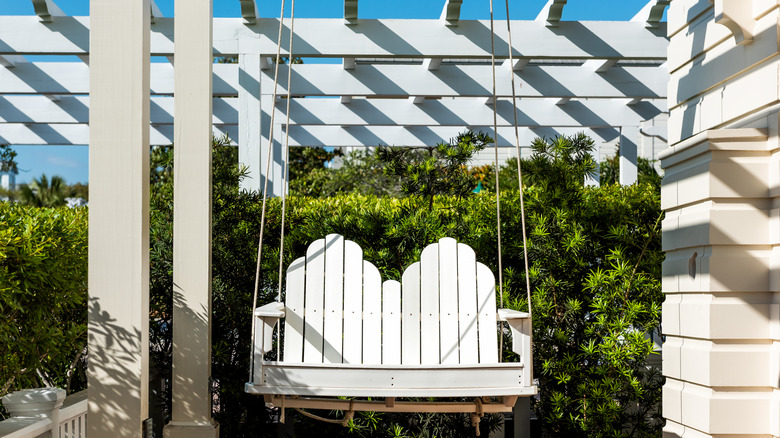
Wood patio swings are a sound choice for a touch of nostalgia and texture, as they wear beautifully, even if left exposed to natural elements. Arguably, this feature also makes them particularly suitable in colder climates. Plus, it's easy to find relatively inexpensive wood options. However, be prepared to seal or repaint them annually to minimize UV damage and rot.
HDPE is another weather-proof material option if you can afford the high price point. Since it's made from recycled plastics, it doesn't show signs of discoloration, rot, or splintering, making it great for busy homes. In addition, it will wear better in coastal areas. Besides, those with eclectic tastes may find HDPE swings in a range of trendy colors. Finally, consider how you'd be using this fixture. Want to laze around? Get a bench with slatted or curved backs, a daybed, or a glider porch swing. But where space is limited, look for egg swings or hammocks.