

5 Disadvantages Of Asphalt Driveways
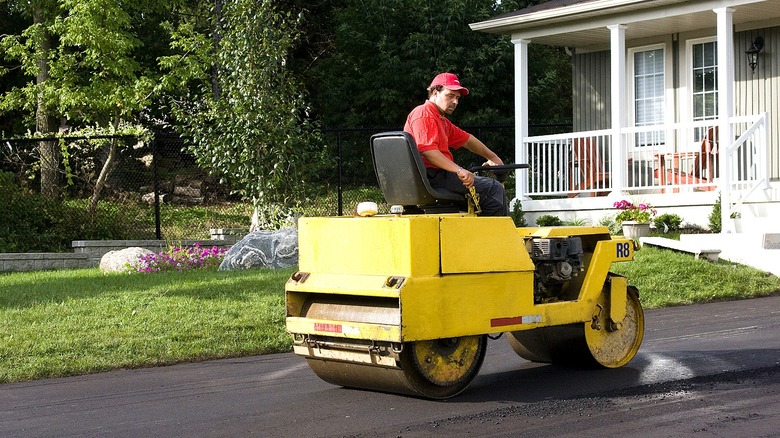
If you're looking to explore your options beyond concrete, asphalt is a popular material to use for driveways. For one, it's often less expensive than concrete. Plus, it can create an attractive smooth finish, dries quickly after installation, and is generally seen as easy to repair. But unfortunately, the asphalt pros seem to stop there. While it's still certainly a viable option for many homeowners, this material has some notable downsides that might cause you to second guess your decision, especially if you don't want to have to put in continuous effort to keep your driveway in good shape. Compared to other driveway materials, asphalt has a middling lifespan and needs more regular maintenance. It can also act up in extreme temperatures, is seen as a negative choice for the environment, and often experiences chemical damage and natural settling that can cause major impacts on its appearance over time.
Of course, there's a reason asphalt is still used, but having a good idea of its cons before you buy can save you a world of trouble down the line. Ripping up old asphalt can easily turn into a task that costs thousands of dollars, so backpedaling isn't exactly easy if you decide that you regret your initial decision. A major demo isn't particularly convenient, either, and could leave you with a mess of a project that's incredibly disruptive to both your routine and your home's appearance. While every driveway material has its own benefits and downsides, choosing asphalt is a gamble that doesn't have great odds.
Asphalt will need to be replaced sooner than other options
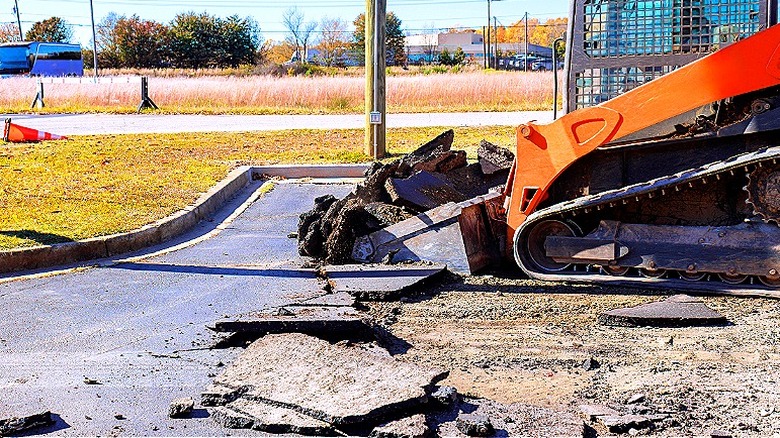
Asphalt's lifespan isn't worryingly short — it can last between 15 and 30 years when it is properly maintained – but compared to some other options, it falls a bit flat. Concrete can hold up for four decades or longer in ideal conditions, while permeable pavers usually last around 20 years or so. Cobblestone tops the list by far, with an expected lifespan that nears a century; brick is another long-lasting, durable option that can stay in good shape for over 25 years.
Of course, you'll have to consider the buy-in with each of these driveway materials. For example, gravel driveways only last around 10 to 15 years, but they're incredibly easy to install (even DIY) and don't require a ton of labor to replace or freshen up. Because of asphalt's relatively low price point, many homeowners see it as a compromise between longevity and cost — few want to shell out up-front for the intensive labor and high price of materials that options like cobblestone require, even if the per-year investment ends up being a good deal in the long run.
If gravel driveways are the equivalent of a budget nightstand from IKEA (low cost, short lifespan) and cobblestone is a handmade piece constructed from solid wood (high cost, long lifespan), asphalt is like a mid-priced armoire from somewhere like West Elm or Pottery Barn that's still made of MDF. While you'll get more time out of it than something cheap, it's not going to become an heirloom.
Asphalt needs to be frequently touched up and maintained
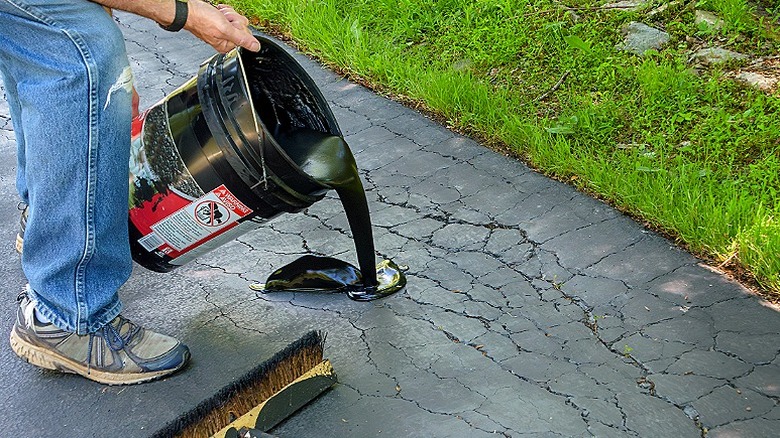
While asphalt will last between 15 and 30 years before needing a full replacement, that doesn't mean that it's completely hands-off in the meantime. Regular cleaning is, of course, needed, and you should keep an eye out for any cracks or potholes that start to develop. If your asphalt driveway is crumbling and it's not coming up on the end of its lifespan, it's also necessary to patch and repair these damaged areas before they get any worse — pits, cracks, potholes, and raveling will only become more severe if they're ignored.
The exact repair schedule will depend on how much wear and tear your driveway gets, both from traffic and certain weather conditions, but one consistent task that you should perform regardless of its state is sealcoating. Every two to five years, an asphalt driveway should be coated with either a bituminous or acrylic-based substance that helps to protect, refinish, and seal the existing material. Without this sealcoat, the binders in the asphalt will start to break down and accelerate its deterioration; it'll also become more prone to damage from the elements and certain chemicals.
Sealing isn't an uncommon maintenance task when it comes to driveways, but options like pavers and cobblestones don't typically require this step. Concrete driveways, on the other hand, benefit from resealing every five or so years, but it's seen more as an optional process that can help to give the material an additional layer of protection rather than an absolute necessity.
Asphalt can experience textural changes in high heat
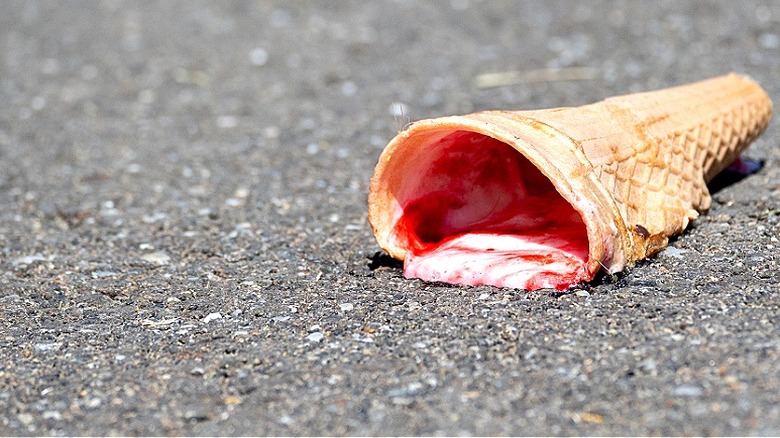
High temperatures don't just create sweaty conditions for people — they can have impacts on the materials in our environment, too. Asphalt is dark. While light-colored driveways made of concrete, for example, can still reach high temperatures, the coloring of asphalt can cause the material to absorb excessive amounts of heat, especially during the dog days of summer. This is uncomfortable for people and can even cause paw injuries for pets, but because of asphalt's unique composition, this can also result in long-term damage.
As the sun heats asphalt and temperatures rise above 95 degrees Fahrenheit, it becomes more pliable and prone to damage. Significant expansion and contraction can also occur as weather fluctuates, resulting in cracks, potholes, and general brittleness. This is especially important to consider if you live somewhere with more extreme swings in weather — think hot, sunny days punctuated by heavy storms that drop the temperature outdoors in a matter of hours. Quick shifts and the damage they cause can lead you down a path of near-constant maintenance, especially considering that problems will only get worse over time if they're ignored.
While you might be thinking that you're safe if you live in a chillier area, this isn't the case, either. Freeze-thaw cycles can also cause damage to your asphalt driveway, especially if it's poorly sealed or there are existing cracks. Of course, regular sealing and maintenance can help to minimize the risk of this kind of damage, but if you live somewhere that sees extreme weather — hot or cold — it'll likely mean quite a bit of extra work.
Asphalt contributes to environmental damage
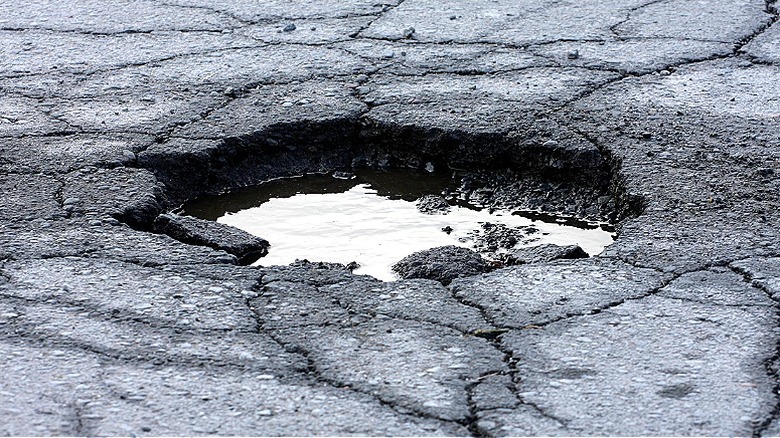
Asphalt isn't an eco-friendly driveway material. In fact, it can cause harm to the environment in several different ways. We'll start with the most obvious: asphalt is made of a mix of aggregates and a binder, similar to concrete. This binder, however, is petroleum-based, meaning it's a non-renewable resource. Nowadays, old asphalt is often processed into aggregate and mixed with more binder to pave new roads, which helps to cut down on the negative impact, but that doesn't change the fact that resources are still being depleted. Additionally, the production of asphalt releases harmful chemicals into the air, contributing to overall pollution – think VOCs and sulfur dioxide.
Once the asphalt is actually in place, there are additional environmental concerns. Because asphalt is impermeable if it's not damaged, it can result in run-off, putting areas at increased risk of flooding, and in some cases, causing negative effects on water quality. If water flows down driveways and through the asphalt-coated streets, it can pick up debris and chemicals before being dumped right into natural sources of water, like lakes and rivers. If it stays in the area and simply soaks into the ground, however, our drinking water remains safer.
Finally, there's the impact of the urban heat island effect. Asphalt is great at absorbing and holding on to heat. This turns it into a burn-inducing surface on the small scale, but it can also result in an overall hotter climate. Areas with large amounts of asphalt, like cities, can feel warmer than those with an adequate amount of green space, worsening the impacts of already-extreme summers.
Asphalt could undergo changes in appearance
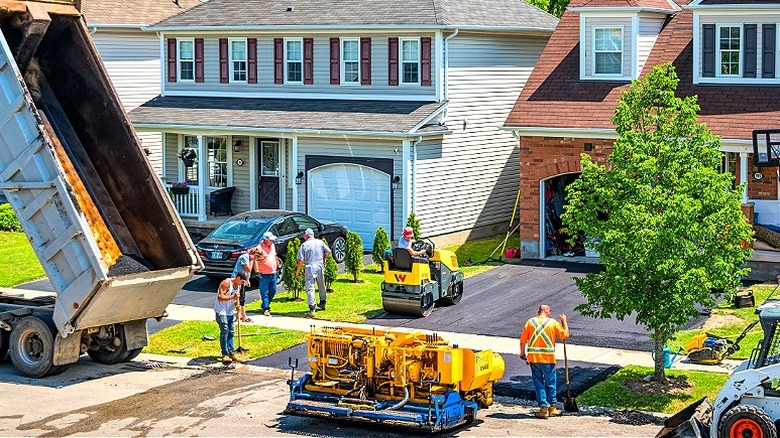
If you've become absolutely enamored by the look of your fresh, smooth asphalt driveway, we don't blame you — one of the major pros of this material is its flawless-looking appearance. Don't expect it to last forever, though. After it's been poured, new asphalt will take some time to fully settle and could start to develop some unsightly lumps and bumps. While most of these problems will go away over time, there's a high chance they'll be replaced by other kinds of damage. We've already covered the impacts of high temperatures and changes in weather that could leave you with cracks, potholes, and raggedy edges, but there's one more thing you have to consider: chemicals.
Unfortunately, many of the things your asphalt driveway has a high chance of coming into contact with could also cause its downfall. This material is sensitive to de-icing salt, which could mean major trouble for those in cold areas. Because of the composition of its binder, it's also prone to damage from petroleum-based products like gasoline and engine oil. If you're working on your car and suffer a spill or a leak, these substances will dissolve the binder underneath, leaving you with a pothole full of aggregate rather than a solid surface.
At the end of the day, asphalt is sensitive. While it's not the worst option for a driveway, it's certainly not the best, especially if you don't want to baby it. More durable choices like concrete, permeable pavers, and cobblestones don't require nearly as much maintenance, which is exactly what most of us are looking for.