

4 Good Reasons Not To Ditch Landscape Fabric Just Yet
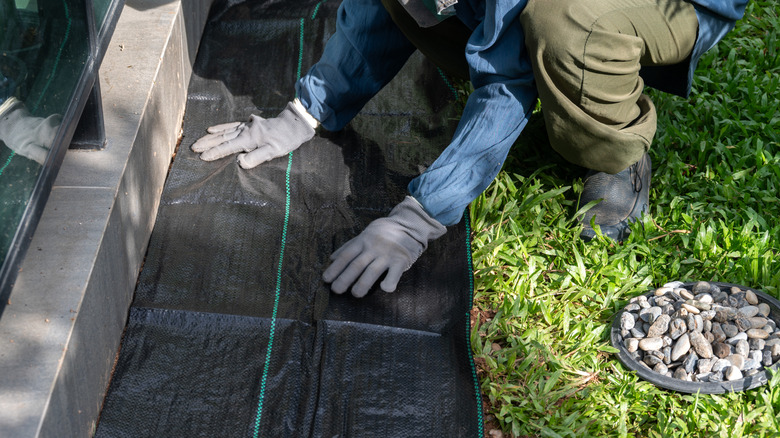
We may receive a commission on purchases made from links.
Increasingly, gardeners are becoming wise to the drawbacks of landscape fabric, a barrier that's traditionally placed underneath mulch to stop weeds from growing through it. The porous fabric, which is generally made from plastic or polyester, can get clogged, preventing water and air from reaching plant roots. While it's effective in the short term, it's not a surefire solution for pesky weeds. Seeds can take root on top of landscape fabric, while resource-starved plant roots can push through it. So much for protecting against weeds! All you're left with is a mess of torn fibers.
If landscape fabric is out and more homeowners are choosing natural lawn solutions and weed eradication options, you may want to ditch it, too. Not so fast! There are certain circumstances in which this notorious fabric can be legitimately helpful in the garden. When you're laying a gravel pathway or shed foundation, killing off weeds before building a garden, or sheet mulching a raised bed, you'll be glad you kept that roll of landscape fabric in your garage.
Landscape fabric might have a place in your yard, but you need to take some steps to minimize the damage caused when you use this plastic-based material around living things. Don't cover the roots of any plants you want to keep around, and replace the material the minute it starts showing signs of wear. The quality of the material is also important. Although it's pricey at well over $100 a roll, an agricultural fabric like Dewitt Sunbelt Weed Barrier Fabric will probably last longer than the thinner fabrics commonly sold at big box retailers.
It's helpful for lining gravel paths and patios
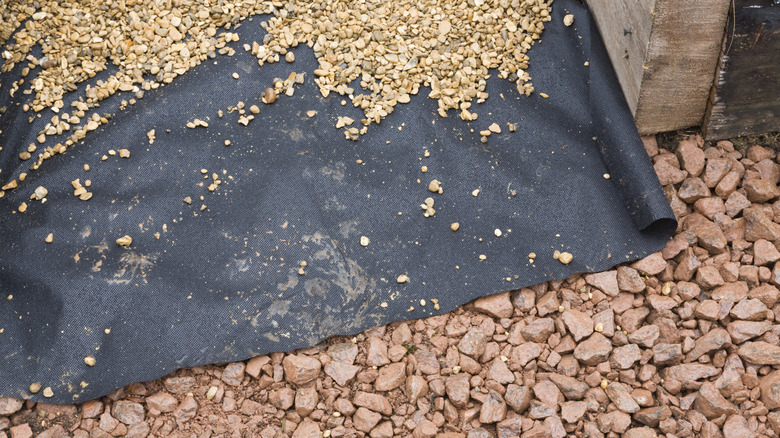
While its use in gardens or yards is more controversial, landscape fabric shines in hardscaping projects, such as patio and path construction. If you're using this durable material under the gravel surface of an outdoor seating area — replete with weatherproof furniture and maybe some potted plants — you don't have to worry about the fabric preventing air and water from reaching plant roots. In addition to depriving weeds of sunlight, landscape fabric adds stability to the soil. If you can stop the gravel from compressing into the soil, you can save money and time spent on maintenance because you won't have to replenish it as frequently.
Depending on the type of landscaping project you're doing, you can choose between woven (traditional) and nonwoven landscape fabric. It makes sense that traditional landscape fabric could doom your French drain, but it may be the best choice for protecting an eroding slope where drainage isn't an issue. Nonwoven landscape fabric is more permeable than its woven counterpart, making it good for use in French drains or under a pea gravel courtyard. No matter which type of landscaping fabric you decide is best for your project, level the ground before laying it down. Aim for at least 6 inches of overlap between sheets and use landscape staples or pins to keep them in place before adding a layer of gravel. Later, you'll still need to watch for weeds. They may not take root as easily, but they can still grow through the stones.
It can suppress weeds for a few years
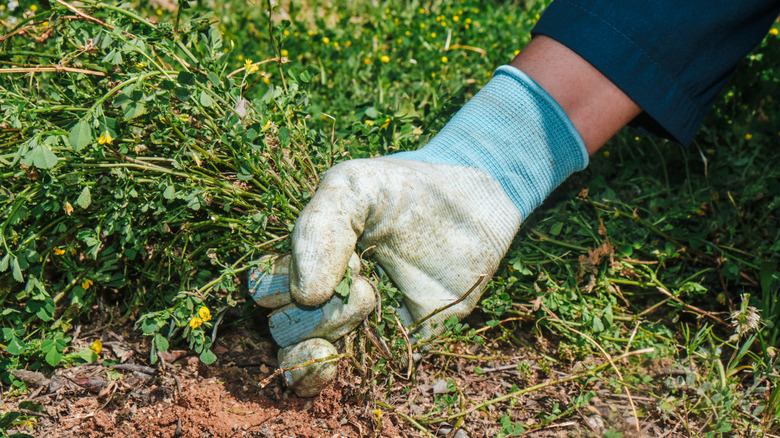
If you have realistic expectations around weed growth and avoid using herbicides, you can tap into the weed-suppressing properties of woven landscape fabric. It's breathable, mildly permeable, and will stop some weed seedlings from getting established. Depending on your specific soil type and garden environment, landscape fabric may keep weeds away for a few years.
To make the most of this material's weed-preventing abilities, mix some compost or your preferred soil amendment into your garden. This locks nutrients into the soil, ensuring it stays as healthy as possible underneath the landscape fabric. Then lay some high-quality woven fabric on the soil and add a layer of organic mulch. Use thick mulch — for example, 3 to 6 inches of wood chips — as fine mulch can break down within a year.
Woven landscape fabric tends to unravel at the ends; prevent fraying by folding the edge over before you staple it to the ground. To reduce wrinkling, pull the roll tightly as you push or hammer in a landscape staple every 12 inches. Overlapping the fabric sheets by 1 foot reduces gaps for weeds to pop up between. Remember, too, that this fabric won't last forever. Dirt clogs the pores between the intersecting threads of the material, and you'll eventually need to replace it. Keep it as a line item in your gardening budget.
It's a good base for built structures in a yard
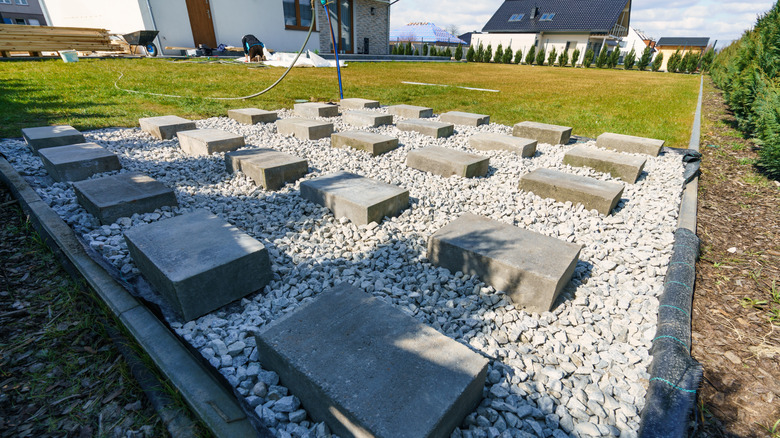
If you're building a garden shed, one place in your yard you shouldn't ditch landscape fabric is the foundation. The material is designed to stabilize the soil under structures like retaining walls, so it makes sense to lay it underneath the gravel under a shed. You can also use it underneath benches, pergolas, playground equipment, large planters, or anything else you're permanently adding to your yard.
Along with the layer of gravel, permeable landscape fabric will improve soil stability, stop weeds poking out from underneath structures, and help keep the ground dry when it rains. Laying landscape fabric outside the footprint of your shed or bench can make it easier to maintain over time. You may even be able to reduce your mowing frequency.
Before laying down your landscape fabric, remove any garden plants, turfgrass, and weeds that are already growing there, as well as any rocks. Then level the soil. Under open structures where people walk, such as garden benches or pergolas, it's vital to secure the landscape fabric firmly to the ground. Place pins or landscape staples between 6 and 12 inches apart. Bonus: Landscape fabric may last longer underneath a gravel layer and a built structure, meaning you won't need to replace it as often.
It's sometimes useful in a raised garden bed
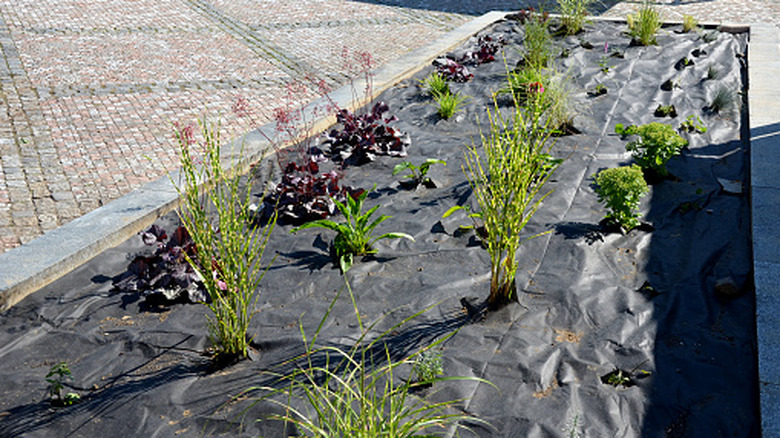
Although it's generally advisable not to use landscape fabric in your raised beds, some gardeners have had success with it, particularly for weed and erosion control. It may keep stray greenery from growing in your beds, where it competes with your vegetables, herbs, or ornamentals for water and nutrients. Landscape fabric can also act as a mulch, helping to keep the soil moist and potentially reducing the need for irrigation. Got a raised garden bed built from timber planks? Soil escapes through the gaps between the planks, washing away over time. Line it with landscape fabric to keep the soil inside the bed.
The key is investing in a high-quality, sturdy woven landscape fabric, like this 5-ounce ECOgardener Premium Weed Barrier. It costs about $32 for a 50-foot roll. For gardeners who are trying to reduce their use of plastic, Sandbaggy Biodegradable Landscape Fabric is an American-made, paper-based alternative to traditional products that costs almost $93 a roll.
First, measure the dimensions of your raised garden bed, and then cut the sheets of landscape fabric to fit. Give yourself at least 4- to 6-inch of overhang on all sides. If scissors are fraying the edges of the material, you can burn the fabric with a torch for a cleaner finish. Likewise, you can use a torch to burn holes in the fabric for plants. Wear a respirator fitted with an activated carbon filter. Avoid the one mistake everyone makes when using landscape fabric to prevent weeds — not using enough staples when securing it to the soil.