

It Was In Every '30s Kitchen — Now It's A Secondhand Appliance To Find For Vintage Charm

We may receive a commission on purchases made from links.
As it turns out, "They Don't Make Them Like They Used To" is more than a Kenny Rogers album, especially when it comes to kitchen appliances. Modern kitchenware tends to rely on cheaper materials and favors efficiency over longevity compared to their earlier counterparts. They also have a lot more tech that can fail. High-tech appliances gained traction with the addition of microchips in appliances in the late 1990s and have since taken on a life of their own, but sometimes less is more. That adherence to simplicity is why the vintage Hotpoint toaster is a vintage kitchen appliance that's now a thrift store gem.
Hotpoint toasters were made from the 1910s through the 1930s by Edison Electric Appliance Co. (now the Hotpoint division of General Electric). This patented electric two-slice toaster was crafted from nickel-plated sheet metal with a geometric, Art Deco design that was a marker of its time. Doors on either side drop down so you can insert two slices of bread, and the internal core generates quick heat for toasted perfection. In a lot of cases, they still work flawlessly 100 years later. Between its utility and charming design, an antique Hotpoint toaster can be counted among the Art Deco treasures you should be thrifting.
How to find and use a vintage Hotpoint toaster
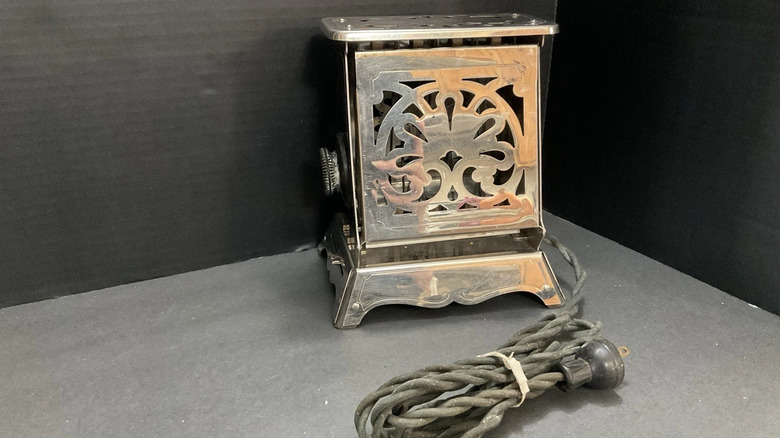
An Art Deco toaster is considered one of the valuable vintage appliances you should always look for at thrift stores. There are many functional Hotpoint models for sale on secondhand sites like eBay and Etsy — a testament to their longevity and durability. A still-working model can be priced anywhere from $25 to over $100 if sold with its original box.
Some vintage Hotpoint enthusiasts say these models from the 1930s (or earlier) work even better than contemporary toasters. However, there are safety precautions to take before plugging in and operating a century-old appliance. First, inspect the cord for fraying and replace a damaged cord with a new one that has the same voltage and amperage rating (a professional is strongly encouraged here). Since these toasters were made before grounding electrical appliances was practiced, some cords in good condition can still be deemed unsafe by today's standards.
You'll also want to keep in mind that toasters manufactured during this time period sometimes relied on asbestos as an insulator. While it is unlikely to be released unless the appliance is damaged or dismantled, do not use your toaster if you see any deteriorating insulation or crumbly fibers. Finally, expect the entire toaster to get very hot and toast its contents rather quickly. Be sure to keep an eye on the toast and only touch the handles to retrieve it.