

The Essential Part Of The Home You Shouldn't Lubricate With WD-40
We may receive a commission on purchases made from links.
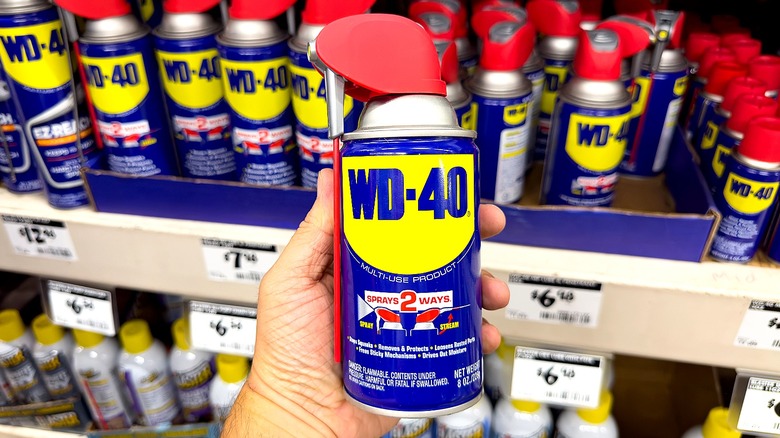
For car lovers, DIYers, and those who make repairs everywhere, WD-40 has a become a superstar. Joining the ranks of other multipurpose items to keep on hand, like superglue and duct tape, this colorful can has been known to get just about anything moving. Unexpected ways you can used WD-40 around the house include removing sticky residue, cleaning up stains, and minimizing the appearance of scratches. So it seems like there's very little that's outside of WD-40's wheelhouse, yet it does have its limitations. One job that it shouldn't be used for, even though it seems perfect for the task, is lubricating locks.
Stiff locks are a major pain, and in some cases, even a source of mild panic, but they're also fairly complicated pieces of machinery. Preventing door keys from sticking often does require lubrication (if nothing's broken, you just need to break up any debris that's found its way in to get the pins moving again), but only certain products are up for the task. Dry lubricants, like 3-In-One Lock Dry Lube, often made using graphite or Teflon, are common recommendations, but WD-40 doesn't make the cut.
This is primarily because it can gum up internal components and make your lock more difficult to use over time. While some WD-40 might seem like it's solved the problem right out of the gate, this satisfaction will soon turn to disappointment as you continue using the lock.
Other reasons WD-40 won't work for sticky locks
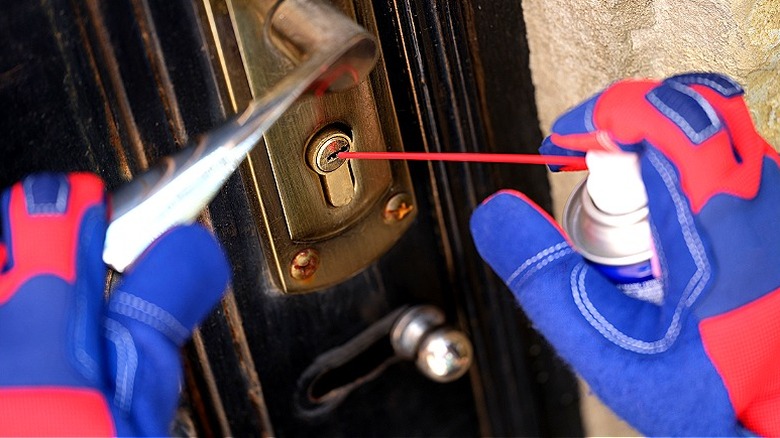
While a gummed-up lock can provide more than enough frustration on its own, this side effect isn't the only reason you shouldn't reach for your can of WD-40 for this task. WD-40 isn't just a lubricant – it's also a solvent that can help to break down material and dirt. While this is a lovely feature if you're using it to lube up your dirty suspension or get your windows shining, it can also deteriorate any of the lubricants that are already in the lock, accelerating this sticky effect. This leaves the lock vulnerable to even more dirt and dust buildup, taking you all the way back to square one.
There's also the fact that WD-40 isn't intended for use in cold weather. If you're dealing with a tricky lock on your front door or a garden shed, the WD-40 can freeze inside, causing you a world of trouble. While WD-40 certainly seems like a logical solution to a sticky lock, and there are plenty of situations where this little can will come in handy, you're better off working with dry lubricants designed specifically for use in keyholes. They'll be just as easy to apply, and over time, you won't have to suffer through additional sticking issues and damage.