

The Medicinal Herb Gardeners Rarely Grow Anymore

Are you interested in bringing some uniqueness to your garden? One way you might try is to look to some of the most overlooked garden plants around, like the cheerful, offbeat flowering herb Acmella oleracea, which boasts intriguing common names like toothache plant, buzz buttons, eyeball plant, and electric daisy! With names like that, you won't be surprised that this compact sunny flower, which is too often ignored by modern gardeners, has both a unique look and history as a medicinal plant.
Toothache plant does indeed look a bit like a daisy without its petals. The button-like flowers sport bright discs with vivid centers. Some varieties have contrasting colors at the rim and center – often yellow surrounding orange or red — giving rise to their "eyeball" nicknames, while others might be only yellow.
So why "toothache plant"? As it turns out, A. oleracea is one of the plants with medicinal properties you can grow in your garden. The flowering herb contains the compound known as spilanthol. This alkamide (fatty acid) reputedly acts as a numbing agent when chewed, thus relieving tooth and gum aches. That numbness is often preceded by a tingling sensation, which can explain the herb's secondary nicknames of "buzz button" and "electric daisy."
The medicinal qualities of the plant were also said to include a cure for scurvy (likely due to its high vitamin C content) and other ailments, ranging from arthritis to a snakebite. While only your dentist and doctor can tell you for sure whether these therapies are still safe, if nothing else growing "toothache plant" makes for an interesting conversation starter!
Give this tender annual plenty of sun and moist soil
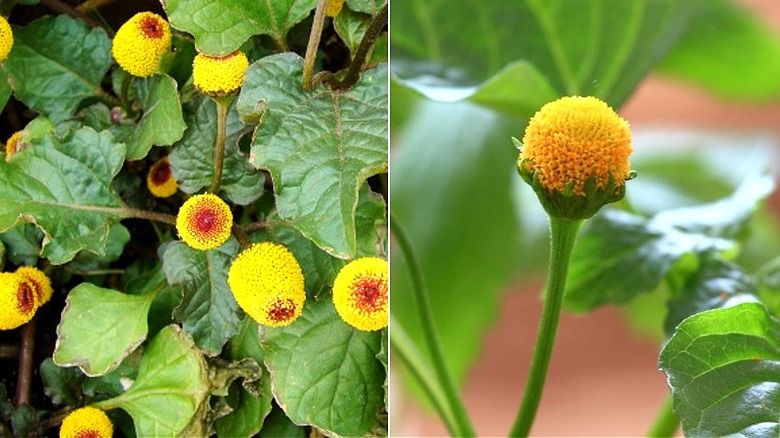
Because toothache plant is only perennial in USDA zones 9 to 11, many gardeners replant it each year. As a sunny annual that's great for your pollinator garden, toothache plant attracts butterflies and bees, along with songbirds and fireflies. Grow toothache plant as an annual if you live in cool or temperate climates. Its compact size works well in the front edge of an ornamental border, or in hanging baskets or other containers. Of course, the plant would also make a unique addition to a themed garden, such as a historical medicinal plot, or even an "unusual edibles" garden.
Toothache plant prefers a moist, but not boggy, growing site. It's especially tolerant of high heat and humidity. Set this cheerful ornamental in a spot where it can receive either full sun or partial sun. When planting several toothache seedlings, establish them at least 12 inches apart.
If you grow heat-loving toothache plant from seed, growers recommend that you wait until the soil temperature is about 70 degrees Fahrenheit. When sowing, don't bury the seeds in the soil, as they need sunlight in order to sprout. Keep the soil moist until germination, which happens in one to two weeks. Of course, you can also start seeds indoors, about a month before you anticipate transplanting them to the garden.