

What To Do Before September Ends To Prepare Your Driveway For Colder Weather

Late September brings the final window of mild weather before freezing temperatures take over for a large part of the country, making it the perfect time to get your driveway winter-ready. Between heavy frost and relentless freeze-thaw cycles, any preexisting surface damage has the potential to aggressively expand over the cold season if left unaddressed, causing even more damage. A weekend afternoon spent tending to your driveway now is the single best way to prevent structural sub-base damage and keep your home's curb appeal intact all winter long.
To prep your home's driveway for winter, there are two main tasks to pay particular attention to: inspecting it for cracks and checking for any drainage issues. Technically, you can do these simple checks during any time of the year, but prioritizing them before fall ends guarantees sealants, for example, cure properly before the first hard freeze. In fact, taking on these tasks is just one of many smart ways to make your driveway look new again while getting your home ready for the colder months ahead.
Good sealants and leveling products only work if the weather cooperates. Most cold-pour fillers and patch kits need a solid 24 to 48 hours of dry weather and daytime temps holding above 50 degrees Fahrenheit to cure properly. If you push this project past September, there's a good chance that the weather won't be in your favor, and the material won't stick. Come the first big snowfall and thaw, that filler will pop right back out, leaving your driveway wide open to winter water damage.
How to inspect your driveway for cracks
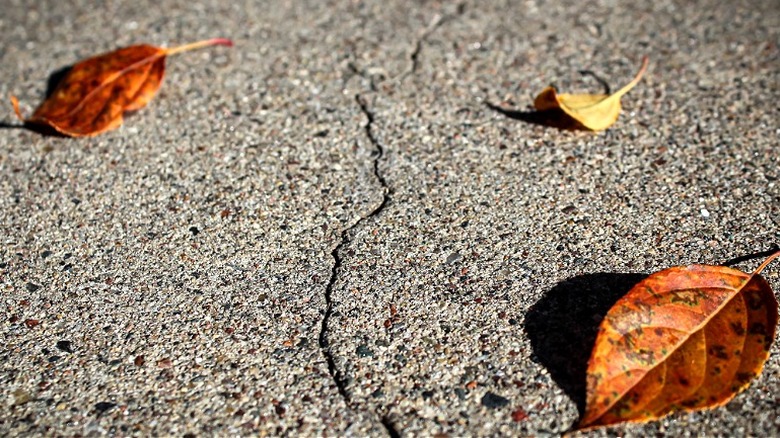
Even though you likely drive on your driveway multiple times a week, you might easily miss subtle signs of wear and tear if you're not looking closely. Cracks (yes, even small ones) can quickly expand into major structural hazards once freezing weather sets in. Over time, this can lead to severe sub-base damage, potentially costing you thousands of dollars in driveway resurfacing or replacement.
To really catch problems early and inspect your home's driveway thoroughly, walk the entire length with a close eye. Hairline cracks are easy to dismiss, but left exposed, rain and melting snow will creep into those tiny fissures, freeze, expand, and force the pavement apart from the inside out. If you find cracks wide enough to hold standing water or connecting into larger alligator patterns, you'll need to fix them immediately to avoid structural foundation failure. Understanding why this happens is important, since trapped moisture and poor preparation are the real reasons driveway cracks keep coming back.
Once you have found all the problem spots, you'll need to prepare the cracks or holes for sealing. Clean out dirt and any loose debris from all cracks using a stiff wire brush or leaf blower, and make sure the area is 100% dry before doing anything else. This prep work guarantees the sealant creates a tight, durable bond with the surface. Then, fill cracks up to a half-inch wide with a cold-pour asphalt or masonry crack filler before ambient temperatures regularly fall below 50 degrees Fahrenheit. Note, if you have a crack or crumbling gouge winder than one-half inch, use an asphalt mastic, heavy-duty patching compound, or see a professional contractor to stop the damage from spreading deeper into the foundation of your driveway.
How to fix drainage and standing water issues
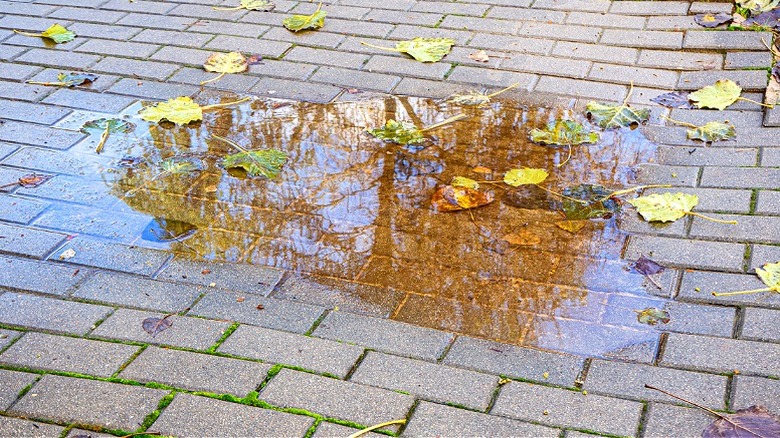
If your driveway retains standing water after a big rainfall, you need to address this seemingly innocuous issue before winter hits. Without proper water drainage, you risk severe surface erosion and dangerous ice hazards once the temperatures drop below freezing.
Start this inspection by walking your driveway a day or two after a downpour to flag any low spots where water still sits. Those persistent puddles are exact maps of where winter ice will form when the temps drop. While you're out there, clear away thick turf edges and fallen leaves along the sides — if runoff can't shed off the edges, it backs right up onto the pavement. Take a quick look at your downspouts, too, and extend them at least 4 feet from the edge of the driveway so you aren't feeding water straight into it.
How you level out driveway dips comes down to material and how deep the depression goes. For asphalt, deep dips can be fixed with cold patches packed in tight layers, while shallow "birdbaths" do better with a thin acrylic surface leveler to get stagnant water moving again. Concrete needs a different strategy entirely, however. Shallow dips can be smoothed over, but sunken slabs usually need mudjacking to raise the concrete back to the proper grade. Reviewing the essential must-do tasks to prepare your concrete driveway for winter will help to ensure your slab remains level and damage-free through freeze-thaw cycles. For a gravel driveway, re-grading the stones and filling in low ruts will keep water from pooling and washing away your rocks during any periods of snow melting.