

What Can I Put On My Cool-Season Lawn In September?

We may receive a commission on purchases made from links.
Lawns in the upper half of the United States are cool-season, which means they perform best with cool-season grasses like Kentucky Bluegrass (Poa pratensis), hardy in USDA zones 3 to 7, or a Fescue (Festuca) variant, hardy in zones 4 to 8. But just because these grasses prefer cold temperatures doesn't mean they can be neglected during chillier weather. As with any other plant in your yard, a lawn full of cool-season grass needs regular maintenance to stay in peak condition, and that upkeep will change with the seasons. For instance, September is an important time for cool-season lawns since it's typically the last chance to care for the grass before it goes dormant once the temperature drops. This is a great time to treat the soil and ensure the grass stays healthy over the winter by adding things like insecticides, soil additions, and a new layer of grass seed.
The list of ways you can potentially treat your cool-season grass in September can be quite long, and depending how far north you live, you may not have long until the temperature gets low enough to trigger dormancy (around 50 degrees Fahrenheit). However, that doesn't mean you can't still get plenty done. For a simple yet effective gardening itinerary, just add fertilizer, remove any weeds, and overseed your lawn to toughen it up. If your lawn is already in good health, these three tasks should be enough to make your cool-season lawn flourish in the spring. Of course, there's a lot more lawn care to do in September if you want to take your cool-season grass to the next level.
Lawn treatments to apply in September
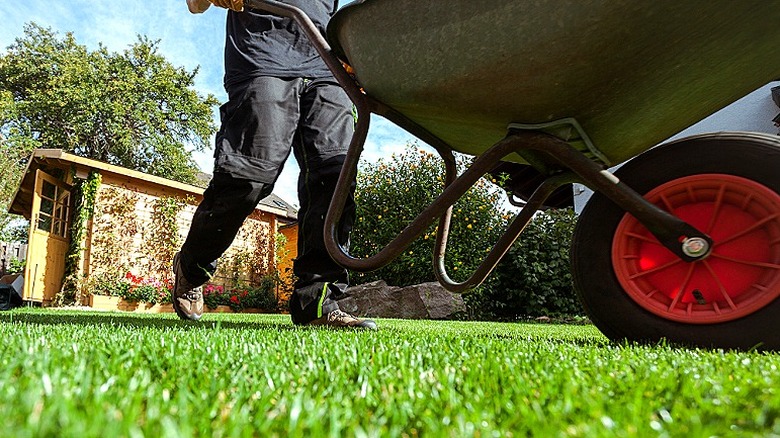
Healthy soil is vital for a healthy lawn, and September is a great time to make sure your soil is in tip-top shape. To this end, you may want to take this time to test your soil with a soil test kit, like a MySoil Test Kit (Amazon, $34.99), that will inform you whether your soil is lacking in any nutrients or has an unfavorable pH level. Once you have the results, you can use soil additions like lime, phosphate, or other options that can boost the health and productivity of your garden soil. Along with diagnosing any chemical deficiencies, this is also the best month to aerate or dethatch cool-season lawns. Doing so will help the soil breathe, making it healthier for its hibernation period.
September is the month to eliminate all manner of annoyance from your cool-season lawn, including weeds, pests, and fungi. Herb-, insect-, and fungicides are all fair game around this time, though you should take extra care with the weed killer you use. To avoid having to deal with weeds during the winter, you should utilize both pre-emergent and post-emergent herbicides. The former will deal with weeds before they can grow, while the ladder ensures any existing weeds won't pop back up. Keep in mind that the colder it is, the less effective post-emergent herbicides tend to be.
How to prepare your lawn for winter

It's easy to get caught up in all the potential treatments for a cool-season lawn, but some of the most important things you can do for your grass in September are also the most basic. As autumn comes around and leaves start to fall, make sure they don't pile up on your lawn. Keep the grass clear of any debris even after it's gone dormant to make things easier on the plant. You should also continue to mow the grass (potentially using the best lawn mower setting for Kentucky Bluegrass), but stop once it enters its hibernation phase. This is also when you should lay down any new sod or, as mentioned before, grass seed.
There's a lot to do to prepare your lawn for winter, but breaking down what your cool-season lawn needs specifically will make things more manageable. To make the most use out of the last few good gardening weeks in September, assess what your lawn is lacking, what it needs protection from, and add the treatments before the month ends. After all, completing certain gardening tasks in September will mean less work in the spring.