

Turn Empty Litter Containers Into Easy-To-Build Raised Garden Beds For Potatoes
We may receive a commission on purchases made from links.
Do you buy your cat litter in those plastic containers, like those used by Purina Tidy Cats? If you've kept a bunch of these empty buckets and the3y're sitting in your garage just waiting for some inspiration on what you could use them for, you might like to follow TikTokker notjustaboulder_rock's example and turn them into a simple raised garden bed you can use to grow potatoes. In the clip, the creator drills lots of drainage holes in each container, puts four of them together, and wraps them in landscape fabric before adding soil and seed potatoes.
If you've ever planted potatoes in a garden, you'll know that you're probably never going to get rid of them from that area because new ones will just keep cropping up. That's why growing delicious potatoes in containers is a much better idea. For this easy-to-build raised garden bed, you're going to need four empty litter containers, a drill with a hole-saw bit, a roll of landscape fabric, and a staple gun, like this heavy-duty one from the Grenpro store. To raise the containers off the ground a little to improve drainage, you might want to find a wooden pallet, and, of course, you'll also need some potting soil and seed potatoes.
Assembling your raised bed for growing potatoes
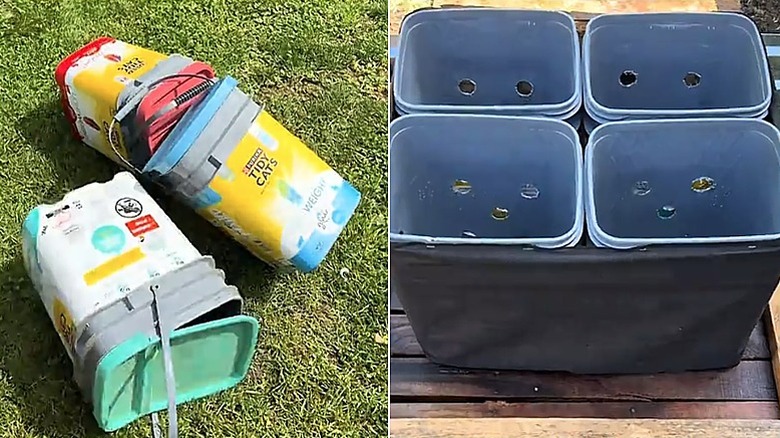
To begin your project, remove the lids from the four containers. Next, take your drill with its hole saw bit and drill around five holes in the base of each one and a similar number of holes in two of the sides, as well as just a couple of holes in the other two sides. This will ensure that your raised garden bed has excellent drainage and the soil at the base won't remain too soggy, resulting in your plants getting root rot. Now, place your containers on the pallet so that they form a square-ish garden bed with four compartments lifted off the ground allowing extra water to drain out freely.
@notjustaboulder_rock How to repurpose empty cat litter containers into a potato garden! #gardenhacks#gardening#potatogarden#recycle#gardenproject
Take your roll of landscape fabric and wrap it right around all four sides to totally enclose the litter containers. This will hold in the soil while making it look more like a raised bed and less like a collection of kitty litter buckets. Using the staple gun, attach the fabric to the tops of the containers on all four sides. Tuck the other end of the fabric under the buckets and also staple this in place. Once all of this is done, your new garden bed is ready for filling and planting. You might be pleased to know that you can even use this bed to plant potatoes in the fall for a late-season harvest, as they're essentially a cool-season crop.
Planting your seed potatoes
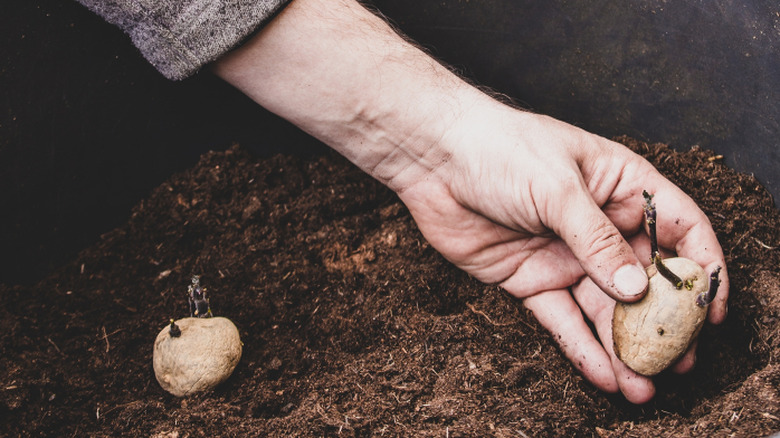
Fill all of your containers about halfway with a good-quality potting soil or compost mixed with soilless materials, such as sand, coco coir, and vermiculite. You'll be adding more soil as the plants start to grow, as is the norm when growing potatoes. You can leave your seed potatoes whole or cut them into pieces, ensuring each piece has at least one eye or growth point. You'll probably only want to place around two to three seed potato pieces on top of the soil in each container. Then, all that's left to do is cover these with more potting soil and water thoroughly.
This is such a clever way to build a raised garden bed that you could easily use the idea with any type of plastic buckets or containers that you might have a surplus of. You could also use this concept to grow other edibles, like sweet potatoes, carrots, or beets. The containers are certainly deep enough to accommodate most root crops adequately. For plants other than potatoes, fill the buckets to the top with potting soil. Just remember that there are plants you should never grow with potatoes, so if you want to grow spuds, it's probably best to dedicate one entire bed to them. Of course, if you make multiple beds, you could also grow non-root crops such as tomatoes, cucumbers, peppers, or brassicas in these. Just add vertical supports as needed.