

The Easy-To-Find Corningware Pattern That Collectors Want For Its Autumnal Charm

We may receive a commission on purchases made from links.
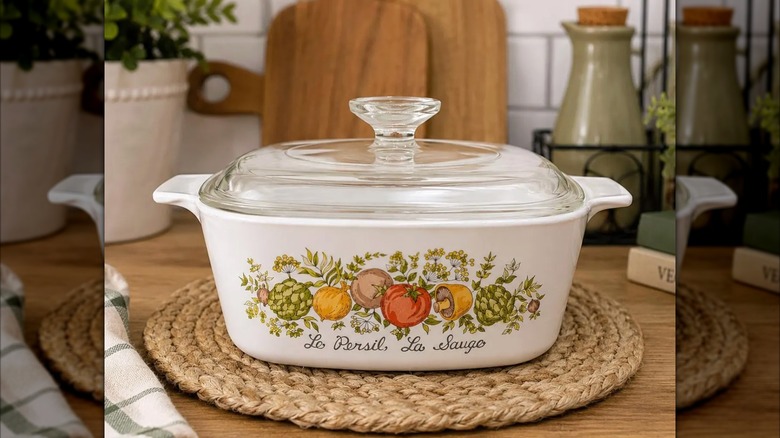
In the world of antiquing, rarity is often associated with value. However, some pieces prove that just because something is easy to find doesn't make it any less valuable — literally and figuratively. For example, the Spice O' Life line from Corningware is one of the most common in the company's catalog. Produced between 1972 and 1987, this collection included a range of kitchenware from skillets and saucepans to casserole dishes and coffee percolaters. The design features an arrangement of produce in front of a floral motif all printed on a white ceramic base. Overall, this pattern exudes a ton of autumnal charm, making it a great addition to your fall decor. Luckily, these dishes can be found in abundance, unlike this other rare thrift store gem from the '80s.
The Spice O' Life line was one of most-produced collections by Corningware, which means that all sorts of pieces pop up in thrift stores, antique malls, and online marketplaces. If you're trying to find one of these antiques out in the wild, make sure to familiarize yourself with the pattern. The design will vary slightly depending on the dish, but all will have tomatoes, onions, mushrooms, and artichokes in a line amid leaves and flowers. Hues of yellow, orange, and green make this collection a no-brainer for cozy autumn table settings.
Spice O' Life pieces made closer to the beginning of the pattern's run will also include French ingredient names like "L'Echalote" or "La Marjolaine." Once you've spotted what you suspect to be genuine Corningware, you can verify the piece by checking the underside for a maker's mark. During the period Spice O' Life patterns were being made, from 1972 to 1987, the company marked their pieces with "CorningWare" in one word and "Made in U.S.A."
Corningware's Spice O' Life pattern is cozy and delightful
A vintage Corningware piece can be more than just a pretty thing to display in your china cabinet. These dishes are also especially durable. Despite looking like white ceramic, Corningware's dishes made before 1998 are actually made of Pyroceram, a material developed by company researcher, Stanley Donald Stookey. Pyroceram is formed using extremely high temperatures, which makes it very heat-tolerant and shatter-resistant. Unlike other dishware at the time, Corningware pieces could be put in the oven, in the refrigerator, in a microwave, or a dishwasher without worrying about temperature extremes. The Spice O' Life pattern came out before Corningware stopped using Pyroceram, so you shouldn't have to worry about missing out on the added practicality, but to be safe, you should check your dish for a mark that says "not for stovetop use." Don't forget to also grab the lid if the piece comes with one; even if you don't plan on using it, you can turn old casserole lids into the cutest hanging bird baths.
The price of a Spice O' Life piece can vary depending on the condition, but unless you stumble upon it in person, you can expect to pay up to $50 online for one of these Corningware pieces. However, larger pieces and full sets will cost more. That makes this pattern cost about the same as modern dishware, but much less than the Shadow Iris pattern, another soft and subtle Corningware pattern collectors dream of finding.