

We Asked Gardeners Which Shade-Tolerant Plants Add The Most Color To Your Garden
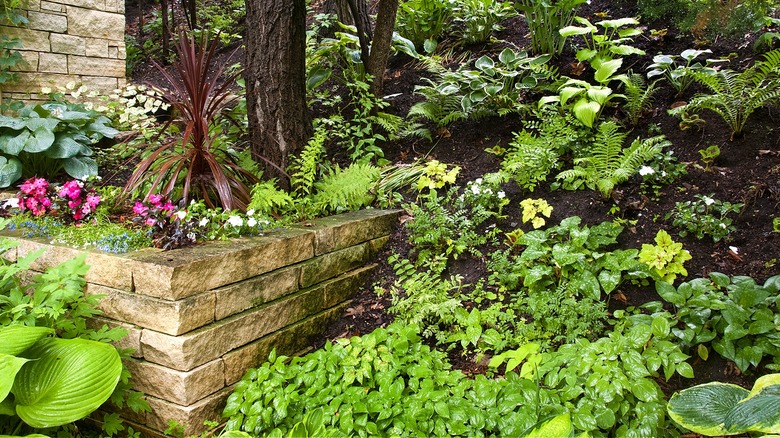
Shade gardens don't have to be the moody, dark corner of your landscape design. While it's true that areas that receive less sunlight limit the type of flowering plants you can successfully grow, as less energy is available to fuel the blossoming process, there are still plenty of options for adding color and variety to your garden, thanks to shade-tolerant plants.
A trio of experienced gardeners gave House Digest exclusive insight into their go-to picks for adding color to a shade garden. In addition to each expert's plant recommendations, we learned their top tricks for increasing your garden's visual appeal. And to steer you clear of common mistakes, the experts also warned against the most common pitfalls they see when planning a shade garden. If you have a shady spot in your yard that needs a boost of color, you'll find these tips helpful.
Annuals and tropicals bring bold colors to shade gardens
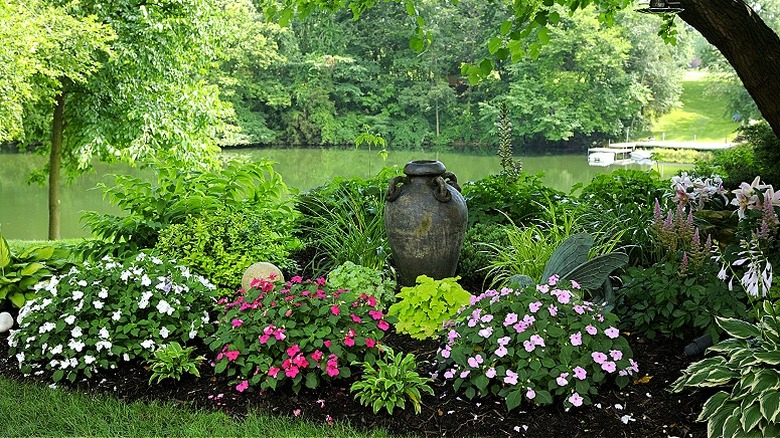
"For the most color, nothing beats annuals and tropicals," says Irvin Etienne, curator of herbaceous plants and seasonal garden design at Newfields, in an exclusive interview with House Digest. To maximize visual impact in a shade garden, he suggests annuals like impatiens or begonias. The upside to these shade-tolerant flowers is that they come in a wide variety of colors. You can pick from hues including red, orange, violet, pink, and white for impatiens. Begonias, well-known for their waxy leaves and stems, meanwhile, have flowers in shades like yellow, orange, red, pink, and white.
In warm-weather growing zones, tropical plants like torenia are also a good pick, according to Etienne. Torenia (Torenia fournieri) is also called the wishbone flower and has a deep, trumpet-shaped bloom that comes in solid or bicolored shades like yellow, pink, or purple. These plants have a spreading growth habit but they can be cultivated to keep to a more compact shape.
Perennials create color throughout the season without the work of repeat planting
Plants that are perennial to your growing zone will return year after year. That can save you time, effort, and money on putting in new plants each year. If you're looking for perennials that will specifically add color, Amy Powers, garden educator and coach at Powers Plants, provides these season-by-season suggestions: "Virginia bluebells for early spring, Eastern red columbine for late spring, tall thimbleweed for summer, zig zag goldenrod and big leaved aster for fall." The advantage of choosing perennials with varying bloom times is that you can perpetuate color in your shade garden throughout the growing season. As one plant's blooming action fades, another plant will go on full display.
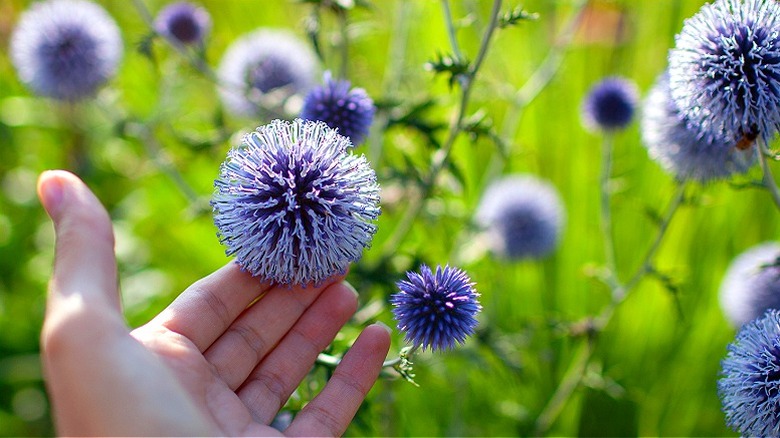
If those plants aren't a match for your planting zone or taste, there are plenty more colorful perennials to choose from. Garden designer Colleen Alexander, founder and operator of THE SHE SHED Home and Garden in mainland Nova Scotia, exclusively shared with House Digest her top picks for colorful perennials. She suggests foxglove for part-shade conditions and points out that it has the potential to rebloom if pruned during the growing season. Regarding this perennial's aesthetic appeal, Alexander says, "[It's] lovely in a cottage or woodland garden in pink, white, purple and yellow." Other perennials mentioned by Alexander include globe thistle — a beautiful blue-blooming flower – Japanese anemone, coral bells, brunnera, and astilbe.
Grasses and shrubs offer color and texture to shade gardens
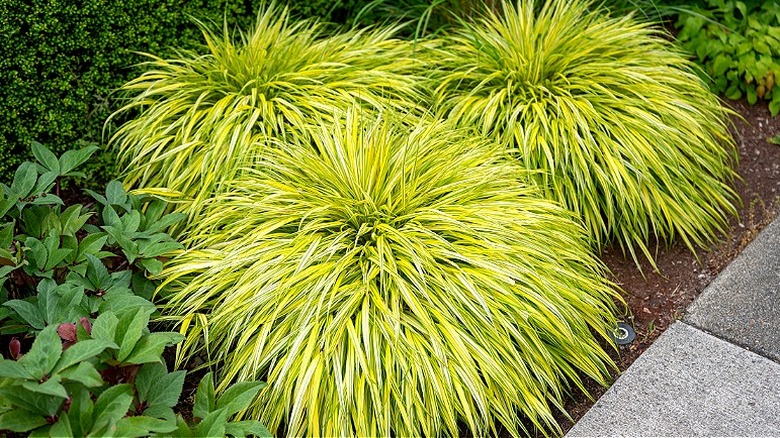
For a double dose of impact in your shade garden, consider shade-tolerant shrubs and grasses that bring both color variety and texture into your outdoor space. Alexander mentions Japanese forest grass as a top pick. "I prefer the 'Hakone All Gold' variety for its standout color and graceful form; it matures at about 24 inches x 24 inches for a vibrant grass that performs well in a shade garden. I also like that deer avoid it." The 'Hakone' variety of Japanese forest grass is hardy to zone 4 and dies back in the winter.
Shrubs, meanwhile, can offer interesting foliage, and some produce blossoms for an added pop of color during the growing season. Alexander suggests several visually interesting shrubs for use in a shade garden, including threadleaf cypress (Chamaecyparis) and Japanese andromeda (Pieris japonica). Regarding the latter, Alexander points out that this shrub has "tiny white or pink bell blooms and striking red new growth in early spring." She adds that some varieties have variegated foliage, too. Such varieties add visual interest across all seasons since "the white margins stand out in the garden year-round as this shrub is evergreen," she further explains.
Focus on contrast, texture, and shape to make your shade garden visually interesting
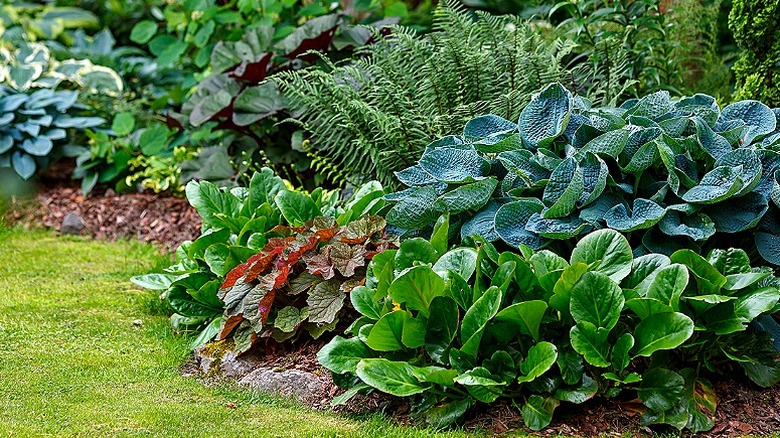
Professional gardeners shared with us that contrasting color and the addition of plants with textured foliage or unique shapes are other ways to make a shade garden stand out. "I love creating textures with low leafy plants like prairie alumroot and Jacob's ladder in the front of the border and then Christmas ferns for height and shape behind them," says Powers. "That sharp contrast helps keep the shade bed interesting and feeling like a layered woodland."
Don't forget to factor in the mature height of plants you choose as well as their growth habit. Keep in mind that plants that spread might take over if you don't take the time to regularly trim them back, while plants that grow in a columnar fashion might block out shorter plants further back in the garden.
Alexander is also a fan of ferns. She says, "Chartreuse and lighter [or] yellower ferns are lovely in shade gardens." One of her top recommendations is sensitive fern (Onoclea sensibilis) because of its "bright yellow-green color and coarse texture." She adds, "While I love the fine texture and black stems of maiden hair ferns, the sensitive fern offers different ornamental characteristics that make it a favorite when designing for shade." This is a good lesson in becoming familiar with more than the obvious choices in a plant family since a lesser-known variety might be better suited to your garden situation.
Alexander explains the reason that plants with contrasting colors work so well: "Paler tones (yellow, white, pink) show up more in shady gardens than darker colors (red, purple)." She also suggests planting shade-tolerant plants in colorful containers in your garden. "The containers bring the color and the plant choices are complementary," she explains. As a bonus, you can rearrange them as needed or move your potted plants to overwinter.
Don't make these mistakes when choosing shade-tolerant plants
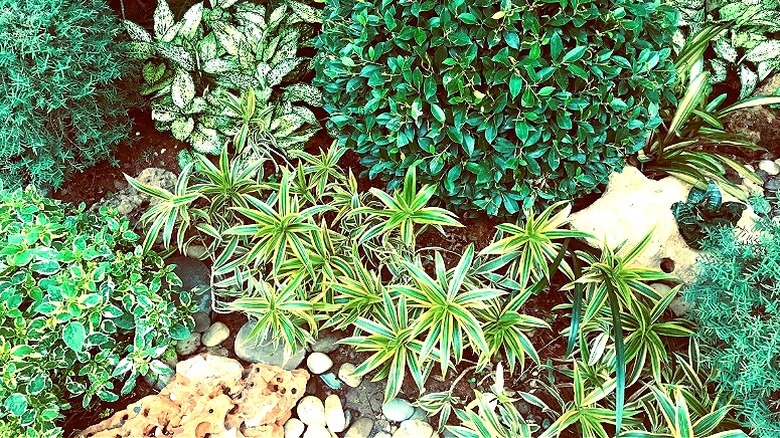
While you're making big plans to maximize the color on display in your shade garden, there are some pitfalls to avoid. Etienne cites three mistakes to steer clear of: "Using plants with the same texture, not using enough color and very important — trying to grow plants that need more sun in the shade." Keep in mind that plants that need partial shade require around two to four hours of light each day (but that exposure shouldn't be full sun). Shade plants need a minimal amount of sunlight, i.e., less than two hours a day.
It's also possible to make your shade garden less attractive by choosing too many competing points of visual interest. Powers says, "I think the biggest mistake people make in shade beds is too much variegated leaves in one bed. Variegated leaves are special and interesting, but they won't be special or interesting if there are too many." Instead of creating a busy or monotonous-looking garden, Powers says to use shade-loving plants with variegated leaves as an accent throughout the space.