

Say Goodbye To French Drains: These Alternatives Could Work Better For A Soggy Yard
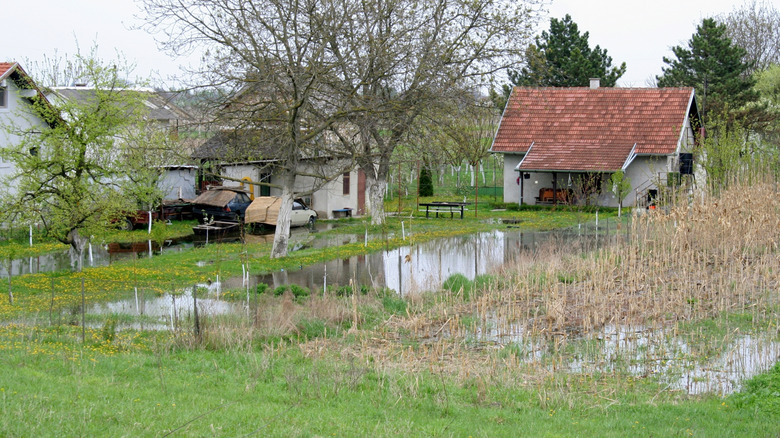
When your property has flooding problems, you may wonder whether you need a French drain. This design is useful for moving water away from your home, and it can last for a few decades. However, when installed in an incorrect way or to deal with the wrong type of problem, French drains can worsen the original issue and even cause extra damage. In some situations, other solutions might work better, such as flumes, trench drains, and conveyance swales (or ditches).
Of these three alternatives, the cheapest option is a conveyance swale. Flumes are slightly more expensive, but if you need a remedy that requires the least maintenance and can move significant amounts of water, it's your best bet. Meanwhile, trench drains require the most maintenance and are most expensive to install. Regardless, each offers unique benefits over a French drain that you should consider before you make any big decisions.
A conveyance swale blends into your landscaping
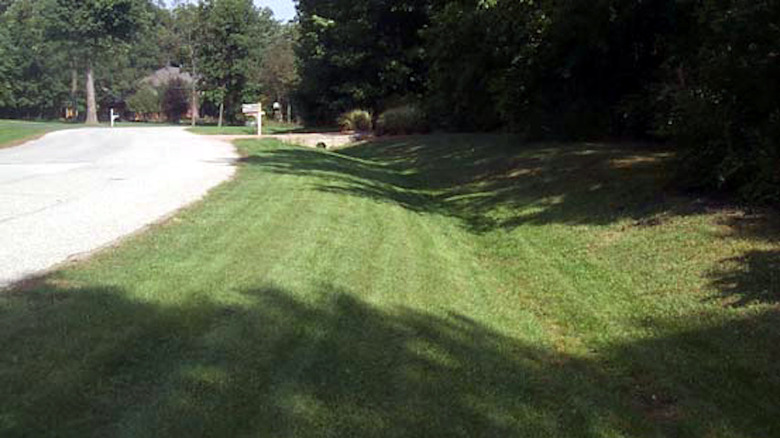
A conveyance swale used for drainage is a shallow channel that can move water using gravity and the natural slope of the land. It has a design that resembles a flume, but it often uses grass or other vegetation in the channel to help it blend into the landscaping. The swale can also be similar to a roadside ditch, but it's usually far shallower. When you want a drainage solution that keeps your grass happy and minimizes disruption to the entire landscaping layout, a conveyance swale can be a great choice. Just be aware that if erosion damage occurs, they may require some maintenance, such as mowing or replanting.
Swales often work better as part of a larger stormwater management design, moving aqua to larger collection areas or to the storm drain system. They're designed to manage water collecting on the surface, while French drains are made to manage saturated ground. To create a conveyance swale in your yard, you'll need to have a slope that is between 1% and 5%. A shallower grade is recommended because steeper slopes may cause erosion. For a shallow, narrow swale, you may be able to dig the channel yourself with a shovel. If you have significant drainage problems or a large channel, you might need to hire a pro who has large power equipment to move a lot of earth. Until grass and other plants can establish themselves in the channel, you may need to add erosion control blankets to hold the soil in place.
A flume is flexible in design
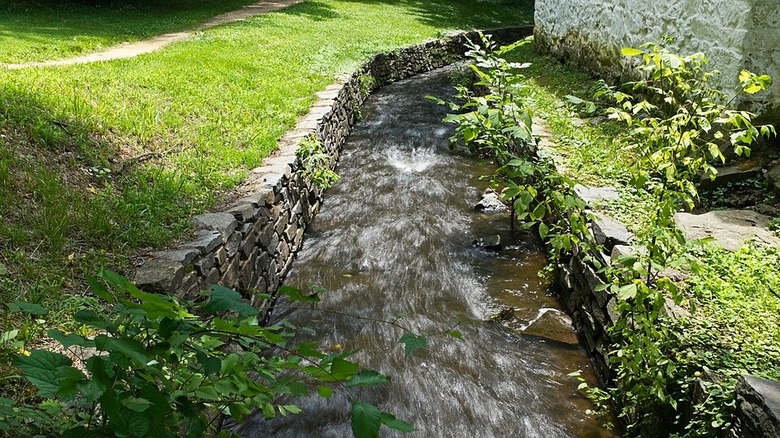
Flumes use concrete to create an open channel in a "U" or "V" shape to manage drainage problems in areas that receive heavy rain. They're particularly useful because you can build the size and depth of the concrete channel to match the maximum amount of water you need to redirect. A flume may be deployed more often in commercial settings than residential areas. They're common on large properties, such as industrial sites, highway drainage areas, and construction sites.
Still, a concrete flume can sometimes be the right choice for a residential property. For the everyday person, it can double as a sidewalk, allowing it to fit in seamlessly with your home's design. Because of the concrete design, it's more effective than a swale at moving water when the property is mostly flat.
A trench drain can be a better solution than a French drain
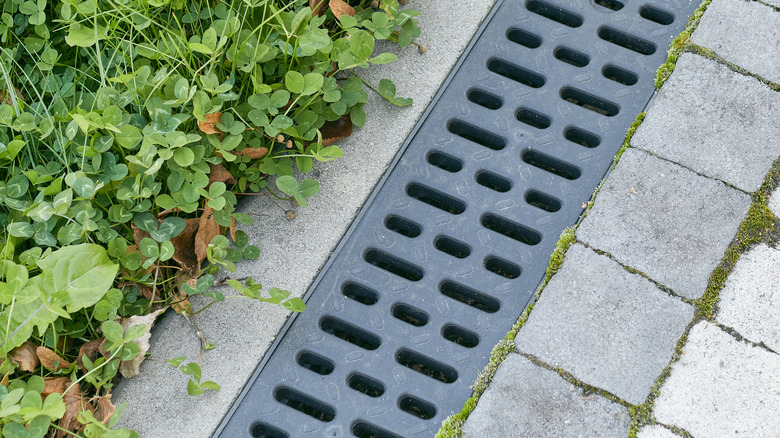
While a French drain can be one of the best stormwater drainage solutions for a home, you may find that a trench drain fits your situation better. These two options may have similar names, but they have different strengths and weaknesses. The primary difference between the two designs is that the French drain removes water that's creating soggy areas in the yard, while the trench design diverts the water that's collecting along the surface.
A traditional French drain uses perforated pipes buried in gravel, sand, or landscaping fabric that allows moisture to flow into the holes, carrying the water elsewhere. Meanwhile, the trench drain uses a dug-out trench, often with a grate over the top, that carries water to a different location. The grate is usually at ground level, which reduces trip hazards. Both solutions rely on the slope of the ground and gravity to move the water. With the trench design, the grate cover is visible, which differs from a French drain that's often hidden underground.
If you have problems with water that sits above ground, a trench drain will give you better results. It can collect the standing water and move it to a new location faster than the French design. Because of its efficiency, the trench drain can be used on either a residential or commercial property.