

Not All WD-40 Is Made The Same: These 10 Specialist Versions That Do Different Jobs
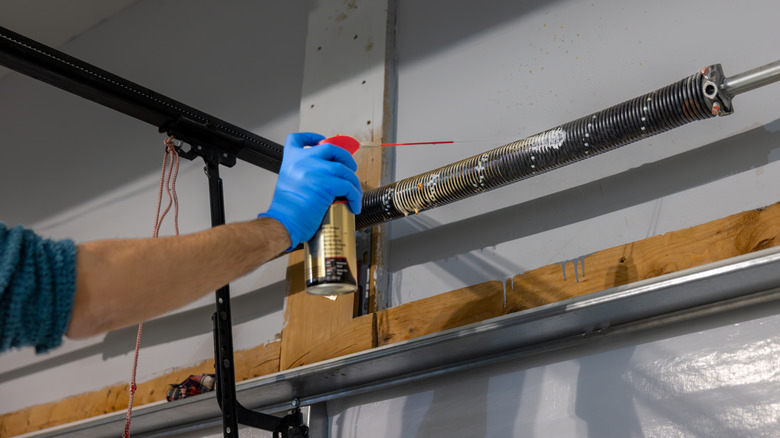
Walk into any garage, and there is a good chance that you will see a can of WD-40 sitting somewhere on a shelf. After all, it has become a go-to for all sorts of everyday problems, but did you know that not all WD-40 cans are the same, and there is a whole specialty line of WD-40 products that are designed for very specific jobs? Take, for instance, WD-40 Specialist Dry Lube. It is a special WD-40 product that is designed to be applied in places where a wet lubricant might attract dust and dirt. Similarly, there is the WD-40 Specialist Silicone. It is also a lubricant, but what makes it special is that it is water-resistant.
These specialist versions of WD-40 have specific formulas that are built for specific jobs rather than general use and offer a more targeted approach. This distinction matters more than it might seem, too. For instance, a cleaner made for general applications can be the wrong choice for sensitive electrical components. Similarly, a product designed to prevent rust is not suitable in places where you need to dissolve rust. So, next time you reach for a can of WD-40 for a certain problem at a store, make sure to check if there is a specialty version available for that issue as well.
WD-40 Specialist Penetrant
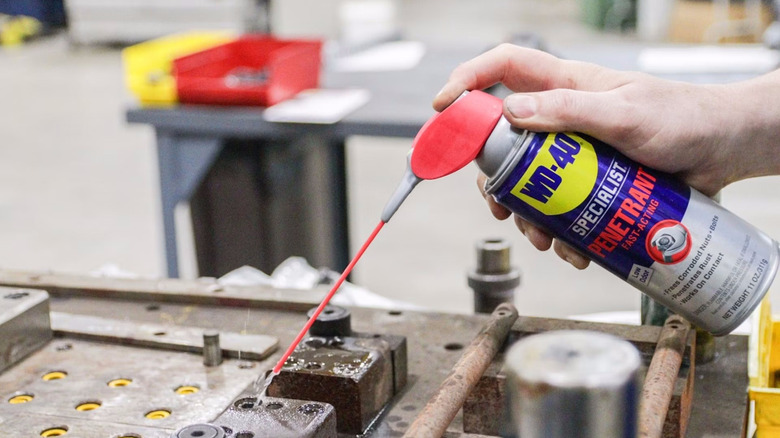
WD-40 Specialist Penetrant is designed to deal with rusted bolts, nuts, and threads that have seized in place and just won't come out. Unlike general lubricants, it uses capillary action. This allows it to get into tight spaces where its formula helps break the bonds between rust and metal. Other than that, it also leaves behind a layer of lubricant material that helps resist corrosion. To use it, all you have to do is spray the penetrant directly onto the seized area, wait about 15 to 20 minutes, and then work the part loose.
WD-40 Specialist Contact Cleaner
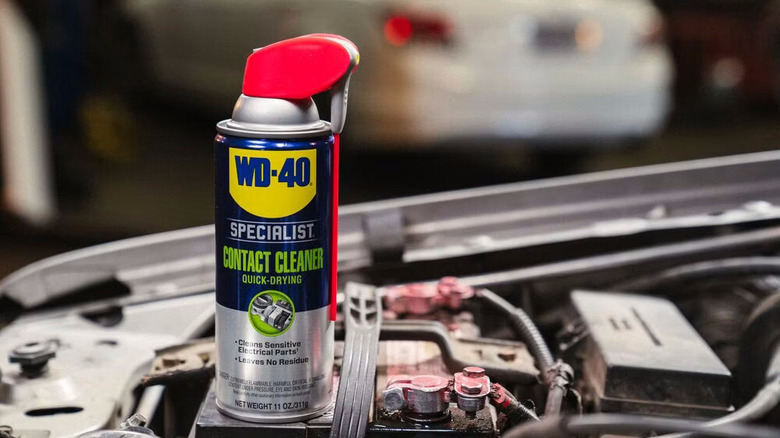
If you are looking for a product to clean oil, dirt, and condensation without leaving a film or liquid behind from things like electronic tools, circuit boards, switches, and motors, then you should definitely check out the WD-40 Specialist Contact Cleaner. It has a quick-drying, residue-free formula. The formula is based on a blend of alcohols and hydrocarbons, which WD-40 says dissolves contaminants and evaporates rapidly. This helps it clean things that do not do well with liquid cleaners. Just make sure that you disconnect the power before using the WD-40 Specialist Contact Cleaner on anything.
WD-40 Specialist Dry Lube
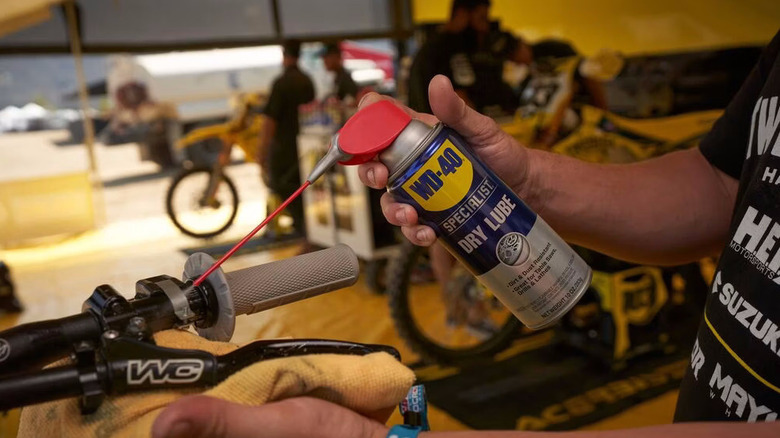
Are you looking for a product to lubricate and extend the life of your power tools? Then, WD-40 Specialist Dry Lube is definitely worth a look. It has a PTFE-containing formula that, according to WD-40, dries quickly and leaves behind a lubricating film instead of a sticky, oily residue, unlike many other common lubricants. This makes it especially useful for dusty environments. The formula also helps reduce corrosion, and it can be used on blades, bits, tracks, slides, rollers, hinges, conveyor belts, and power tools. Just make sure you test it on a small area first.
WD-40 Specialist White Lithium Grease
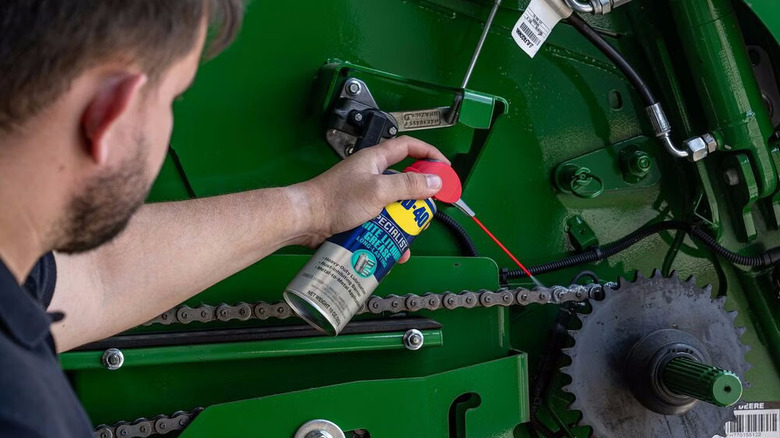
Not every lubrication job calls for a dry lubricant. Take, for instance, hinges, gears, sprockets, and door tracks. These are places where metal comes in direct contact with metal, and here you need grease, which can keep things moving smoothly, and that is where the WD-40 Specialist White Lithium Grease can help. It sprays as a liquid. However, it later dries into a thick protective coating that resists running off. Also, according to WD-40, WD-40 Specialist White Lithium Grease can handle extreme pressures and works without issue from 0 to 300 degrees Fahrenheit.
WD-40 Specialist Gel Lube
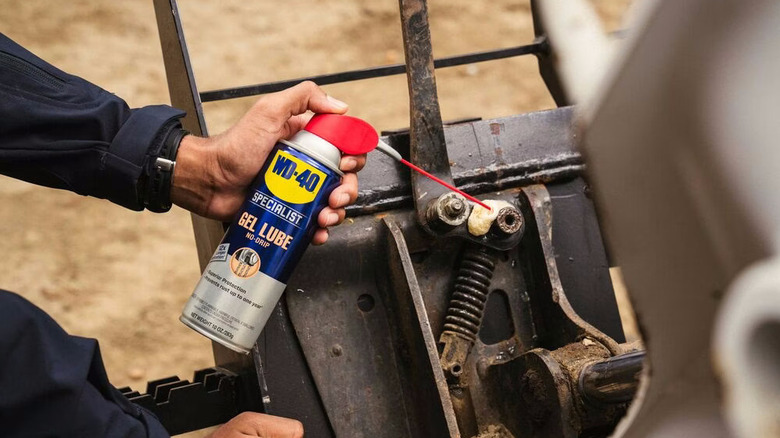
One problem with many standard spray lubricants is that they fall or start dripping after application, and this makes them unsuitable for moving parts or vertical components like garage doors where you might want the lubricant to stay in its place. That is where WD-40 Specialist Gel Lube comes in. It forms a thick gel coating on application. This helps it cling instead of quickly dripping or flinging off the surface, and according to WD-40, its formula also allows it to resist water and helps protect against wear, corrosion, and rust.
WD-40 Specialist Degreaser
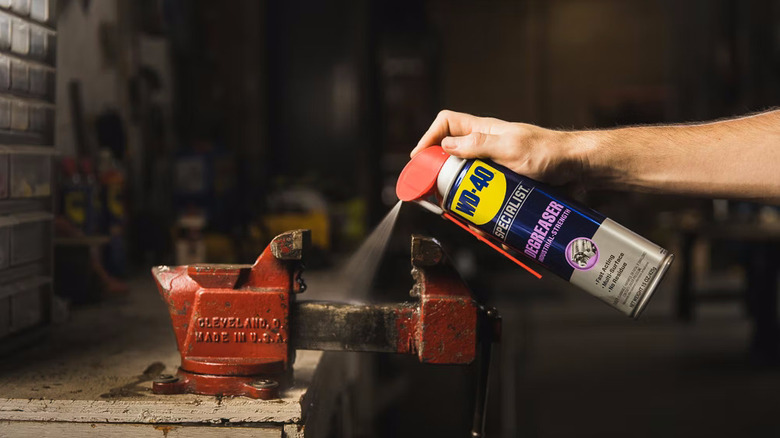
WD-40 Specialist Degreaser is made for those jobs where the goal is to get rid of grease instead. It is a solvent-based aerosol cleaner. According to WD-40, it can be used to remove grease, oil, and grime from engines, machinery, and tools, where it breaks down grease on contact. All you have to do is spray on the greasy spot, give the formula about 1 to 5 minutes, and then rinse the spot with water. While its formula is said to be safe on metals, plastics, rubber, and glass, you should still test it on a small area.
WD-40 Specialist Silicone
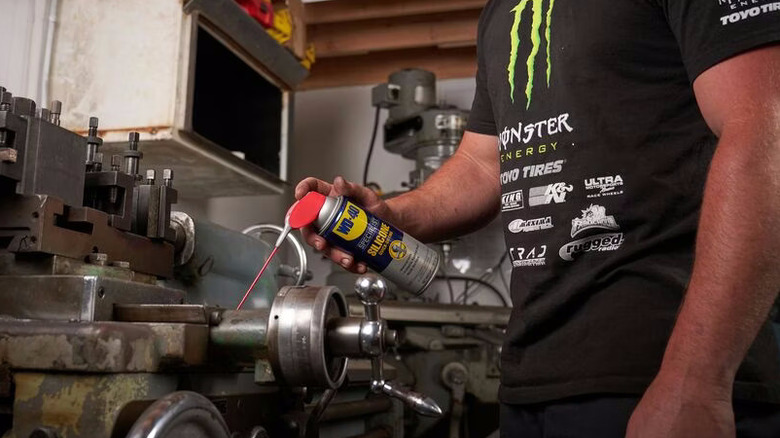
Not every surface responds well to petroleum-based lubricants. Take, for instance, rubber. It swells when treated with petroleum-based lubricants, and that is where WD-40 Specialist Silicone comes in. Instead of petroleum compounds, its active ingredient is polydimethylsiloxane, which is a silicone polymer. To use it, you just need to spray it onto the target surface and allow it to dry fully. It will then make a clear, dry film that will help reduce friction. Just keep in mind it only works from -100 to 500 degrees Fahrenheit, and if temperatures are more extreme, it might fail.
WD-40 Specialist Corrosion Inhibitor
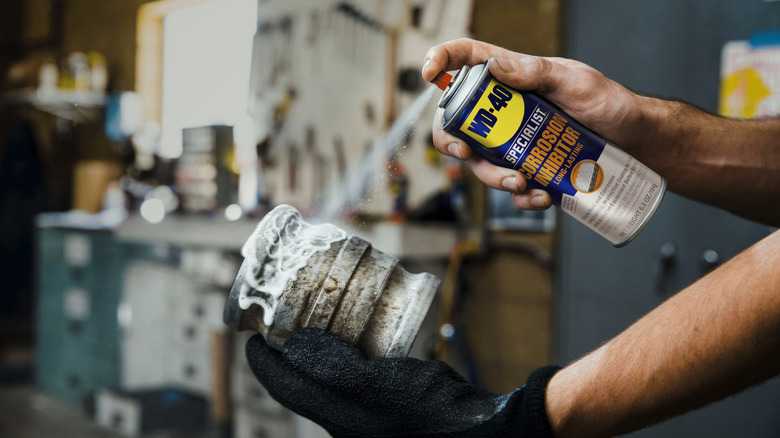
Looking for something to keep all of your copper pipes corrosion-free? Then, WD-40 Specialist Corrosion Inhibitor should definitely be on your shopping list. You can use it on tools, chains, locks, hinges, car parts, and other exposed metal that might be prone to rust and corrosion in your home, as long as you do not allow prolonged contact with rubber. Just make sure that you are not confusing it with a rust remover. Its job is to prevent rust before it even forms, using its vapor corrosion inhibitors that help seal metal from air and moisture.
WD-40 Specialist Rust Remover Soak
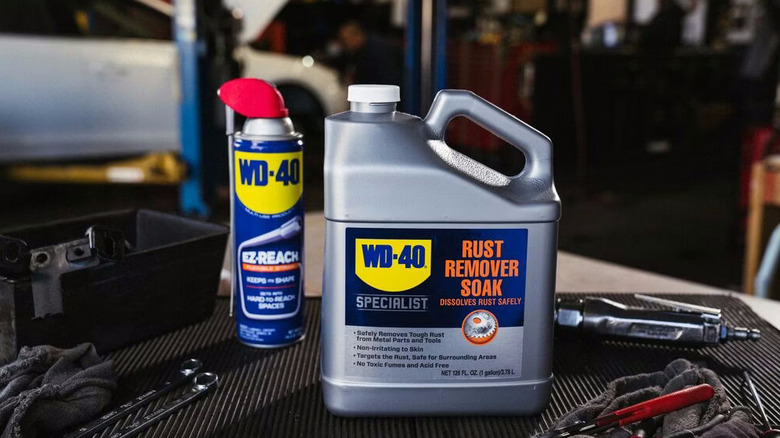
If rust has already formed, a corrosion inhibitor is not going to solve the problem, and what you need instead is a rust remover, such as WD-40 Specialist Rust Remover Soak. The product works by soaking the rusty item in a ready-to-use solution that dissolves corrosion and exposes bare metal. You just need to make sure that you remove dirt, oil, and grease before soaking a rusty item in the WD-40 Specialist Rust Remover Soak, and if the rust on the item is very bad, leave the item in the soak for about 24 hours.
WD-40 Specialist Electric Parts Cleaner
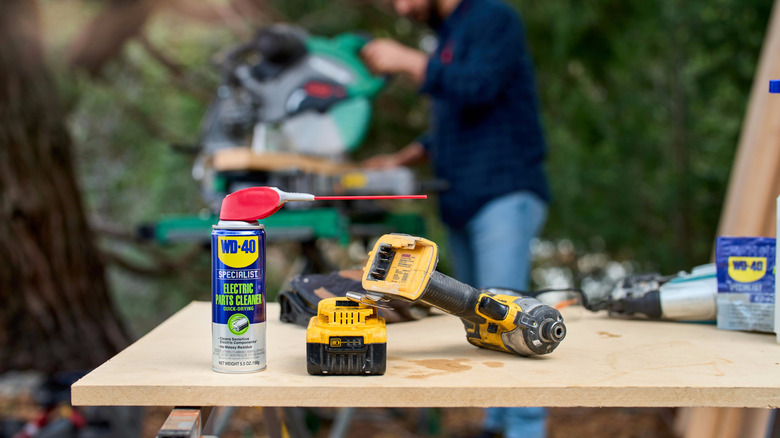
Last on the list, we have the WD-40 Specialist Electric Parts Cleaner. As the name suggests, this WD-40 specialty version is specifically designed for cleaning sensitive electrical parts like exposed electrical components of drones, HDMI connectors, and male-end charge cords, among other things. It uses a fast-evaporating aerosol formula that safely removes oil, dirt, and moisture from electrical components without leaving residue behind. This is important as residue can cause conductivity faults in electrical parts. Just keep in mind that when using it near electronics, you should avoid spraying it on adhesives, screens, and keyboards.