

Not Basil, Not Cilantro: The Lemon-Scented Herb With Flowers You'll Want In Your Garden
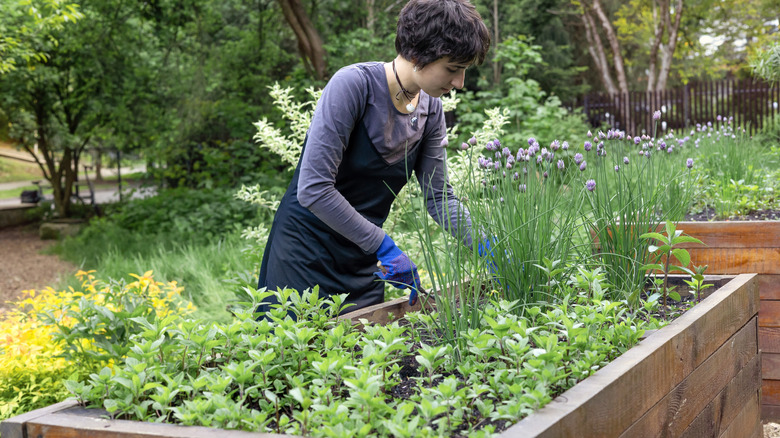
Tired of the same boring old herbs in your garden? Basil and cilantro might smell nice and taste great, but they don't inspire much interest. If you're already confidently growing these staples, you've got the bandwidth to branch out into something a little more creative. Lemon thyme (Thymus × citriodorus) is a low-growing evergreen ground cover that makes a fascinating addition to any herb garden in Zones 5 to 8. It's completely unfussy and will thrive in some pretty harsh growing conditions, making it an herb that's easy for even the most forgetful people to grow. There's even a variegated variety, Thymus × citriodorus 'Variegatus', that boasts vibrant lime-yellow foliage.
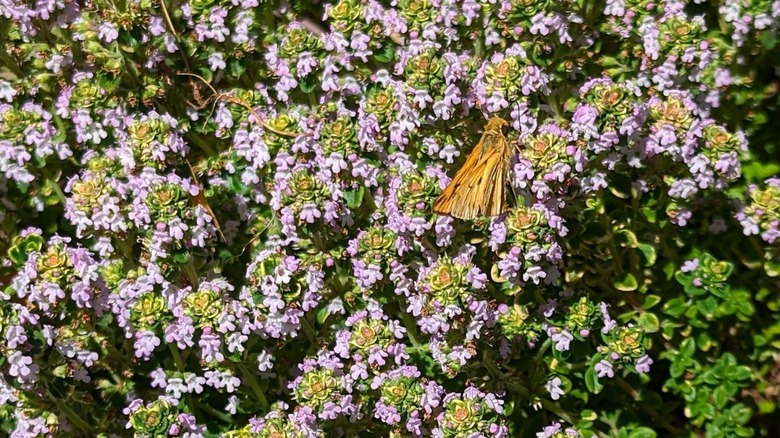
The pale green leaves of lemon thyme are a lovely change from the deep green foliage of common thyme. Come summer, this thick mat of leaves will fill with tiny, light pink flowers that emit a delicious lemony fragrance and attract pollinators. Expect lots of nectar-filled blooms from June through August. As hinted at, this undemanding herb is also heat-, drought-, and even neglect-tolerant. Whether you choose to grow it in a container or a garden bed, it's the perfect herb for gardeners who don't want to run up their water bill or spend a ton on fertilizer every year to keep their plants looking green and healthy. Did we mention that lemon thyme is edible? The leaves and flowers can be used in everything from baking to seasoning blends to syrups for cocktails.
Lemon thyme is great for living mulch and sensory gardens
If you've got a spot in your garden with sandy or rocky soil that gets baked by the sun all day, that's where lemon thyme will be happiest. However, it's tolerant of a wide range of soils and light conditions. The biggest threat to lemon thyme is excess moisture; it can develop root rot if allowed to sit in soggy soil for too long.
Heavy clay soil, poor drainage, and frequent rain can spell trouble for lemon thyme. You may want to grow lemon thyme indoors to actually keep it alive — or at least grow it in a planter filled with well-draining soil that you can move to a sheltered location as needed. This fragrant herb is cold-hardy to Zone 5, so it's not the best choice for areas with harsh winters. You may still be able to grow it as an annual or plant it in a container and overwinter it indoors.
Lemon thyme can handle light foot traffic. If you've been struggling to keep turfgrass alive in a sunny, water-starved part of your yard, you could finally get a healthy lawn with this grass alternative that can take the heat. It can also serve as a living mulch in garden beds. Use it to fill empty space between plants, where it will suppress weeds and keep the soil moist. It's also a great herb to choose if you're building a sensory garden because the lemon fragrance will complement the sharper scent of rosemary or add citrusy notes to the softer fragrance of lavender.