

Not Hydrangeas: The Violet-Blue Flower With Peculiar Buds That Gardeners Rarely Grow
There's no question that blue is a beautiful color to have in the garden. Who doesn't love the vivid azure blooms of a justly prized hydrangea plant? You don't have to grow space-hogging shrubs in order to populate your yard with blue. Consider, instead, perennial flowers like bottle gentian (Gentiana andrewsii). Sadly, contemporary gardeners aren't too familiar with this violet-blue beauty. Yet this fall-flowering native plant has much to offer, especially after hydrangeas and other blue bloomers have packed it in for the summer.
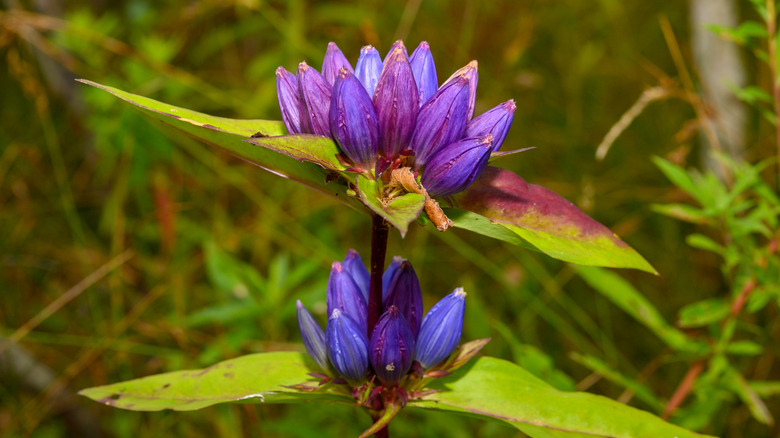
This native flowering plant's two common names, bottle gentian and closed gentian, hint at its rare quirk. The flowers remain closed throughout the blooming season, which runs from late August to early October, depending on your climate. Instead, they form clusters of bottle-shaped buds flanked by pairs of leaves on tall stems. The plant brings color to a garden in two ways: its dramatic blue-violet flowers and its purple-tinged foliage.
Bottle gentian is a perennial in USDA Plant Hardiness Zones 3 to 7 and grows from 1 to 2 feet tall and about 1 foot wide. It's also one of the end-of-summer plants that'll keep your garden full of pollinators through fall. This pretty native attracts large bees — specifically bumble bees, which are strong enough to open the closed flowers. Once inside the bud, they sip the flower's nectar and transfer pollen.
This unusual native plant thrives in shady, natural settings
Nurseries sell bottle gentian seeds, seedlings, and bare-root plants. Keep in mind, however, that species in the Gentiana family are infamously tricky to grow from seed. Seedlings or bare-root plants are likely the best investment. Since bottle gentian is one of the best plants to grow in partial shade to transform your yard and garden, pick an area that meets this requirement. Much like hydrangeas, these flowering perennials prefer acidic, moist — though not boggy — soil. A garden bed bordering woodland or a pond would be perfect, as would a well-mulched, landscaped spot near some shade-creating shrubs. Bottle gentians are relatively disease- and pest-free.
Bottle gentians will take every opportunity to form large clumps. Space seedlings at least 1 foot apart to give your plants plenty of elbow room. Likewise, leave room for the colony to expand in the coming years. This spreading habit is generally welcomed in naturalized areas of a yard, like wildflower and woodland gardens. If you don't want your bottle gentians to spread, divide your patch in fall or early spring. The flowers bloom on long stems that can get a bit floppy. Give tall bottle gentians some support by staking them or growing them among other plants to help keep the stems upright.