

The Beautiful And Fragrant Plant To Prune Before September Is Over

Like so much else in life, timing is everything when it comes to pruning your delicate flowers. Simply put: If you do it too early or too late in the season, you run the risk of damaging the plants or preventing future growth. A great example of this is jasmine (Jasminum), the beautifully scented climber that requires a well-timed pruning to keep flowering year after year. The good news: Assuming you get the timing right, pruning these perennials is usually fairly straightforward.
The most important tip when pruning jasmine to keep it happy and healthy is to cut it back right after it finishes blooming. For summer-flowering varieties such as common jasmine (Jasminum officinale), this happens in late summer or early fall, so September is usually the perfect window! Keep in mind: There are also winter-flowering types, which bloom from winter to spring — and these should also be pruned after flowering.
It might sound intimidating, but pruning is just the act of removing parts of a plant. There are several reasons to do this, but gardeners typically prune to shape plants, encourage growth, and support more flowering. "By August and September, you will see many long, whip-like stems that can appear slightly messy. At this point, it is time to tidy your climber," gardening expert and blog owner Mike Murphy told Homes & Gardens. For jasmine flowers (and many others), it's a vital step to ensuring they stay healthy and come back next season.
Prune summer-blooming jasmine before the fall chill blows in
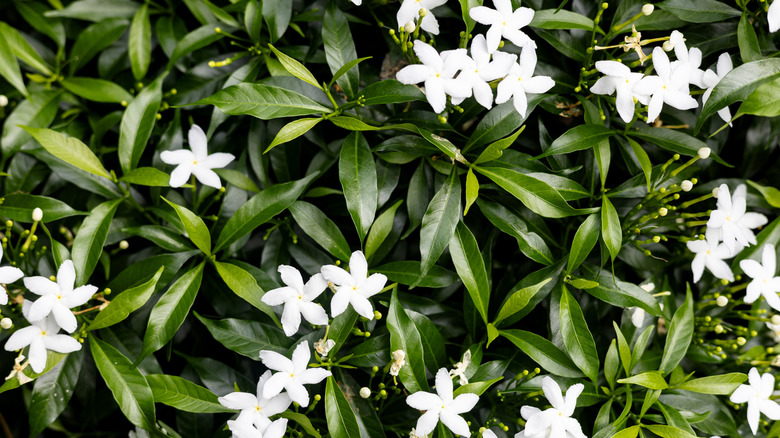
Just like there are guidelines to follow when pruning jasmine, there are also certain things you'll want to avoid as well. As we've mentioned, pruning at the wrong time of year is one of the biggest no-nos. Jasmine blooms on old growth, but if you cut it back just after the blooms fade in September, there will be enough time for new shoots to emerge, and these will flower next year. However, if you wait too long, the freshly cut vines will not re-grow in time, and you will have cut off the parts of the plant that would have turned into flowers, so they won't bloom next year. This can also happen if you trim back too much of the jasmine.
As you work, remember to follow the three D rule for pruning plants and focus on trimming the pieces that are dead, diseased, or damaged. For the best results, cut just above a leaf node, where new branches will shoot out. There are also some all-too-common mistakes you'll want to avoid when pruning your plants in general. Don't use dirty or dull gardening tools, which can make it easier to spread disease between plants. Rough cuts also create more opportunities for pathogens to enter, which can lead to disease.
When you're done pruning, take some steps to prepare your jasmine plants for winter. Before cold temperatures hit, give in-ground plants a thorough watering and add a layer of mulch to the soil. Straw, shredded leaves, and hardwood chips are all good mulch options for these flowers. Potted jasmine, however, may need to be moved indoors before the first frost of the year.