

No Tools Needed: How To Remove Young, Small Weeds From Mulch
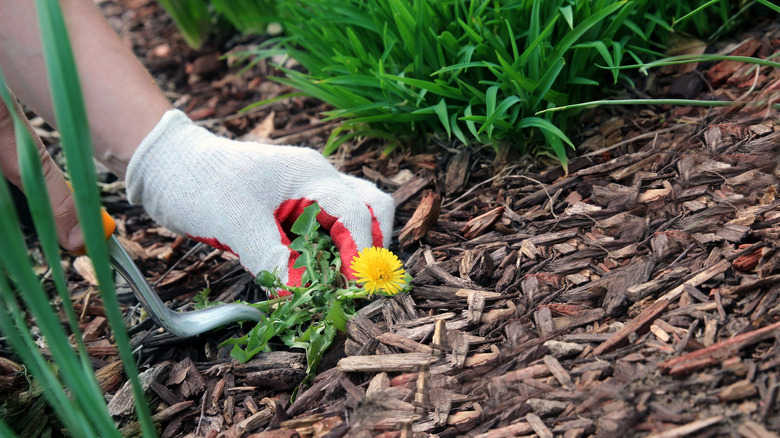
As you might know, mulching your garden beds has numerous benefits, and one of them is that it will reduce the number of weeds that are going to crop up. However, it won't eliminate them altogether, especially if you choose eco-friendly mulch options like pine needles, grass clippings, or wood chips. You'll notice a few popping up every now and then as the material naturally decomposes. The good news is that you can leave all of your tools for banishing pesky weeds in your garden shed. If you want to remove weeds while they're still young and small, all you'll need is a homemade solution made with ingredients you probably already have in your kitchen.
To mix up your weed-killing spray, grab a 16-ounce spray bottle, add one tablespoon of dish soap, ½ cup of salt, 15 drops of clove essential oil, and fill the remainder of the bottle with distilled white vinegar. On a sunny day, use a stream setting on the nozzle to spray this directly on the young weeds popping up through your mulch. You'll find that all those bothersome weeds will be dry and dead within around 24 hours. Once the weeds have shriveled, drench the spot with plenty of water to get rid of any salt and vinegar accumulation. This concoction works quickly to kill small weeds growing in mulch, and it can also be applied between pavers and along the driveway.
Spraying this home remedy eliminates young weeds
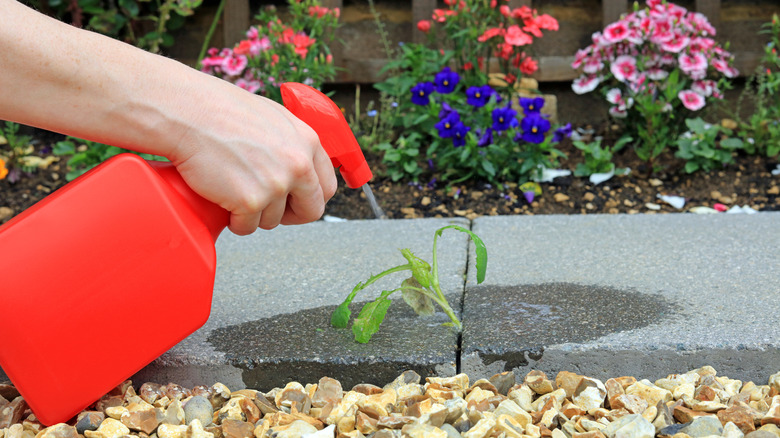
You'll find that as long as the weeds are only young and still relatively small, this home remedy will going to work extremely well as a contact herbicide. You see, common household vinegar, with a concentration of only 5% acetic acid, may not be strong enough to kill large, tough weeds. However, it will definitely spell the demise of young weeds that haven't reached maturity yet, which is also one of the disadvantages of using vinegar in the garden. At the same time, clove oil is also regarded as a non-selective herbicide, causing the plant's leaves and stems to dry out and die. You will find, though, that it won't kill the roots, which is why it also works best on young weeds that haven't produced much root growth yet. Of course, salt is also known to kill weeds, as well as any other plants it touches.
Always remember that just because you're putting together a mixture that you might regard as natural or organic, it doesn't automatically mean that it's harmless. That's why you need to be particularly careful when using this mixture around your mulched garden beds. Always make sure you spray your weeds on a day when there's absolutely no wind and direct the liquid in a straight stream onto the weeds. If the mix comes into contact with any of the plants you want to protect, it's most likely going to cause some damage. Be aware that clove oil is hazardous to honey bees, so limit your spraying times to when bees are not active in your garden.