

Replace Your Old Shower Curtain Liner: The Non-Toxic Alternative To Consider
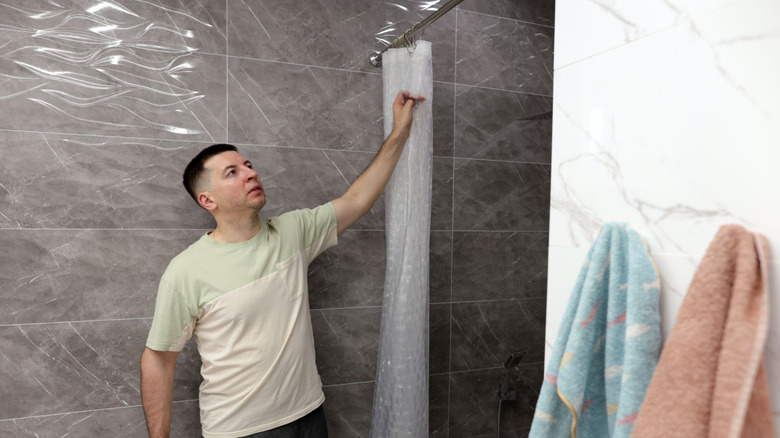
Shower curtain liners serve a critical function in the bathroom. They prevent our more decorative outer curtains from getting wet and, over time, moldy. Not only that, but they also prevent water from splashing out of the shower and all over the bathroom floor. The reason you may want to ditch certain shower curtain liners is that they're made from potentially toxic materials. One of the most common is PVC, which is often sourced by homeowners as an effective, budget-friendly solution. But if you've ever owned one, you may well have noticed a strong, chemical smell coming off of your new liner — an odor that can linger for weeks. This is hardly the most relaxing fragrance when you come to soak in the tub or try to wash off a hard day at work. Nor is it particularly good for you.
That smell is the result of the material off-gassing chemicals that were used to produce the liner. And strange as it may seem for something that's designed to go in the bathroom, it's an issue that's often worsened in warm, humid environments. Even if you can just about manage the smell, it's hardly reassuring to know that one of the main culprits behind it is chlorine. But before you decide to stop using plastic shower curtain liners altogether, there are some safer alternatives that you can choose from. One is Ethylene Vinyl Acetate, or EVA. Since it's free of chlorine, you won't have to worry about inhaling the same fumes that come with a PVC liner. And while liners made from EVA are typically more expensive, they're deemed worth the investment for several important reasons.
What to know before buying an EVA shower curtain liner
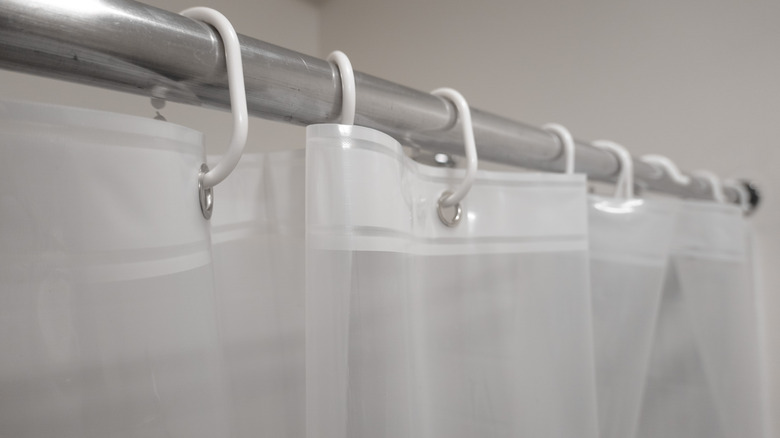
As mentioned, EVA shower curtains are chlorine-free, which is already a big tick in the material's favor as far as your family's health is concerned. Another point to note is that it's much more stable in warm, humid environments — like the shower — than PVC. EVA curtains are also highly durable, and can certainly withstand the rigors of the family bathroom. And yet, the material has excellent flexibility and elasticity, and is resistant to UV radiation, which is ideal if your bathroom sits on the sunny side of the house and is often flooded with sunlight. Being plastic, it repels water instead of absorbing it, which also means that it protects your decorative outer curtain and wider bathroom from splashes.
On the other hand, it's important to remember that EVA is still plastic. In other words, while they're considerably less harmful than PVC curtains, they're not as safe as other fabric shower curtain materials, like cotton or polyester. Ultimately, your choice to use it depends on what's most practical for your household. If splashy showers are a daily occurrence, and you need something that will hold up to weeks of use between cleans, then EVA could well be a good choice. Along with the aforementioned benefits, it's great at resisting mold and mildew, which can become a real problem with fabric liners if you're not fastidious about cleaning them. It's also less likely to smell after a while, since it repels water and soap scum, instead of clinging onto it.