

Is It Okay To Use A Gas Grill When It's Raining?
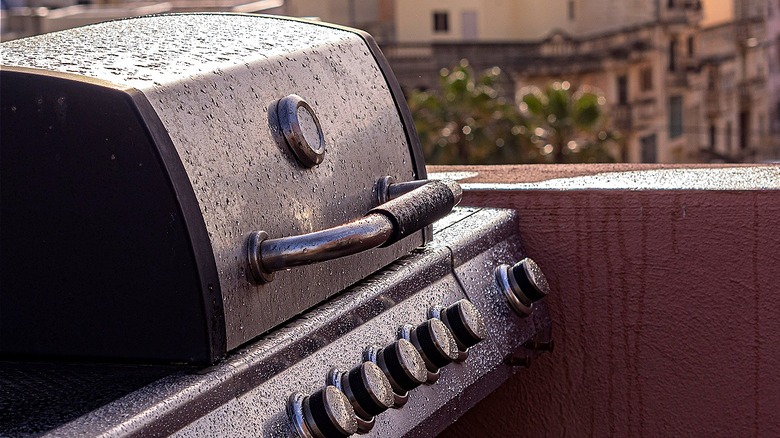
There's hardly anything worse for a summer dinner menu than firing up the grill and having a sudden rainstorm roll in. Electric grilling while raining is a big no-no for obvious reasons, and using a charcoal grill in the rain can leave you with soggy coals that refuse to light. But what if you have a gas grill? While rain showers might keep you from eating your dinner on your patio, you'll be happy to know that no matter which of the best grill brands for ultimate outdoor entertaining you use, it's perfectly safe and okay to use a gas grill in the rain.
Unlike electric grills, which carry a serious risk of electrical shock in wet weather, and charcoal, which gets ruined by excess moisture, gas grills handle wet conditions well enough to be able to cook with little issue. You just need to make sure you're following a few basic safety rules to avoid dangerous hazards. First, for significant safety reasons, remember that when the rain hits, do not move the gas grill into a house, garage, shed, or any screened enclosure to escape it. Gas grills produce carbon monoxide (a colorless, odorless, lethal gas) and present a major fire hazard in enclosed areas. While you might instinctively want to move the grill closer to the house or under an awning to stay dry, you must maintain at least 10 feet of clearance from all structures, combustible walls, vinyl siding, and overhead eaves.
Finally, remember that rainstorms can bring heavy wind gusts. Wind can blow out the burner flames, causing unlit gas to pool inside the grill body. If this happens, don't try to reignite the grill right away. Instead, turn off the burners and open the lid. Allow the gas to clear for at least five minutes, then try lighting the grill again.
Tips for using your gas grill in the rain
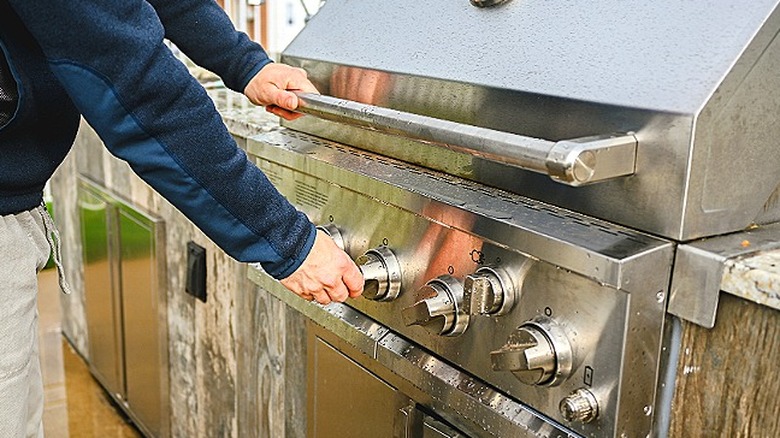
Having a sudden rain shower shouldn't be the end of your cookout — you just have to adjust your grilling technique a bit to account for the heat loss resulting from the cold falling rain and wind. To start, when preheating your grill, allow an extra 10 or so minutes for the grill to reach the target temperature before throwing food on the grates. Without the proper preheat time, your food won't sear or cook correctly.
Also, when cooking in such conditions, it's important you keep the lid closed so as to not lose ambient heat. Every time you lift the hood in wet weather, you allow cold water to enter the firebox, extending the cook time. To help keep heat trapped inside, opt for a waterproof leave-in remote thermometer to monitor internal temperature continuously. This allows you to watch your food cook without losing heat or exposing the burners to rain, so your meal cooks more evenly.
You'll also want to position your grilling setup strategically. If you haven't already planned the perfect outdoor kitchen that you'll want in your own backyard, setting up a temporary dry station is key to using a gas grill in the rain. Place things like food prep trays and your tongs or spatulas nearby on a covered table or under an umbrella to minimize the time the grill lid stays open while flipping or transferring food.
Incorporating smart outdoor grill-station ideas for the perfect entertaining space, like using side shelving, can also make managing wet-weather meals much smoother. Finally, once the grill has fully cooled, wipe down all exterior stainless steel and metal surfaces with a dry microfiber cloth before putting the cover back on to help prevent moisture from getting trapped underneath.