

Is It Okay To Pressure Wash Brick?
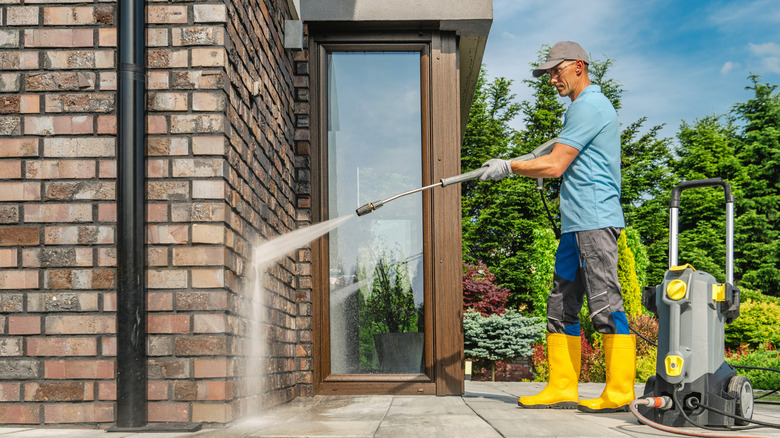
Brick walls and driveways are built to last, but when years of dirt or green algae start to take over, the exterior of your home can quickly lose its charm. The idea of scrubbing the entire outside of your house or driveway can seem exhausting, and since there are plenty of places you can use your pressure washer to clean for dazzling results, it's tempting to power it up to speed up the process. Even though this seems like a smart solution, is it safe for brick, or will it cause expensive damage?
Overall, you can use a pressure washer to clean your home's brick — but only if you use the right approach. In order for this cleaning project to not destroy your masonry, you'll need to wash at a low pressure (under 800 PSI) and use the proper cleaning solution. Standard pressure washing typically runs at 1,500 to 3,000 PSI, making it best for non-porous surfaces like sealed concrete driveways. High water pressure strips the brick's protective skin and forces moisture inside, causing cracks and long-term water damage. A lower PSI means you can safely remove stubborn dirt and grime without compromising the integrity of your brickwork.
Keep in mind that this process is meant for modern brick. If your home has historic or hand-molded masonry, put the pressure washer away. These are much softer and more porous than modern brick, meaning any high pressure could permanently etch or pit them. It's best to stick with low-pressure garden hoses and soft-bristle manual scrub brushes to clean them properly.
Prepare to clean your brick
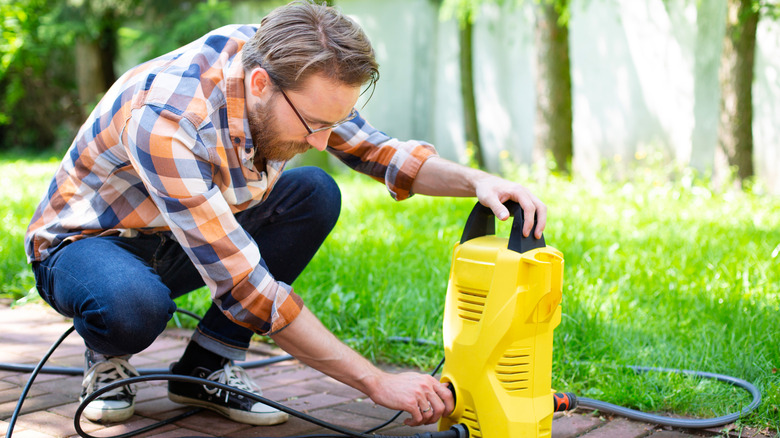
Understanding what you need to know to pressure wash your own home in the right way will help keep your brick clean and safe. Before you start to spray, take a good look at the brick wall or driveway. If you see any damaged mortar, you will need to repair the joints and allow them to cure fully for a minimum of one week before cleaning. Even at low pressure, forcing water into open seams will drive moisture right behind the brick veneer, causing interior rot or mold.
This process relies on using chemical cleaners, so you'll want to suit up before fully committing to the cleaning process. Gear up with safety goggles, chemical-resistant gloves, long sleeves, and non-slip boots to prevent skin and eye irritation. An N95 mask or respirator is also a must if you're spraying overhead to keep bleach fumes out of your lungs. You'll also want to protect any surrounding landscaping and fixtures. Thoroughly drench surrounding grass and flowerbeds with fresh water before starting, and cover any fixtures that may come in contact with either the water spray or cleaning chemical with plastic sheeting and painter's tape.
How to pressure wash brick
After prepping the area, grab your garden hose and soak the brick from the bottom up. Don't skip this pre-soak — dry brick acts like a sponge and will absorb cleaning chemicals deep into the masonry. While the surface is damp, grab your bottle of pre-mixed exterior house and siding or masonry cleaner. Spray the mixture onto the wet brick in small, manageable sections, moving from the ground up so dirty runoff doesn't leave grime streaks.
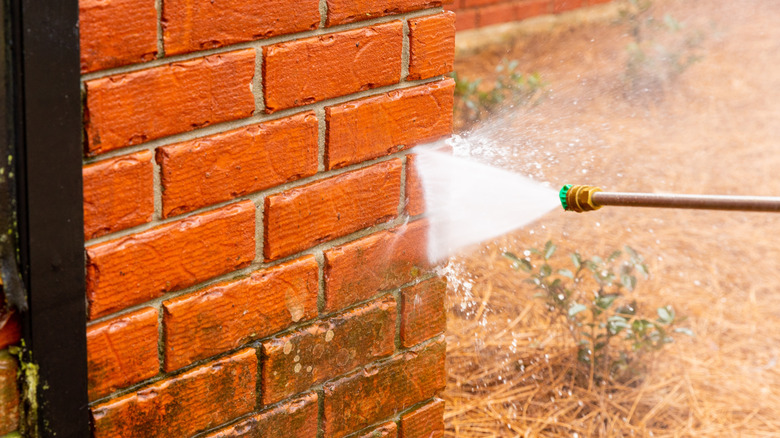
Follow the directions on the bottle for leaving the solution on the brick to break down dirt, but mist it lightly with water if it starts to dry. The cleaner does the work, so manual scrubbing isn't necessary, though a soft-bristle synthetic brush helps with any stubborn mold spots. When you're ready to rinse, avoid the common mistakes everyone makes when pressure washing by sticking to a wide 25-degree or 40-degree spray tip. Also, keep the dial between 500 and 800 PSI and stand at least 12 inches from the brick as you rinse from the top down. This will safely clean away the mess without damaging the brick face or eroding mortar joints.