

Is It Safe To Mix Dish Soap And Pine-Sol For Cleaning?
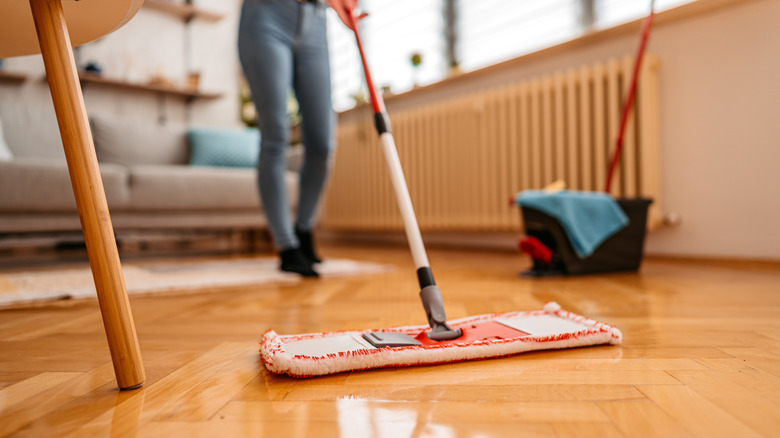
Pine-Sol is an iconic and slept-on cleaner. Its distinctive scent is inextricably tied to cleaning day for plenty of folks, leaving you with the feeling that your space has been instantly freshened up as soon as you crack open the bottle. While this cleaner is branded as a multi-purpose product that can tackle just about any mess in your home — there are plenty of unexpected ways you can use Pine-Sol around the house — its downside is that it's not always seen as the complete package. It's great for adding fragrance to your space and killing germs, but for those craving a bit more sudsy action, it could fall flat. If you find yourself in this position, it's tempting to squirt in a bit of dish soap to really get things bubbling, but is this safe? As it turns out, yes, but there are a few caveats.
We should all know by now that mixing cleaning supplies can be a risky endeavor. In fact, most cleaning brands, Pine-Sol included, explicitly warn against experimenting with different combinations. It's always better to follow this advice to avoid putting yourself at risk, but a significant number of these dangerous chemical reactions are the result of mixing bleach with other common cleaning products. That's not to say that you shouldn't proceed with caution with different products — again, mixing is rarely, if ever, advised — but the combination of Pine-Sol and regular dish soap won't release any toxic gases or suddenly blow up in your face. Pine-Sol is essentially just a mix of water, surfactants, and antibacterial cleaning ingredients, while dish soap contains a more concentrated combination of surfactants with the primary goal of cutting grease.
Why is mixing Pine-Sol and dish soap unnecessary?
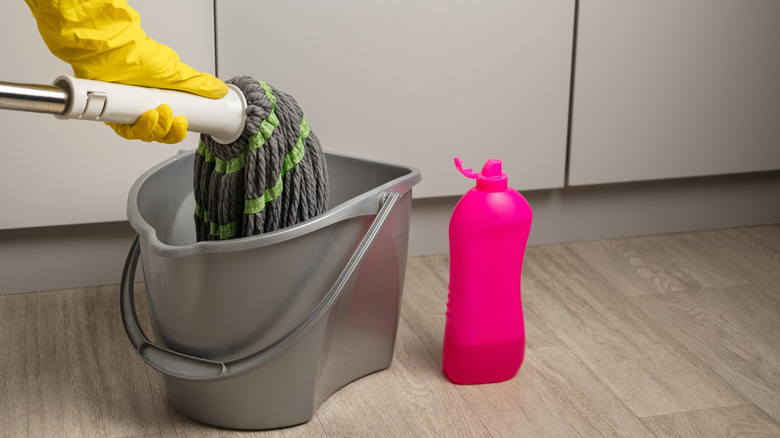
Mixing dish soap and Pine-Sol won't cause serious harm, but it won't provide you with any real benefits, either. Pine-Sol already contains propylheptyl ether as an active ingredient, which is a powerful grease-cutter on its own. It also includes surfactants that help to lift, trap, and remove dirt. Adding more surfactants in the form of dish soap won't somehow boost the cleaning power of the solution — it's just redundant.
Additionally, dish soap has a habit of leaving a film behind on surfaces if it hasn't been very heavily diluted or washed away after cleaning. Mopping with a combination of Pine-Sol and dish soap or using it to wipe down your countertops could result in a hazy, slightly sticky surface that's far from the sparkling clean you're going for. Sticking with one product that's been diluted with water at the proper ratio will make the mix easier to control and reduce your risk of overdoing it with cleaning agents.
As a general rule of thumb, these two products will accomplish similar goals, but dish soap is the gentler of the two. Pine-Sol is great to use on hard, non-porous surfaces where you want some intense disinfectant and dirt-lifting action — think sealed wood flooring, countertops, toilets, bathtubs, and tile — but it can be a bit overpowering for certain situations. It shouldn't be used on marble, copper, cars, or surfaces that will come into direct contact with food, like dishes, but these are the cases where a simple dish soap and water solution will do the trick.