

Not Coffee Grounds: The Syrup To Add To DIY Fertilizer For Thriving Leafy Greens
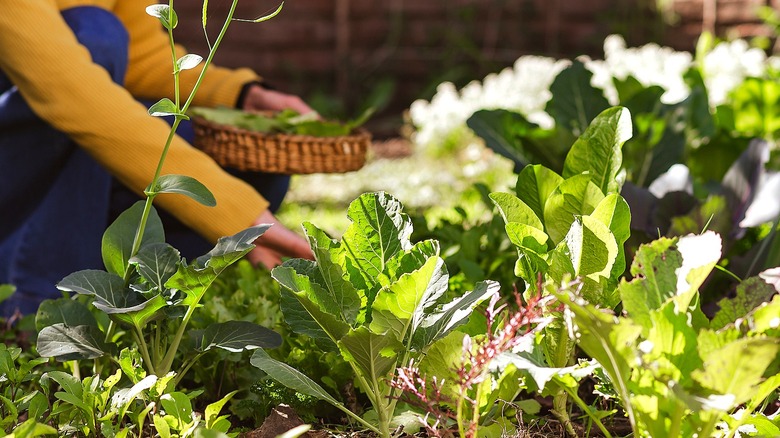
Molasses isn't the most common pantry item, but many of us are familiar with its flavor. Toffee, gingerbread cookies, cakes, sweet sauces, and marinades are just a few fan favorites that benefit from this syrupy ingredient. However, just as molasses makes food more enticing to humans, it also appeals to an invisible organism that makes your garden soil more fertile. If you're growing leafy green plant varieties, try adding a spoonful of molasses to your gardening routine to produce a nutrient-rich environment that these veggies love.
Molasses comes in three types: light (or mild), dark, and blackstrap. Although any of these can work, blackstrap contains the most beneficial minerals of the three – calcium, magnesium, potassium, and iron — that can add value to your soil. Also, the unsulfured variety is the better choice for gardening purposes since sulfur dioxide, used as a preservative in molasses, can kill the very microorganisms that can help your crops.
Note that while the minerals in molasses can help your soil, it's not a standalone fertilizer. The main benefit is its impact on microbial activity in the dirt. A 2022 study published in Open Journal of Ecology reported that drenching the soil with a molasses solution led to higher microbial activity. As well, in a second test, mixing blackstrap molasses with a fertilizer found similar results: "In study 2, there were significant differences between fertilizer sources and molasses treatments. The benefit of molasses was dependent upon fertilizer source and dependent variables. Organic fertilizer with molasses maintained the highest activity after five weeks for all treatments."
Through boosted microbial activity, as bacteria and fungi break down nutrients, it makes the nutrients more readily available for plants. Because leafy greens require rich, fertile soil, active, well-fed microbes can provide a steady, significant amount of nutrients to produce a thriving crop.
How to use molasses in your garden
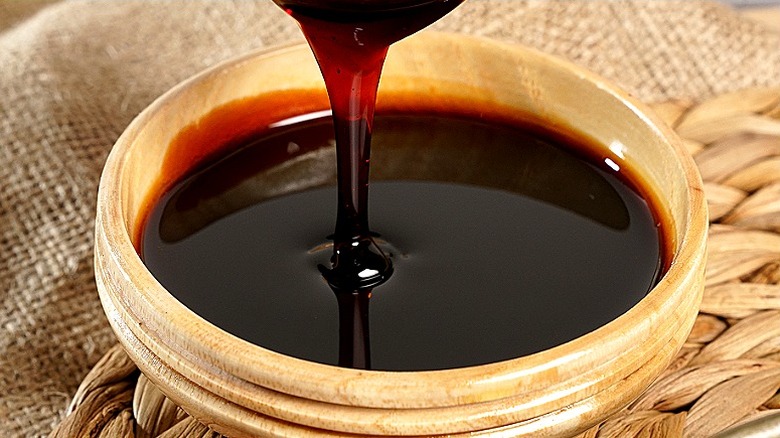
There is, however, a science to using molasses in your garden. Never pour pure molasses directly onto the soil. Instead, make sure it's diluted. One way is to make a DIY compost tea, similar to this other DIY fertilizer for leafy greens. Combine water and composted fruit and vegetable scraps in a bucket and add a spoonful of molasses. The extra microbes in the compost will start to feed on the molasses as the tea steeps; stir the contents each day. After waiting a week to 10 days, strain the liquid and dilute it (1 part tea, 10 parts water) before watering your greens every two to three weeks.
An even simpler way is to use the soil-drenching method, just as the Open Journal of Ecology study did in its first test. Here, you will mix the molasses directly into water and pour it around the base of the plants. Simply, mix 1 to 2 tablespoons for every 1 gallon of water and drench the soil around your growing leafy greens, once a month or biweekly is plenty of molasses. Too much molasses syrup has the potential to turn into a stick mess and create drainage and airflow problems for your soil.
Remember, using molasses in the garden isn't a magical solution. A 2022 study published in the journal Agronomy showed soil type impacted molasses's efficacy; it found that blackstrap molasses used in loamy soil helped to reduce root damage and reproduction of harmful root-knot nematodes among lettuce plants, but not necessarily in other soil types. The takeaway: Try molasses on your leafy greens, but don't neglect its nutritional needs from other methods — particularly nitrogen, which can be added to your soil in a number of easy ways.