

Can You Use WD-40 To Remove Rust From Tools?
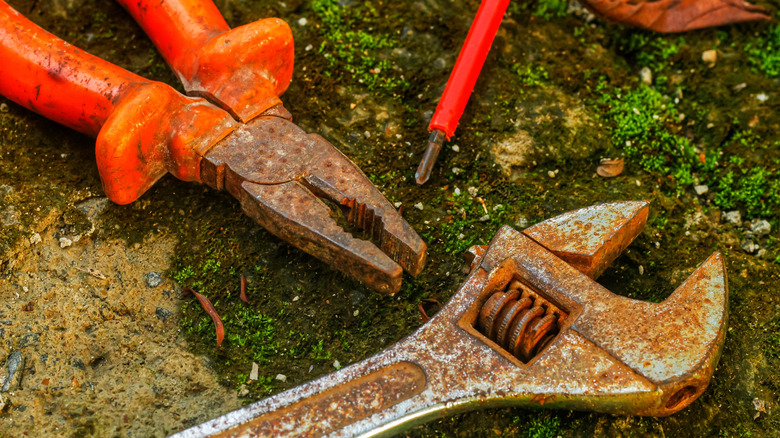
When rust takes over your tool collection, grabbing a trusty yellow and blue can of WD-40 feels like an instinctive first move. After all, there are plenty of brilliant ways you should be using WD-40 in your garage, so it would make sense that it could easily clear away heavy oxidation. Before you spray down every pair of pliers or saw blade in your shop though, it's important to understand if it's safe to use this ubiquitous workshop staple to remove rust from your hand tools, or if it's a hack that will do more damage than good.
Luckily, you can use WD-40 to remove stubborn rust from your metal tools, but it comes with a caveat. It truly only works best on light-to-moderate surface rust, rather than deeply pitted metal. Standard WD-40 is not a chemical rust remover or acid converter, meaning it does not actually dissolve the rust. Instead, this seemingly magical solution works by penetrating the surface layer, breaking the bond between rust particles and the bare metal underneath, making it easier for you to scrub away oxidation with steel wool or a stiff wire brush.
If you have tools that have only minor surface spots or light rust buildup, go right ahead and reach for the can of WD-40, a stiff wire brush or fine steel wool pad, and a clean microfiber rag. However, if you have heavily corroded gear that has deep physical pitting, you'll need to skip this process entirely and look into other ways to remove rust and corrosion from tools, minus the elbow grease, by soaking the items in a dedicated chemical bath to dissolve the oxidation completely.
How to derust your tools with WD-40
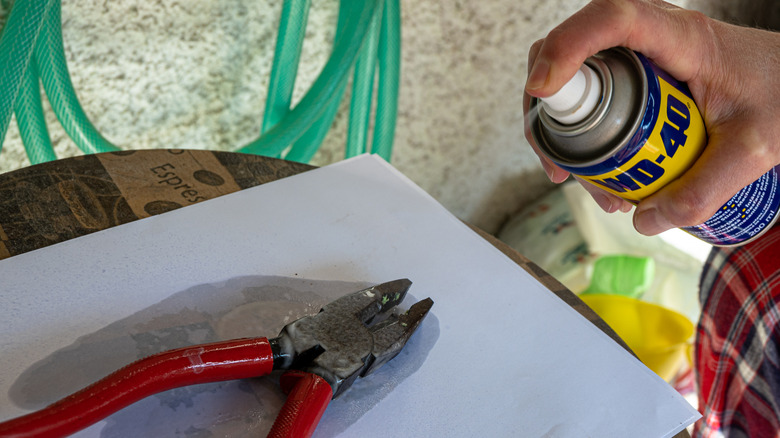
Before you begin spraying, you need to prep your workspace. Make sure you're working in a well-ventilated area to avoid inhaling concentrated aerosol vapors. Spray the entire surface of the tool directly with WD-40 until fully coated. If removing rust from a jointed tool like pliers or shears, make sure to work the mechanism open and closed to coat all moving parts. Next, you'll need to be patient and let the penetrating spray do its job, letting it soak for about 10 to 15 minutes. WD-40 is not a rust remover by itself so you will have to use a non-scratch nylon scrub pad or some fine steel wool to manually scrub the corrosion away. For moderate rust, a brass wire brush or a standard steel wool pad will remove build-up without scratching the underlying metal.
After scrubbing, wipe away the loosened rust slurry using a clean rag or microfiber cloth. Remember to never rinse your tools under water — this can cause flash rust to form almost instantly. After wiping down the tool completely, you'll want to take care to protect it from future corrosion. To do this, spray a very light film of WD-40 over the clean metal and wipe off the excess. Beyond tool maintenance, there are dozens of other unexpected ways you can use WD-40 around the house, but for your workshop, this final wipe-down leaves a protective barrier against moisture, keeping your newly restored hand tools rust-free as long as possible.