

The Type Of Perennial Plants You Shouldn't Be Planting In September
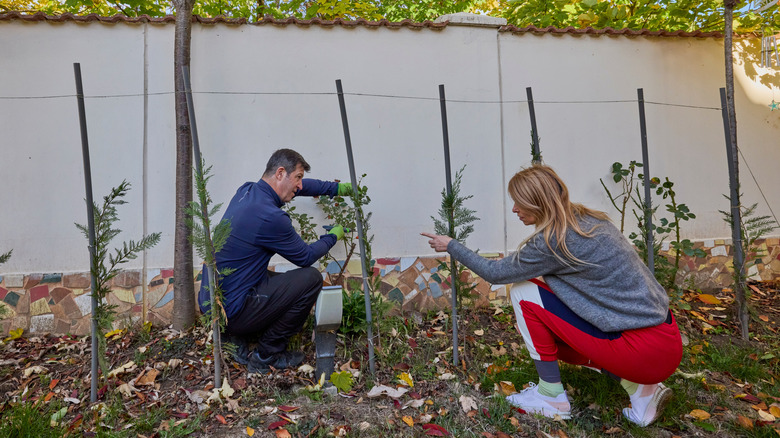
September is a great time to be out in the garden, because most regions still have at least a few weeks before the first frost hits. It's one of the best months to plant deciduous trees and shrubs because the weather is milder, which means these plants can put their energy into root production rather than coping with hot temperatures. It's also the perfect time to plant spring-flowering bulbs that need a period of cold to produce their magnificent blooms. But while there are plenty of perennials you should be planting in September, this is not the ideal time for planting evergreens.
Most evergreen perennials, like rhododendrons and arborvitae, retain their green foliage over the colder months and will lose precious moisture through their leaves and needles. If they don't have enough time to establish their roots beforehand, the roots won't be able to supply the plants with the water that they need to survive. This will often result in winter injury to these evergreens, and some may not survive at all. Even evergreen perennials that have large leaves, like boxwood, holly, and Southern magnolias, can be damaged by winter temperatures if they are planted in September. These plants are better off being planted in the spring than in the fall.
Planting evergreens in September can also lead to frost heaving
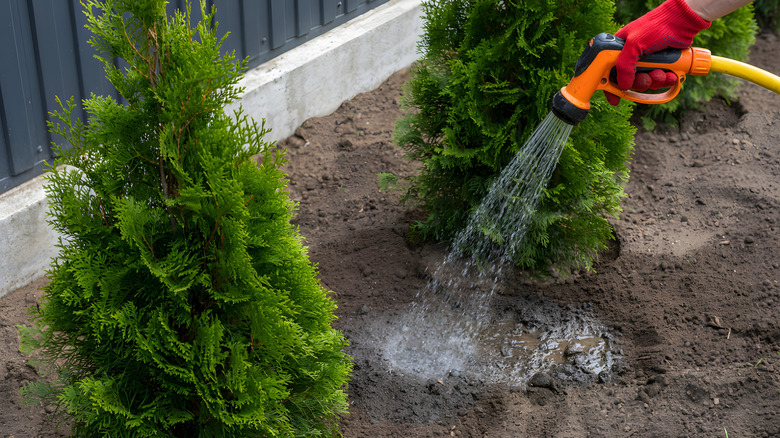
You'll also find that evergreen perennials that haven't had a chance to establish a decent root system can be prone to heaving as a result of the ground freezing and thawing over the winter. This process pushes the crown and upper roots of the plants out of the soil, thus allowing them to be exposed to cold air and its associated dryness. Ultimately, this can cause a great deal of damage to the plants and may even result in death.
This is another reason it's far better to wait until spring before you plant evergreen perennials in your garden, especially if you live in the northern states where the ground tends to freeze. The roots of newly planted perennials need soil that's not frozen to grow and establish themselves enough to handle the cold. On the other hand, if you happen to garden in the warmer southern regions, you can get away with planting these types of perennials in September or even later, as long as there's no danger of their roots freezing over winter.
Additionally, you can deal with frost heaving in your garden to some degree by applying a thick layer of mulch around the base of the plants, which should keep the soil a little warmer. The perfect mulching materials for this include straw and pine needles.