

As Summer Shifts To Fall, Check This One Thing First Before Aerating Your Cool-Season Lawn
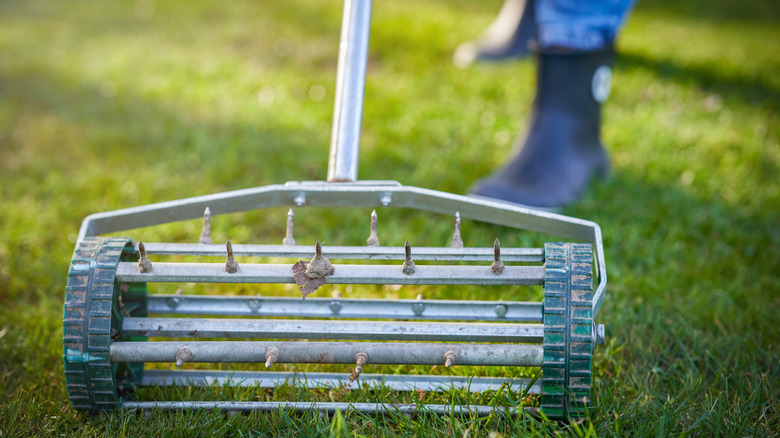
With temperatures starting to slowly drop, coffee shops everywhere adding pumpkin spice to their menus, and your favorite sweaters finally coming out of storage, September brings with it a feeling that we should start prepping for the colder months of the year. Most of the tasks to do around your house and garden before fall are about bracing for chillier temperatures and taking advantage of the last few spurts of warmth and growth before the cozy, indoor season. But jumping the gun to get ahead of the weather could actually cause some problems, especially when it comes to your lawn. Cool-season grasses like Kentucky bluegrass, fine fescue, tall fescue, and perennial ryegrass actually go dormant when temperatures are especially high. If you're planning to loosen up compacted soil, make sure that your grass has already come out of dormancy — doing so too early is one of the common mistakes everyone makes when aerating their lawn.
Summer is a stressful season for grass, especially if you've experienced a powerful heat wave or drought conditions, and the moderate temperatures during fall give your lawn the chance to recover and grow. Lawn aeration is a maintenance step that ensures that your grass has access to nutrients, air, and water it needs to thrive during this peak season. Overzealous maintenance while your grass is still limping along in late summer will have the opposite effect, however. It has quite a few benefits, but aeration is still a damaging process — if you rough up your lawn before it's ready to bounce back, you could be setting it up for failure.
How to tell if your cool-season grass is still dormant
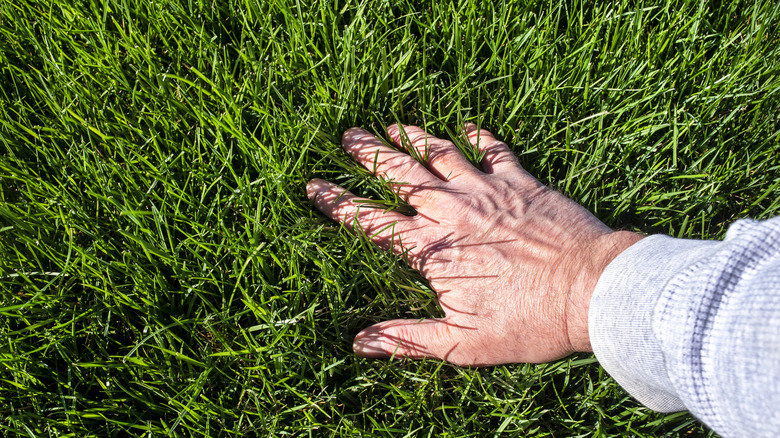
Determining whether or not your grass is still dormant isn't as simple as checking the weather, but it will give you some clear signs when it's ready to come out of this phase. Cool-season grasses only stay dormant for about four to six weeks during summer — any longer, and your lawn might actually be dead — but during this time period, it will look brown and dry. If you pick a brown blade and it offers some resistance, you can rest assured that the grass is dormant rather than dead, but it's still not quite ready to be aerated. Allow the temperatures to fall further, give your grass some water, and wait a week or two — once it's green again, it's safe to aerate.
Aeration can be your secret tool to a lush, healthy lawn, but this step isn't necessary for everyone. Before you run out and rent expensive equipment, hire pros for the task, or put yourself through the laborious process of using a manual tool, make sure that your grass actually needs this treatment. Heavy-use lawns that see a lot of foot traffic are prime candidates for aeration, as are newly sodded areas and spaces outside of new-build or recently renovated homes that underwent frequent construction vehicle traffic. To test if your soil is compacted, drive a screwdriver into your lawn a couple days after it's rained. If it puts up significant resistance, there's a fair chance it needs some help to breathe again. Spongy texture, a thick layer of thatch, and frequent puddling are also signs that your lawn would benefit from this treatment — once the timing is right, that is.