

Not Always Better After Rain: Don't Use This Method To Remove Weeds From Wet Soil
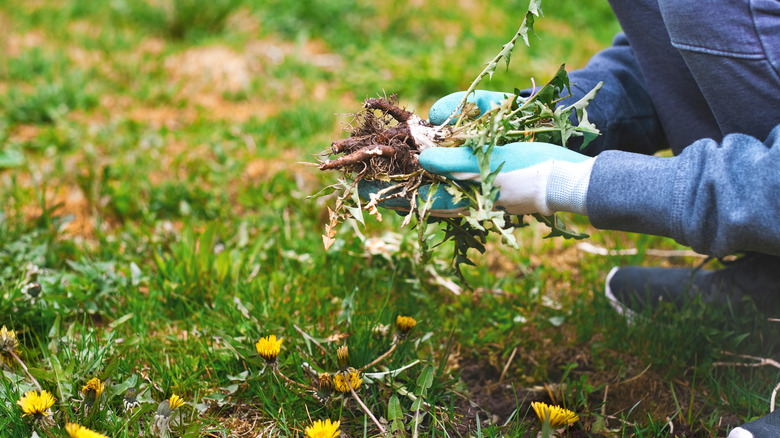
If you're an avid gardener, pulling weeds is probably one of your most tedious tasks, especially in the middle of summer. Not only do the scorching temperatures make it uncomfortable to be outside, but the weeds also snap instead of pulling neatly out of the dry soil when you yank them out with gloved hands. That's why, as you might already know, gardeners consider the brief window after a rainstorm the best time to pull weeds without hassle. While that may be true for hand-pulling weeds, it doesn't apply to all weed removal methods. Specifically, you should never use a hoe following rainfall. The best time to use a hoe in your garden is on a warm, sunny day when the soil is slightly dry. You should also try to tackle this task in the morning, if at all possible.
There are a few reasons for this, but the main one is that hoeing in these conditions is less damaging to soil structure. You'll also create dust mulch, a type of soil surface that may prevent weeds from returning. Finally, using a hoe in rainy or foggy weather makes it more likely that disease will spread. Pathogens in contaminated soil can come into contact with your clothes or nearby plants when they soil is disturbed by hoeing and spread from there. Now that you know when to get rid of weeds with a hoe, let's talk about how to do it — starting with safety gear. For safe hoeing, you'll need a pair of heavy-duty gardening gloves, boots, a hat, a long-sleeved shirt, and long pants.
How to use a garden hoe to remove weeds in dry weather
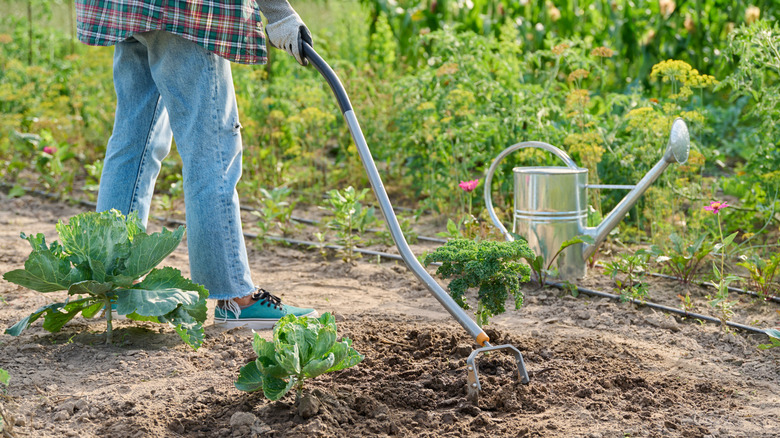
Perhaps more importantly, you'll need to choose the right type of garden hoe — how they all differ is more complicated than you may think. Stirrup hoes are one of the best options for weeding. They go by other names, too, including loop, hoop, and scuffle hoes. To use a stirrup hoe, all you have to do is push the tool back and forth over the weeds. The blade will slip underneath the soil and slice the weeds off at the roots or lift them out of the soil. Don't want to go out and buy a stirrup hoe? If you already have a regular garden hoe, also known as a draw, planter, chopping, or paddle hoe, you can use it to tackle any weeds that have sprouted up in your yard.
Its rectangular blade is great for breaking up chunks of soil and loosening weeds so they're easier to remove. While standing, hold the head of the hoe against the ground, angling it so the blade's edge goes into the soil. Slide the blade underneath the weeds. If you manage to create a dust mulch as you work, you'll hinder weed seed germination, too. create As you chop out or pull up weeds, place them in a bag, bucket, or wheelbarrow. The container should be big enough to hold all of the weeds so they don't spill out onto your lawn where they could spread seeds or rhizomes that could sprout. When you're done, put the weeds in a sealable plastic bag and throw the bag away in your regular trash can. Don't skip this step — it's a weed disposal mistake that'll have them growing back in no time.