

Not Mums: The Drought-Resistant Fall Perennial That Stuns Year After Year
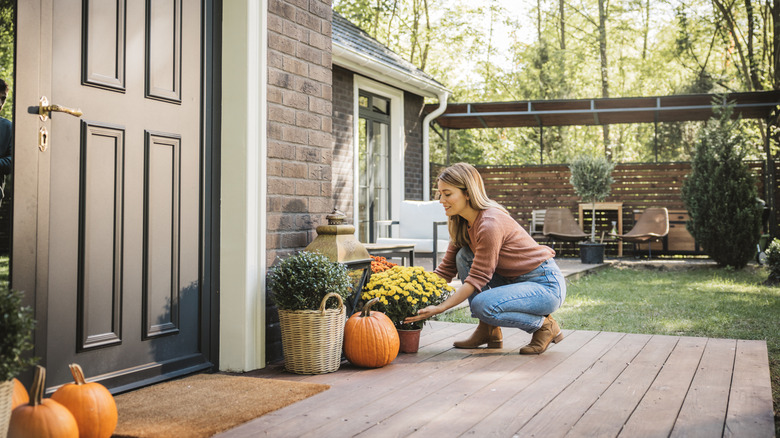
Every fall, it's hard to resist buying at least one pot of chrysanthemums, poinsettias, or Easter lilies to adorn your front porch. Unfortunately, by doing that, you're perpetuating the seasonal buy-and-toss cycle that leads to so much yard waste. This fall, instead of treating mums and other popular seasonal flowering plants like throwaways, consider an alternative that will produce blooms year after year. Daylilies (Hemerocallis spp.) are stunning, drought-tolerant plants that you can plant in your garden in fall.
There are early-, mid-, and late-season daylilies. They all have tuberous roots that help insulate them against dry spells, but if you want fall flowers, look for late bloomers and rebloomers. Reblooming daylilies will attract hummingbirds all summer and fall, and if you deadhead the spent flowers daily, some plants may even bloom right up to the first frost. Once a flower stalk is finished, you can cut it back to tidy the plant and wait for it to bloom again.
Gold couldn't be a more fall-vibes-inducing color, and these reblooming hybrid cultivars all boast flowers in the hue: 'Happy Returns,' 'Stella de Oro,' and Rainbow Rhythm 'Going Bananas.' Add them to your cool-season garden or Halloween porch arrangements. 'Autumn Prince' is an older late-blooming daylily with fragrant yellow flowers. If you're looking for colors other than gold, try 'Desert Flame' — the blooms are a vibrant pumpkin orange with a lime throat. 'Always Afternoon' has ruffled pink flowers with a maroon and yellow center, while the flowers of 'Joan Senior' are creamy white.
How to plant daylilies for abundant fall flowers
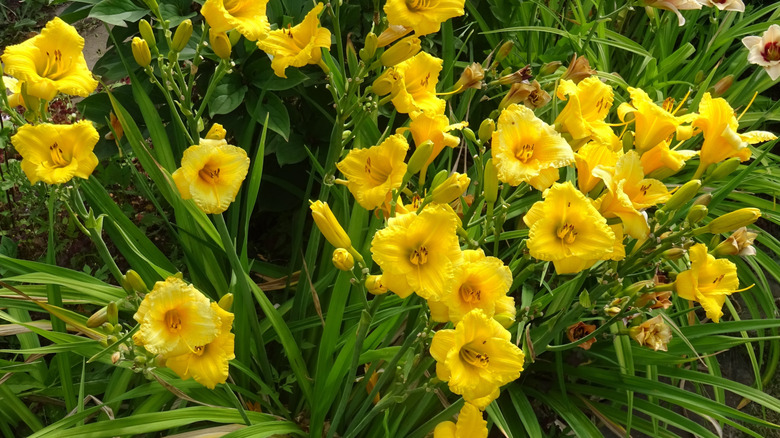
Finding perennials that will bloom every autumn and outshine annual mums to boot is a challenging task. Daylilies are clearly the answer, especially since you plant them in the fall, too. Hardy in Zones 3 to 9, daylilies need to go in the ground about four to six weeks before the ground freezes or they may not survive the winter. Cold snaps can arrive early in some places, so daylilies are best planted as soon as summer's over.
Daylilies need a full-sun site to bloom abundantly, especially in fall, when there's a little less light around. They'll grow in almost any soil as long as it's well-drained, though they prefer it slightly acidic, with a pH level of 6 to 6.5. They don't mind if the soil dries out a bit, either. Put them in a hole less than 1 inch deep with about 18 to 24 inches between plants. Water thoroughly. As long as the ground isn't frozen, you can continue to water your daylilies deeply every week until they're established. Adding a layer of mulch before winter sets in will prevent frost heaving, helping prepare your daylilies for colder weather and ensuring a thriving fall garden.
If you want lots of flowers in fall, the best time to fertilize daylilies is in early spring when you see new growth. Daylilies are heavy feeders, so apply a side-dressing of fertilizer in mid-summer after the first flush of flowers. You can also apply a top-dressing of leaf mold or compost annually in place of fertilizer. Divide the clump in spring or fall.