

What Does An Orange Flame On A Gas Grill Mean?
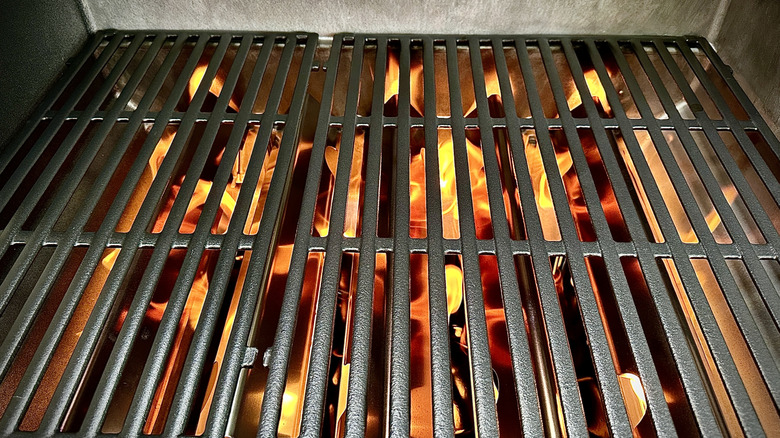
It's a general fact that a solid blue flame is much better and safer than an orange flame on gas-powered cooking appliances. When a gas stove produces an orange flame, it usually means there is an imbalance in the air-fuel ratio, causing the system to suffer incomplete combustion. This dirty type of combustion is dangerous since it yields soot and toxic gases, like carbon monoxide. The same principle applies to outdoor gas grills, although the culprit behind this phenomenon may be quite different from the usual grease and grime buildup in indoor gas stoves. An orange flame on a gas grill is typically caused by creepy crawlies seeking refuge from the frigid environment during the cold months. That's why it's important to spider-proof the grill when storing it for winter.
The burner tubes inside the grill are the perfect hiding spot for spiders and other insects come wintertime. They are dark, sheltered spaces that provide a warm place for spiders to spin their webs or other insects to build their nests. Since grills sit unused for a long time during the cold season, these unwanted guests can readily find their way into the tubes and stay there. Then, when it's time to use the grill after winter, you'll be surprised to see the burners producing an orange or yellow flame because the webs, nests, and other debris trapped in them are obstructing the flow of gas and interfering with the grill's normal function.
Another reason a gas grill burns orange flames
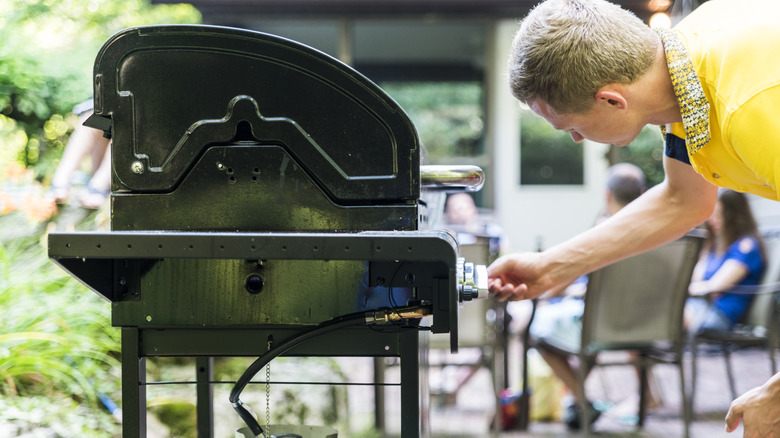
While it's easy to prevent spiders and other crawlies from messing up the air-fuel mixture by cleaning and preparing your grill properly for outdoor storage during winter, another culprit behind the orange flame phenomenon is more technical and therefore requires careful inspection. Gas grills are usually designed to work with a specific fuel type, be it propane or natural gas. Accidentally using the wrong gas type can affect the pressure and air-fuel ratio within the system. So, for example, if a grill that's supposed to run on natural gas is connected to a propane supply, the mismatch can lead to incomplete combustion and an orange-colored flame.
If an orange flame appears the moment you turn on your grill for the first time or after its fuel has been replaced, immediately switch it off and let it cool before inspecting the issue. If you don't see spider webs, insect nests, and other debris obstructing the tubes or openings of the burners, then you should verify that you have the correct fuel for the cooking appliance. Check the grill's metal plate for its label or model number and look for the LP (liquid propane) or NG (natural gas) codes. If you can't find them there, refer to the user manual. A simpler way to verify the required fuel for a gas grill is to look at the pipes. Natural gas grills always have bigger piping than standard propane.