

What Does An Orange Flame On A Gas Stove Mean?
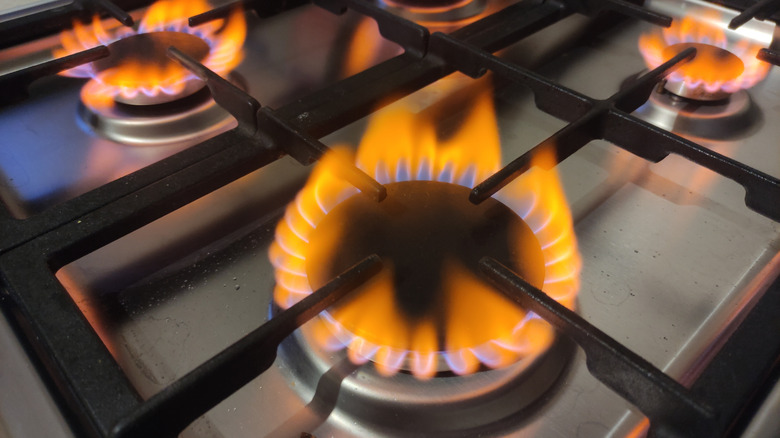
If you've ever glanced down at your gas range expecting a steady blue flame and were greeted by a flickering, fiery orange instead, you're not alone. While a vivid flame may look cozy, on a kitchen stove it's often a warning sign. Before you panic and call a repair technician, though, the solution may be far simpler — and much closer — than you think.
A healthy, properly adjusted gas flame should burn a crisp, solid blue, indicating the gas is mixing with enough oxygen to burn efficiently and cleanly. If the burner isn't receiving enough oxygen, the gas may not burn completely. That incomplete combustion can produce glowing soot particles, turning what should be a clean blue flame into that telltale bright orange or yellow.
An air-fuel imbalance isn't the only culprit behind a color change. Everyday factors, such as food spills or mineral dust from an ultrasonic cool-mist humidifier, can also turn those blue tips orange in an instant. Understanding why your stove is suddenly casting a warm glow is the first step toward getting your burners back to peak efficiency, keeping your air quality clean, and ensuring your cooktop runs safely. It's also important to note that if any burner persistently produce yellow or orange flames or emit a strong gas smell, turn off the stove immediately. You'll need to call a licensed technician to have the stove inspected for serious underlying issues. If ongoing maintenance or indoor air quality concerns have you rethinking your setup altogether, you may want to consider getting rid of your gas stove, though switching to electric or induction comes with its own trade-offs.
Steps to take when the flame is orange
If you notice an orange flame on your gas stove, the first step is to rule out false alarms caused by your home's air quality. Before pulling apart your stove, turn off any ultrasonic cool-mist humidifiers running nearby. Tap water minerals suspended in the air glow bright orange when burned. If you frequently notice a powdery film settling around the room, identifying the source of white dust in your house can help narrow down the culprit. Open a window to clear the air and test the burner again after about 15 minutes.
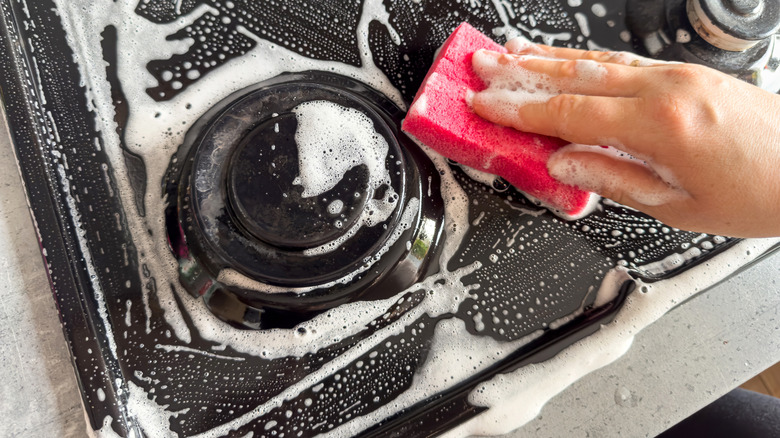
If that doesn't do the trick, grease and gunk are likely the culprits. Give your stove a chance to cool completely, then pop off the cast-iron grates, burner caps, and heads. Drop the caps and heads into a basin of warm, soapy water to loosen up any baked-on food or stubborn oil buildup. Wipe down the stovetop around each burner base and scrub the soaked pieces with a gentle, nonabrasive sponge.
While you have the burner components removed, take a close look at the tiny slots along the sides of the heads where the gas flows. Knowing how to clean gas stove burners properly involves clearing out trapped crumbs or buildup using a straightened paper clip or needle — just steer clear of wooden toothpicks, which can easily snap off inside the ports and leave you with a bigger mess. Once everything is clean, dry each piece thoroughly with a towel. As you put the stove back together, make sure the burner heads sit totally flush on the base, and the caps click neatly into place. If a cap is even slightly crooked, it chokes off airflow and gives you that same annoying, flickering orange flame all over again.