

This Common Home Device Could Cause Massive Contamination If You Toss It In The Trash
Most of the time, we don't think all that much about what goes into our trash cans. It's the default — while we might be more cautious about the common items we shouldn't be putting on our recycling bins or compost piles, just about everything that doesn't get sorted out for further processing can be dumped straight in the trash without issue. There are a few exceptions, though. Decluttering used batteries shouldn't involve tossing them in the garbage, and medical waste like prescription meds and needles needs special treatment. The same is true, surprisingly, when it comes to old thermostats. If your model was installed before 2006, it might need to be dropped off at a hazardous waste facility.
If this information has made you to cautiously glare at the thermostat on your wall, don't worry — the device itself is safe to handle. The problem is that the mechanism inside could contain mercury. While thermostats with this system were banned in 2006, mercury-added thermostats can still be found in homes that haven't been updated in a while. If you're looking to renovate, do your due diligence and treat the old thermostat with caution. If it's tossed in the garbage and eventually crushed during handling, even the small amount of mercury inside (about 3 grams) is more than enough to contaminate an entire lake. Luckily, there are plenty of resources you can turn to for safe disposal, and in most cases, they're free and easy to access, even if you live somewhere more rural.
How to find a thermostat recycling program
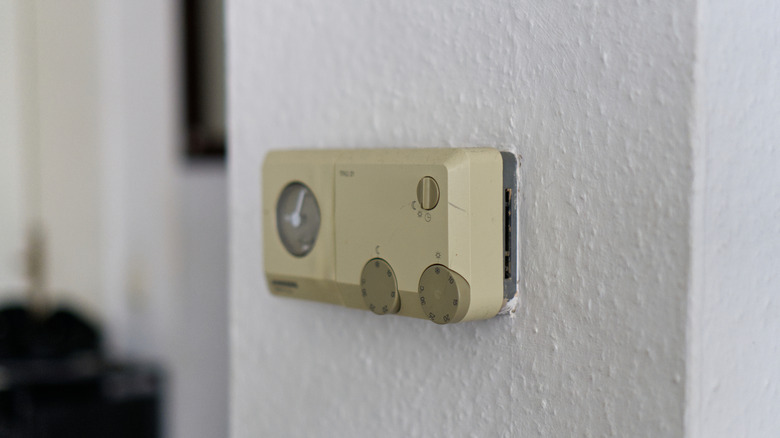
Before you go out of your way to dispose of your thermostat, you should determine whether or not it contains mercury. If it was produced anytime in the last 20 years, you shouldn't have to worry about this at all, but if it's older, a little investigation is all you need. This is fairly simple to do on your own — remove the cover and look for a small glass tube that contains the shiny, metallic liquid. It's safe to handle if this tube is unbroken, but to keep things protected, you should place the cover back on the thermostat before you start researching local recycling programs.
For a quick way to find recyclers in your area, head to the Thermostat Recycling Corporation's website and put in your zip code. You'll be greeted by a list of local businesses that are participants, most often appliance and refrigeration wholesalers. It's always a good idea to call the business before heading over to confirm the hours, that it's still participating in the program, and its location, but companies on this list should be willing to take your old thermostats and safely dispose of them for free.
There's also the option to look into municipal programs. Many counties already have thermostat recycling programs in place through their waste departments, but this will, of course, depend on your location. More general municipal hazardous waste programs provide locals with safe ways to dispose of common household items that are actually hazardous waste, so this could be worth looking into if you have more items that you're not sure how to safely dispose of.