

Stop Tossing Toilet Paper Tubes: Turn Them Into A Place For Birds To Rest
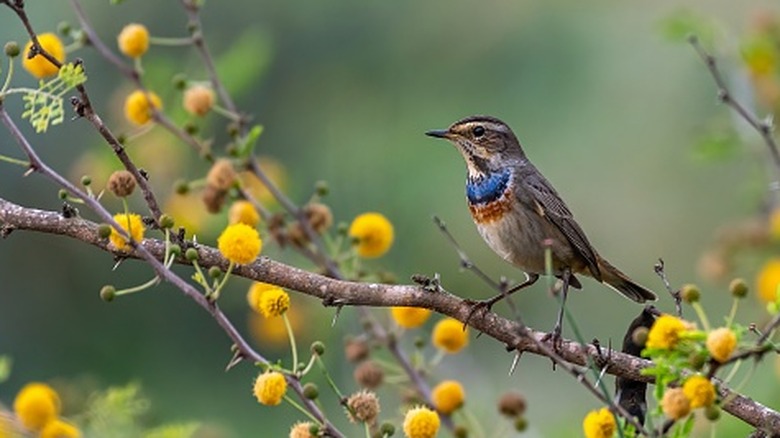
The pleasing trill of songbirds is one of nature's soothing soundtracks. But first, you've got to create the avian version of a neon "open for business" sign. There are a number of ways to attract more songbirds to your yard, and one of those is to attract them with a source of food. Even feathered friends have a hard time resisting a free meal. One way to do this is to repurpose empty toilet paper rolls. A clever toilet paper tube bird feeder can provide both nourishment and a convenient spot for birds to perch and rest as they enjoy snack time sustenance.
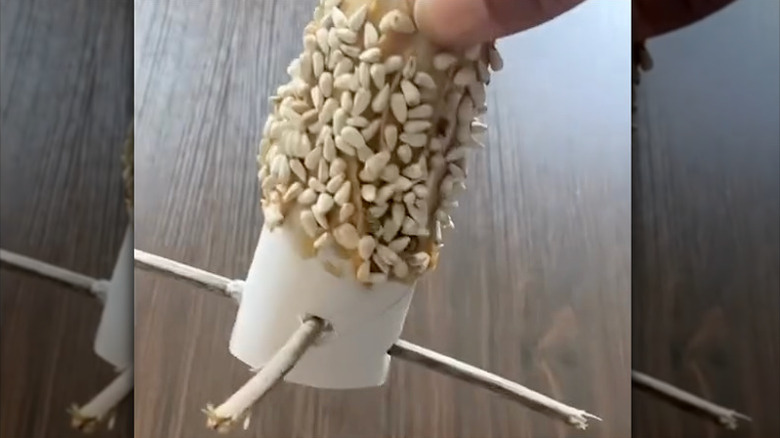
Starting with a bare toilet paper tube, make four holes in even intervals about a half inch from the base of the tube and two parallel holes at the top, using the tip of a small knife or a mini hole punch to prep the tube, depending on the size of your perches. Make sure the bottom holes are lined up so that a stick poked through a hole on one side can come out level through the other. You can use slim wood craft stick to create these perches, or sticks you find in the yard for a no-spend, rustic look. Slide your sticks through the holes or slits so they cross inside the tube; thread the top two holes with a section of string for hanging. Next, use a knife to spread peanut butter, ideally a natural type with as few additives as possible, around the tube's exterior. Then roll the peanut butter-coated tube in your choice of bird seed, selecting whichever type of bird seed attracts your favorite birds.
Placing your bird feeder for maximum benefit
When it's time to head outside, find a quiet spot in your yard that's most likely to be safe from predators and hungry squirrels. Your new DIY feeder should hang at least five feet off the ground, and about 10 feet from overhead branches and foliage where potential predators can hide. It's a good idea to make a few of these feeders at a time and hang them in different areas of the yard and at different heights. Experiment with different lengths of perches to attract different sized birds. Place feeders where you can view them from your windows, but at the proper distance: Keep feeders either at least 10 feet away from windows, or within 3 feet so that birds leaving your feeder won't have enough momentum to seriously injure themselves if they do fly into the glass. It's also a good idea to keep cats indoors for the birds' safety.
Aside from the opportunity to upcycle and enjoy the sounds of birdsong, there are myriad benefits to having a bird feeder in your yard, the biggest being conservation. The U.S. Committee of the North American Bird Conservation Initiative estimates that more than a third of the continent's birds need conservation action. Year-round bird feeding is crucial to sustaining wild birds so they can do their jobs in our ecosystem: containing the insect population, pollinating flowers and fruits, and spreading seeds that sustain forests. Next time you see an empty toilet paper roll, think of all the good it can do when used to benefit birds and our fragile environment.