

What It Means If The Flame On A Gas Stove Is Making Whirring Or Crackling Noises
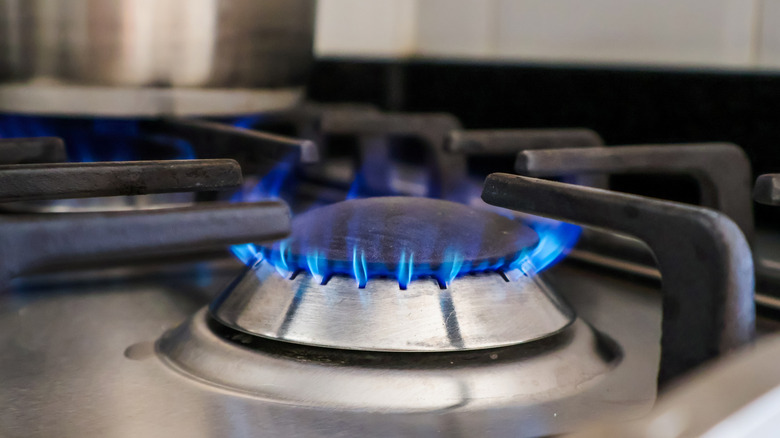
For any home cooking enthusiast, adding the latest in stove technology is like Christmas for kids. We're often spoilt for choice, thanks to the variety of smart home kitchen appliances now available across the country. While induction stoves may be a big kitchen trend in 2026, especially those with all the bells and whistles, gas stovetops remain popular amongst traditionalists.
If you own a gas stove, there are a few things to look for that will let you know something's off. Certain signs will be physical. For example, you may notice something different with the flame or simply no flame. With others, the issue will be more audible. If you hear a pop or clicking sound, it may be that your burners are wet or the burner cap is not positioned properly. What if you hear a whirring or cracking noise, though? If you do, should you be calling in a professional?
First up, it's important to know that a clicking and whoosh sound are completely normal when you fire up your gas stove. This is the ignitor and initial ignition that gets your gas going. Once the gas is lit, if you hear a whirr or crackle, it may mean that you have a problem with your air-to-gas mixture. This is the mix of oxygen and fuel that controls how cleanly and efficiently the fuel burns. Before you call in the stove specialists, it may take one simple adjustment to get rid of the sound.
How to fix the ratio of air and gas in your gas stove
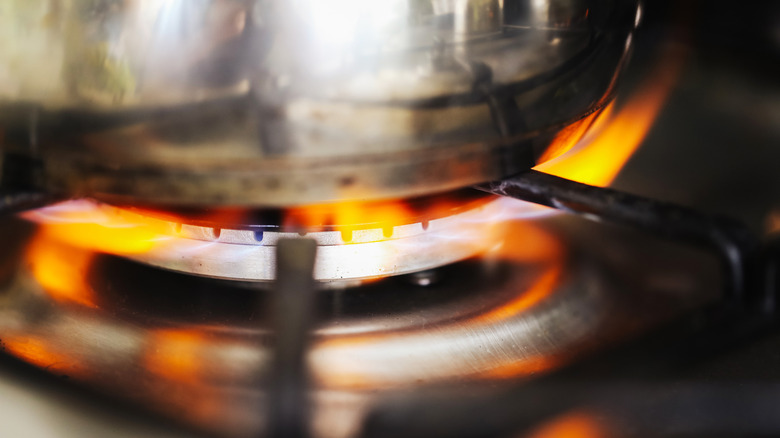
One of the main reasons for the whirring or crackling noise from your stove is that you are getting too much air coming through your gas burners. As the incorrect mixture hits the burner ports, it will cause unstable combustion. Too much air will not produce a yellow or orange flame on your gas stove, so this whirring or crackling sound can coexist with a normal blue flame.
There is a simple adjustment you can make to solve the issue. If there is no misalignment or moisture on an affected burner cap or clogged burner ports, find its damper. For most gas stoves, the damper is located under the stove head, underneath the main cooktop surface.
Make sure that you've turned off the gas inlet by locating the gas shutoff valve and giving the lever a one-quarter turn. If you're not sure if it's off or not, you want it to be at a right angle to the gas pipe. If there are electric components in the stove, make sure it's unplugged from the wall or the extension cord. Locations may vary from model to model, but this is what's most common. If you're unsure, find the manual for your specific model or do a quick search online for the specifics of your gas stove.
Once you locate the damper, you need to turn the adjustment screw to lower it, reducing the air coming in. Once everything is back in place and turned on, fire up the gas burner to check if the problem is solved. It may take more than one attempt as you look to get the air-to-gas mixture right. Once you have a strong blue flame on your stove and no more whirring or crackling, you'll be good to go.