

Not Mums: The Vibrant Fall Flower That Gardeners Love Planting In The Shade
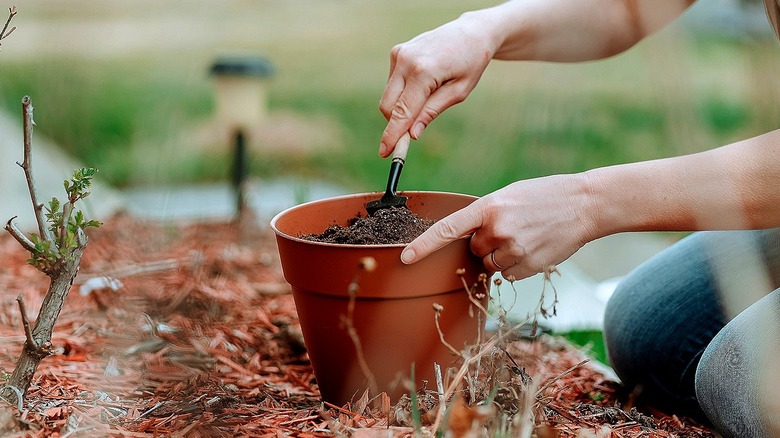
Now that the summer has begun to wind down, you may notice that your choice of flowers at the garden center reduces into a sea of mums. Lovely as they are, there are other flowers that can brighten up your yard, even the darker corners of it. Fuchsia, for example, with its pendulous, two-tone flowers, thrives in the shade and can keep blooming long past the summer show, with some varieties even flowering until first frosts. They're beautifully colored, producing displays of pink, purple, burgundy, and white blooms, often with two colors on the same flower.
Fuchsia comes in both hardy and tender forms, and both can be planted in containers or garden beds. These flowers grow perfectly in the shade, preferring indirect sunlight. Fuchsia flowers like a little shelter, too, as they can be vulnerable to heat and drying winds. Although they are native to Central and South America, they're from the cooler mountain regions versus the more tropical climes found in other parts of the countries. They're considered tender perennials.
Some fuchsias are surprisingly substantial plants that can range from low-growing shrubs to plants several feet tall; there's even one variety, Fuchsia magellanica, that can reach a whopping height of 10 feet. Given their striking appearance you'd be forgiven to think fuchsias need extra TLC, but caring for fuchsia isn't too complicated at all.
Growing fuchsia so it actually thrives
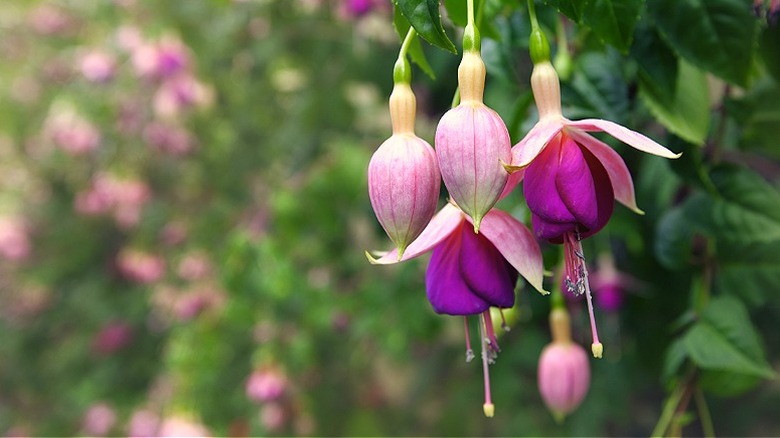
Though fuchsia prefers the shade, don't be mistaken and equate "shade-loving" with "will thrive in complete darkness." Too much shade will still leave fuchsia struggling to produce its flowers so the ideal scenario is to plant it in areas that receive dappled sunlight or more gentle morning sun, as opposed to the harsh blast of midday. Some of the more hardy fuchsias can also flower in full sun but partial shade is often a safer choice, especially if you live in a hot climate. Depending on the variety, fuchsias are hardy in zones 5 to 10.
It's important to keep the soil consistently moist for fuchsia, as well as well draining as sitting in soggy compost is just as problematic for these plants, as is letting them dry out. As with other container plants, if you grow fuchsia in a pot, planter, or hanging basket, water with more frequency to ensure the soil doesn't become too dry, particularly in warmer weather. Tender fuchsias grown in containers, meanwhile, can benefit from a liquid fertilizer during the growing season, while hardy fuchsias will generally need less (the Royal Horticultural Society recommends feeding them just once in the spring).
Finally, fuchsia is not among the flowers you should always deadhead. Spent fuchsia flowers often drop by themselves, and some will develop into purple edible berries afterward. Recipes include fuchsia jam and scones.