

Don't Trash Your Old Batteries — Recycle Them For Free At This Popular Hardware Store
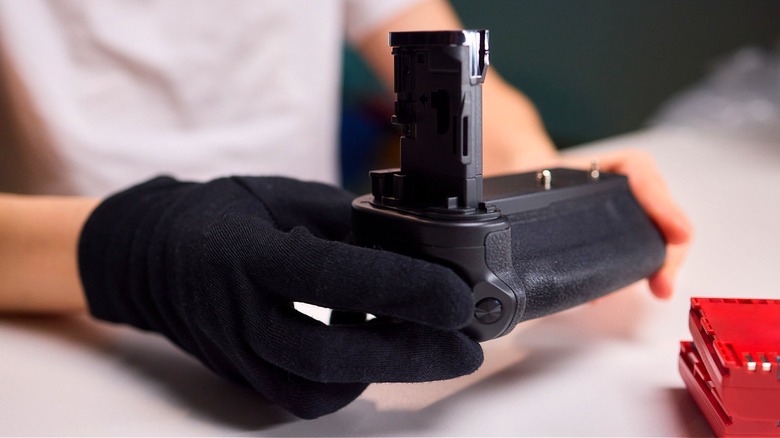
You may already know that placing used batteries in the garbage can create a dangerous situation. Rechargeable lithium-ion batteries that suffer damage in the trash could lead to a fire that quickly spreads, while alkaline batteries that are made for single-use purposes could occasionally spark or rupture when placed under pressure. (However, if recycling them isn't an option, alkaline designs are considered safe enough to be placed in normal household trash in most states and municipalities.) Many rechargeable batteries, meanwhile, need to be taken to hazardous household waste sites or recycled, and some states have created laws that force proper disposal or recycling of them.
Learning how to dispose of your used batteries the right way may start with a visit to the hardware store, specifically The Home Depot. The Home Depot has been partnering with The Battery Network (formerly known as Call2Recycle) for more than two decades, offering in-store collection points for rechargeable batteries that are recyclable. The Home Depot will accept those that weigh 11 pounds or less and have less than 300 watt-hours of capacity. To determine the watt-hours of your battery, multiply the amp-hours, or Ah, by the voltage, or V, measurements. For example, a Ryobi 40V 5.0 Ah rechargeable unit would have a capacity of 200 watt-hours (or 40 x 5).
You aren't limited to only recycling rechargeable batteries for outdoor power equipment or power tools either, though. The Home Depot's recycling program also accepts rechargeable designs used to power smartphones, cordless phones, digital cameras, digital video cameras, laptops, two-way radios, toys, and more portable electronics.
How to use the free Home Depot battery recycling program
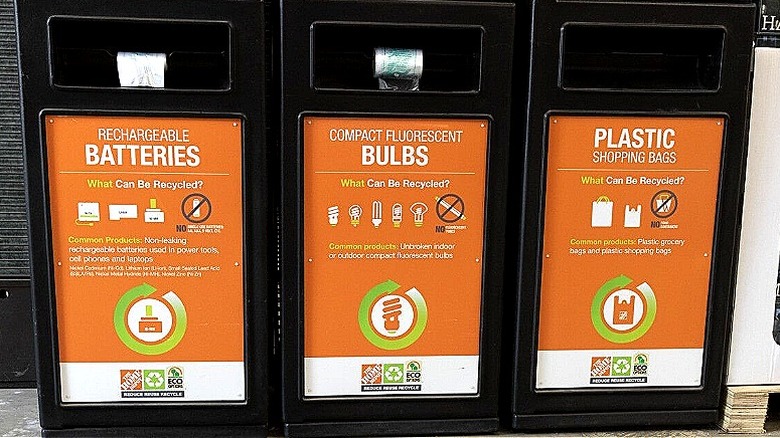
If you're planning to visit your local store to check out some of the top finds at The Home Depot, you can bring your recyclable batteries at the same time to drop them off. Most stores have rechargeable battery recycling bins where you can deposit various recyclable materials, including fluorescent light bulbs and plastic shopping bags. These recycling bins are typically found near the entrance, or inside the customer service area. If you don't see it in these areas, the customer service team can help you find it. To determine whether your Home Depot is participating in this program, search for locations near you at The Battery Network website.
The Home Depot recycling program accepts lithium-ion rechargeable designs. The safest way to dispose of lithium-ion batteries when recycling them at your local store is to place tape over the terminals or put each unit in its own plastic bag to prevent short-circuiting accidents. The retailer also accepts older nickel-based rechargeable batteries (NiMH and NiCd) as part of the program.
The Home Depot doesn't accept lead-acid batteries, however. That said, if you buy a new lead-acid battery for your lawn mower or car at a Home Depot, you can bring your old battery to the store for proper disposal at the same time or later. The hardware store also doesn't accept single-use alkaline batteries. Some stores will accept button and coin-cell batteries as part of the program, while others won't.
What to do if you don't have a Home Depot near you
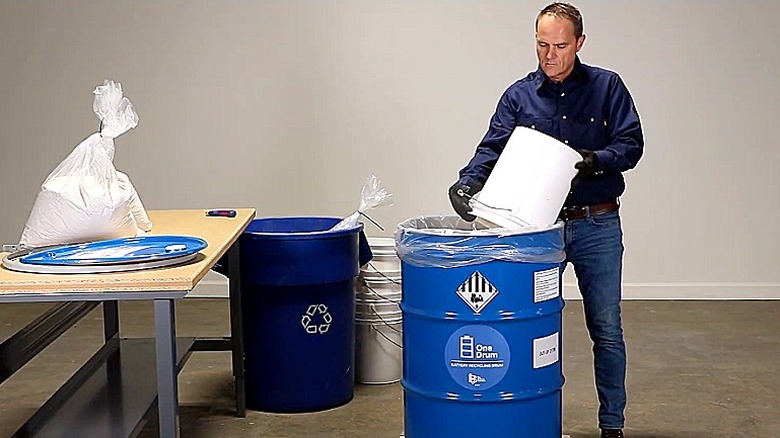
If you don't have a Home Depot location near you, or if your local store doesn't participate in the program with The Battery Network, still don't trash your batteries — you may be able to recycle your rechargeable batteries in another nearby location. When you enter your zip code at The Battery Network's website, you'll get a list of battery recycling locations nearest you for the particular type of battery you want to drop off: i.e., e-bike, rechargeable, phone, or high energy. Beyond The Home Depot, you may find matches for locations like Lowe's, Staples, local libraries, and bike shops. You can also use the Earth911 website to search for locations that will accept recyclable batteries and other materials.
Some city or county recycling centers, meanwhile, will accept rechargeable batteries. You might also have a hazardous household waste facility near you (operated by your local government or a local nonprofit), and such facilities may accept these batteries as well. However, note that you will often have to show proof that you're a resident of the county, region, or the city where the facility operates to drop off your batteries. Some regions offer centralized collection events on a certain day, rather than having a facility that local residents can visit at their convenience. Contact your local government for information on these recycling options.